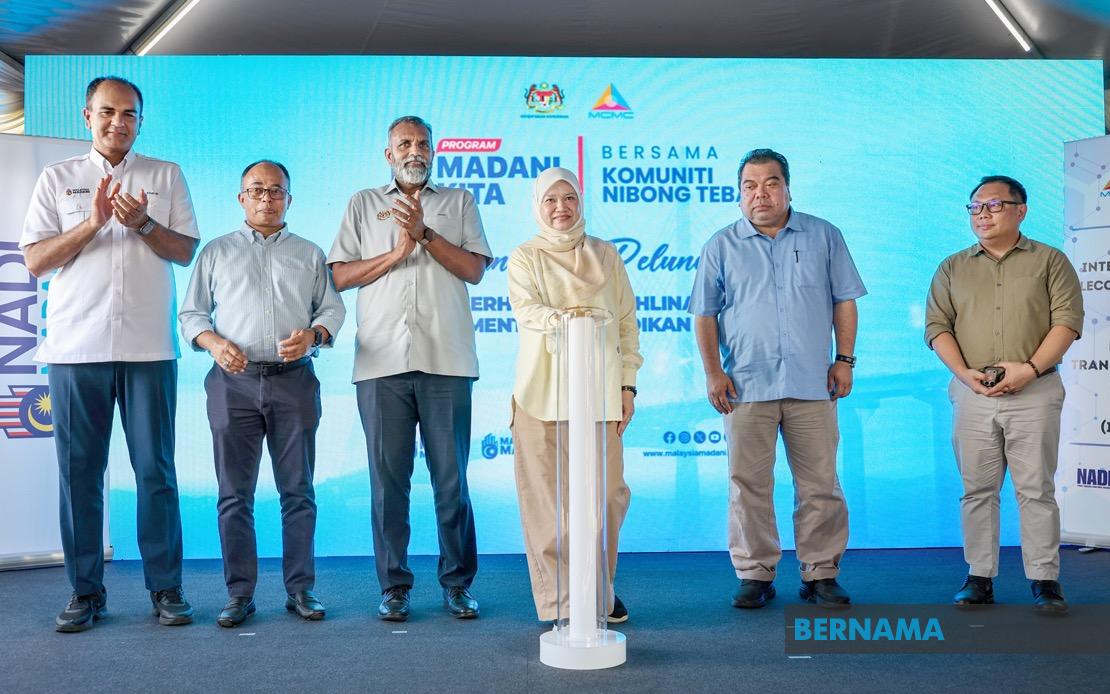
The Malaysian government is significantly expanding its grassroots engagement strategy through the MADANI Kita initiative, with 41 programmes now operational across the country. The effort represents a coordinated push by the Communications Ministry to dissolve the traditional distance between bureaucracy and citizens, ensuring that government services become tangible and accessible rather than abstract policy announcements. The latest instalment of the programme was launched in Nibong Tebal with Education Minister and Nibong Tebal MP Fadhlina Sidek officiating the event, underscoring the cross-ministerial commitment to this citizen-centred approach.
At the operational level, the MADANI Kita initiative brings together the Community Communications Department (J-KOM), the Malaysian Information Department (JaPen), and the Malaysian Communications and Multimedia Commission (MCMC), coordinating their efforts through the National Information Dissemination Centre (NADI). According to Communications Ministry deputy secretary-general (Telecommunications Infrastructure) Mano Verabathran, this institutional framework enables seamless collaboration across government agencies, allowing citizens in participating communities to access multiple services and information streams from a single point. The consolidation of these agencies reflects a deliberate policy to reduce fragmentation in government communications and create unified touchpoints for public engagement.
The philosophical underpinning of MADANI Kita extends beyond conventional information dissemination. Rather than limiting interaction to one-way messaging about policies, the programme prioritises dialogue and experiential learning. Citizens attending these events gain opportunities to ask clarifying questions, voice concerns, and provide feedback directly to government representatives. This bidirectional engagement model acknowledges a fundamental shift in public expectations: Malaysians increasingly demand not merely awareness of government initiatives but visible demonstration of tangible benefits flowing from those efforts. The programme thus positions government ministries and agencies as responsive entities willing to explain decisions and justify resource allocation in real time.
The activities offered through MADANI Kita programmes span technology, education, skills development, and community wellbeing, deliberately moving beyond conventional entertainment formats. This breadth reflects recognition that governance engagement must address multiple dimensions of citizen life. For younger demographics especially, the integration of e-sports alongside traditional skill-building activities represents an attempt to meet communities where cultural interests lie. By incorporating gaming into the framework, organisers acknowledge that technology-native generations require engagement strategies aligned with their preferences and values.
The competitive and talent-development dimensions of MADANI Kita activities serve a secondary but important function: they cultivate team spirit and encourage disciplined competition among participants. Rather than positioning these as frivolous entertainments, programme designers frame them as platforms for nurturing capability and fostering healthy community cohesion. This approach aligns with broader Malaysian development philosophy emphasising holistic nation-building rather than siloed policy implementation. The emphasis on youth participation particularly matters in the Southeast Asian context, where demographic bulges in younger age cohorts create both opportunities and challenges for political stability and economic participation.
Previous iterations of MADANI Kita have demonstrated substantial public appetite for these engagements. The Permatang Pauh programme, conducted alongside the Penang International Halal Expo 2026 from July 24 to 26, attracted more than 17,000 attendees. This volume suggests that when government services become localised and embedded within existing community events, participation rates increase significantly. The piggybacking of MADANI Kita onto established expos and festivals creates synergies, reducing friction for citizens to simultaneously explore commercial offerings while engaging with government representatives.
For Malaysian stakeholders, the MADANI Kita expansion carries important implications regarding governance modernisation. The programme embodies a deliberate pivot toward decentralised, community-based service delivery rather than reliance on centralised bureaucratic channels. This matters particularly for smaller towns and secondary urban centres where residents have historically faced longer distances to government offices and reduced frequency of direct engagement with officials. By bringing services to communities, the initiative potentially reduces administrative burden on individual citizens while improving perception of government responsiveness.
The cross-agency coordination required for MADANI Kita also suggests institutional learning within Malaysian government regarding collaborative delivery models. Rather than each ministry operating independently within territorial silos, the programme creates incentive structures for departments to align activities, share resources, and coordinate messaging. Such integration remains rare in Southeast Asian public administration, where departmental territoriality often undermines policy coherence. Should MADANI Kita sustain this coordination, it could establish templates for future interagency initiatives addressing complex challenges requiring multisectoral responses.
Regionally, Malaysia's investment in direct citizen engagement through MADANI Kita positions it competitively within Southeast Asia's governance landscape. While digital governance and e-services have advanced across the region, few countries have attempted systematic physical community outreach at this scale. The programme demonstrates commitment to inclusive engagement regardless of digital access, recognising that portions of Malaysia's population remain inadequately served by online channels. This inclusive approach distinguishes the initiative from purely digital governance strategies that risk deepening digital divides.
Looking forward, the sustainability and evolution of MADANI Kita will depend on consistent resourcing and political commitment across successive administrations. The current expansion to 41 programmes suggests institutional embedding, but expansion alone does not guarantee quality or meaningful impact. Evaluation mechanisms measuring actual citizen satisfaction, policy awareness improvements, and service uptake resulting from these programmes remain crucial for justifying continued investment. Additionally, feedback mechanisms must translate citizen inputs gathered during MADANI Kita events into actual policy adjustments, ensuring that engagement translates into genuine responsiveness rather than symbolic consultation.

