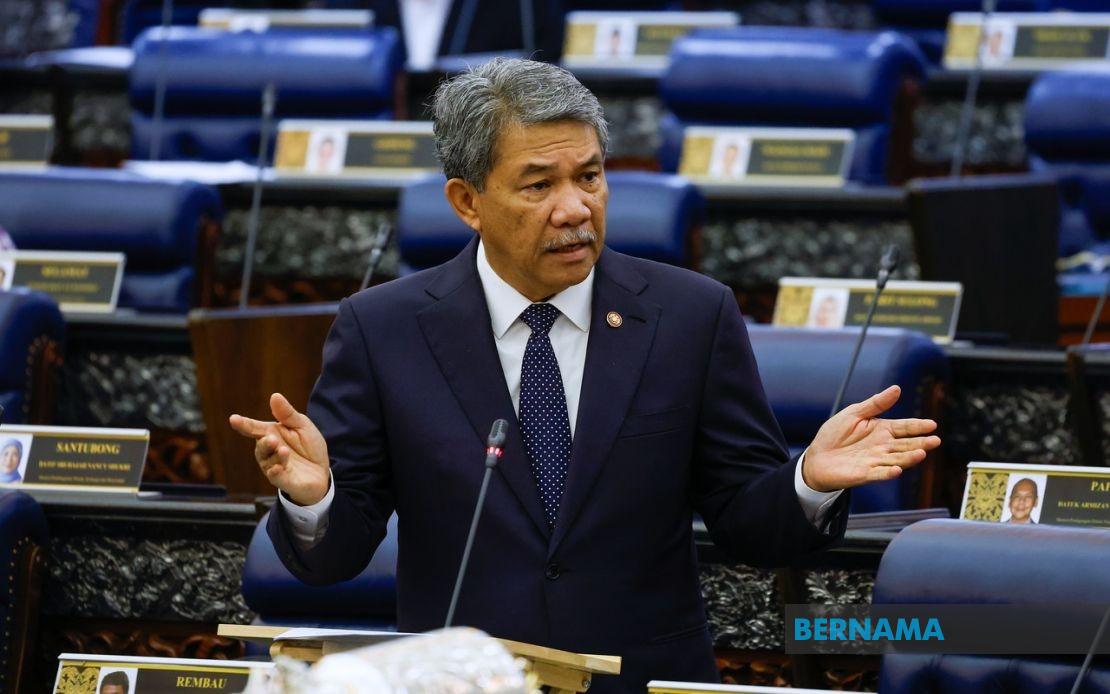
Foreign Minister Datuk Seri Mohamad Hasan has moved to dispel any misunderstanding about Malaysia's diplomatic engagement with Myanmar, asserting that the Malaysian delegation's visit in May carried no implication of recognising the junta's authority. Speaking in parliament, Mohamad stressed that Malaysia maintains its principled stance of non-recognition whilst simultaneously working within ASEAN frameworks to address the ongoing political crisis affecting the Southeast Asian nation.
The visit, Mohamad explained, formed part of a deliberate strategy coordinated among ASEAN member states to preserve diplomatic channels rather than abandon them entirely. This approach reflects the bloc's broader conviction that continued communication offers a more productive path toward resolution than the alternative of complete isolation. By maintaining dialogue, regional leaders believe they can exert meaningful influence on Myanmar's trajectory whilst preventing the country from drifting further from ASEAN's orbit.
During his parliamentary response to Datuk Seri Saifuddin Abdullah, the Foreign Minister described the specific nature of his engagement with Myanmar's counterpart, Foreign Minister Tin Maung Swe. Notably, Mohamad highlighted that the meeting took place at a hotel rather than at Myanmar's Foreign Ministry, a detail underscoring the informal character of the exchange and signalling Malaysia's careful calibration of the interaction. This distinction carries symbolic weight, avoiding any suggestion that Malaysia was according legitimacy to Myanmar's post-coup administrative structures.
In articulating Malaysia's messaging to Myanmar during the encounter, Mohamad revealed that he had conveyed specific expectations regarding the direction of change required within the country. These expectations align with ASEAN's collective position on resolving Myanmar's crisis, reflecting the organisation's commitment to structured principles rather than ad-hoc responses. The Foreign Minister's emphasis on communicating these matters suggests that dialogue remains fundamentally about persuasion rather than acceptance of the status quo.
A crucial element of Mohamad's intervention centred on reminding Myanmar of the reciprocal nature of membership within ASEAN. While the country enjoys certain rights and privileges as a regional member state, it simultaneously bears obligations to uphold the bloc's norms, values, and decision-making processes. This framing positions Myanmar's obligations as non-negotiable aspects of continued regional belonging, establishing clear expectations about behavioural standards irrespective of internal political arrangements.
The Foreign Minister's articulation of ASEAN's strategy reveals sophisticated thinking about the consequences of complete disengagement. Rather than viewing isolation as a form of punishment or protest, Malaysian policy-makers recognise that an abandoned Myanmar could become vulnerable to influence from powers operating beyond the Southeast Asian framework. This concern about a potential power vacuum reflects legitimate anxieties about how major external actors might exploit Myanmar's marginalisation to advance their own strategic interests in a region of considerable geopolitical importance.
Mohamad's commitment to sustaining open channels of communication underscores Malaysia's belief that constructive engagement, even with governments whose legitimacy the country does not recognise, serves broader regional stability. The Foreign Minister emphasised that maintaining these lines remains essential to ASEAN's long-term interests, suggesting that the organisation's unity and effectiveness depend upon its ability to retain influence with problematic members rather than expelling them into international isolation.
Building on this dialogue framework, Malaysia has scheduled additional meetings with Myanmar stakeholders for early or mid-July, signalling the continuation of sustained engagement beyond the initial May contact. These planned discussions indicate that Malaysia views the resolution of Myanmar's crisis as an iterative process requiring persistent effort rather than a matter susceptible to swift resolution through single encounters. The scheduling suggests structured, ongoing communication rather than sporadic or reactive engagement.
Within these forthcoming discussions, Malaysia intends to maintain pressure for outcomes aligned with ASEAN's Five-Point Consensus, the regional blueprint for Myanmar's path forward. This consensus framework encompasses multiple dimensions including cessation of violence, implementation of genuine ceasefires, establishment of meaningful dialogue among all stakeholders, and ensuring that humanitarian assistance reaches affected populations. By anchoring bilateral engagement to this multilateral framework, Malaysia preserves consistency between national diplomacy and collective ASEAN positioning.
The broader context for Malaysia's approach involves careful navigation of competing impulses. On one hand, the country shares ASEAN's fundamental commitment to upholding norms of democracy and civilian rule, principles that Myanmar's junta represents a direct affront to. On the other hand, Malaysia recognises that ASEAN's legitimacy and effectiveness as a regional organisation depend upon its capacity to maintain relationships with all members, even during periods of acute internal conflict. This tension between principle and pragmatism characterises much of contemporary Southeast Asian diplomacy.
For Malaysian observers and the broader regional audience, Mohamad's clarifications serve multiple purposes. They reassure those concerned about Malaysia appearing to normalise junta rule that the government maintains principled opposition whilst explaining why complete disengagement would be counterproductive. They signal to Myanmar that dialogue remains possible even without recognition, potentially creating space for evolution in the country's political trajectory. They also demonstrate to other ASEAN partners Malaysia's commitment to collective approaches rather than unilateral action.
The manner in which Malaysia calibrates its Myanmar engagement has implications extending beyond bilateral relations. It provides a case study in how middle-power countries within regional organisations can maintain principles whilst contributing to institutional coherence. Rather than seeing the choice as binary between recognition and isolation, Malaysian policy articulates a third path rooted in persistent communication directed toward advancing concrete objectives aligned with shared regional values.

