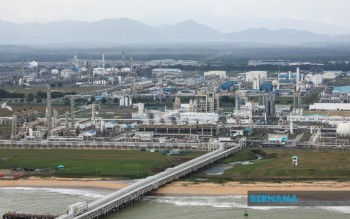
Malaysia's decision to investigate the establishment of a national petroleum reserve reflects growing recognition that energy security demands proactive planning in an increasingly unstable global landscape. Prime Minister Datuk Seri Anwar Ibrahim has directed officials to examine the feasibility and design of such reserves as a defence against geopolitical disruptions and supply chain crises. Market analysts and energy specialists now view this initiative not as precautionary excess but as essential infrastructure for a nation deeply integrated into international energy markets.
The urgency stems from a fundamental shift in how energy professionals perceive global shipping risks. The Strait of Hormuz, a 38-kilometre-wide waterway between Iran and Oman, remains the world's most critical oil chokepoint, with approximately 20 million barrels daily traversing its waters—equivalent to one-fifth of global petroleum consumption. Rather than viewing disruptions here as isolated incidents, analysts increasingly characterise the route as chronically vulnerable to intentional interference and regional conflicts. Stephen Innes, managing partner at SPI Asset Management, articulated this reframing: what once seemed like a periodic shock has become a structural feature of energy markets, likely to persist until decades-long infrastructure projects create viable alternative transport networks.
The nature of threats has evolved beyond traditional geopolitical tensions. Yemen's Houthi movement, aligned with Iran, has reportedly completed military preparations targeting vessels in the Red Sea's southern approaches. Recent attacks on Saudi oil tankers and subsequent American strikes on Iranian military installations underscore how quickly localised conflicts can disrupt global energy flows. These incidents inject lasting risk premiums into petroleum pricing, pushing insurance costs higher and creating persistent scarcity in available shipping capacity. Brent crude traded at US$96.86 per barrel and West Texas Intermediate at US$88.76 per barrel as markets absorbed these ongoing concerns—levels substantially above pre-crisis baselines.
Malaysia's particular vulnerability demands urgent attention. The nation produces approximately 570,000 barrels of oil daily from its own fields but remains structurally dependent on imported refined products and crude oil. During 2025, roughly 69.2 per cent of Malaysia's crude imports originated from suppliers connected to Strait of Hormuz trade flows. This exposure concentrates Malaysia's energy resilience on a single, volatile chokepoint. A simultaneous disruption affecting both the Persian Gulf and Red Sea shipping corridors could cascade into severe consequences: elevated crude prices, multiplied freight costs, inventory depletion and industrial slowdowns. For a manufacturing-dependent economy like Malaysia's, such disruptions threaten far beyond energy consumption itself.
Energy analysts distinguish between two complementary but separate concepts that inform Malaysia's strategic planning. Energy security traditionally emphasises ensuring adequate supply access and pricing. Energy resilience, by contrast, focuses on system continuity during inevitable disruptions. Innes emphasised that resilience requires multiple layers: physical backup inventories held in strategic reserves, relationships with diverse suppliers spanning different geographical regions, alternative shipping pathways circumventing chokepoints, robust electricity transmission networks, and fuel flexibility permitting rapid switching when preferred options fail. These elements must be operational before crises materialise, not improvised during emergencies when time and options compress.
A national petroleum reserve functions as emergency insurance within this broader framework rather than a standalone solution. The reserve should complement, not replace, the petroleum inventories maintained by commercial operators for routine business continuity. Commercial stocks exist to smooth short-term operational fluctuations and maintain supply chains during normal market conditions. They prove insufficient during extended geopolitical disruptions because commercial operators prioritise profitability over duration. A government-controlled strategic reserve can sustain nations through extended supply interruptions by releasing petroleum at controlled rates, thereby affording policymakers time to negotiate alternative arrangements or wait for disruptions to subside. Innes cautioned, however, that reserves require clear governance rules specifying when withdrawals occur and how replenishment happens, lest political pressure or opportunistic private-sector lobbying deplete them prematurely.
Malaysia's reserve strategy must interconnect with comprehensive energy diversification initiatives already underway. The country maintains programmes including Solar@PETRA for renewable energy development, the Corporate Renewable Energy Supply Scheme supporting business participation in clean power, biodiesel blending through the B15 programme, and electric public transport expansion. Energy Ministry forecasts project Malaysian dry natural gas production reaching 82.3 billion cubic metres by 2026, strengthening domestic energy foundations. These initiatives collectively reduce reliance on imported petroleum while advancing environmental objectives—simultaneously addressing energy security and climate imperatives.
Regional coordination amplifies individual national strategies. Innes advocated for ASEAN governments collectively reassessing strategic fuel inventories, establishing common supplier relationships transcending bilateral arrangements, developing emergency supply-sharing protocols, and creating transparent communication channels regarding shipping disruptions. When one Southeast Asian nation faces supply constraints, regional connectivity permits temporary resource redistribution rather than isolated shortages cascading into broader economic damage. Such coordination requires sustained diplomatic engagement and institutional development within ASEAN frameworks currently focused primarily on other sectors.
Government fuel subsidies complicate resilience planning and warrant reassessment alongside strategic reserves. Blanket subsidies insulate consumers from market prices, reducing incentives for conservation and efficiency improvements while straining government finances precisely when oil prices spike. Innes recommended targeted assistance focusing on lower-income households genuinely requiring energy support and critical industries—agriculture, transport, healthcare—whose disruption triggers cascade effects. This approach preserves fiscal resources while concentrating support where vulnerability concentrates. Higher energy prices, while immediately painful, signal scarcity and encourage conservation and alternative technology adoption.
Beyond petroleum reserves, Malaysia's energy resilience requires sustained investment in alternative pathways. Renewable energy capacity expansion, supported by battery storage systems managing intermittency, provides domestic generation reducing import dependence. Regional power interconnectors linking Malaysia with neighbouring countries create emergency resource-sharing capacity. Exploration and development of commercially viable domestic gas reserves strengthen the foundation of energy independence. Nuclear power, increasingly viewed as compatible with climate objectives among energy-security-conscious nations, merits serious evaluation given Malaysia's available sites and growing electricity demand. Each component addresses different vulnerability dimensions within an integrated strategy.
The analytical consensus supporting Malaysia's national petroleum reserve initiative reflects sophisticated understanding that geopolitical risks have fundamentally altered energy markets' operating environment. The Strait of Hormuz's structural vulnerabilities will persist across the coming decades as infrastructure alternatives develop only gradually. Yemen's Houthi capability, Iranian regional assertiveness, and broader Middle Eastern tensions show no signs of abating. Simultaneously, global energy transition efforts create transitional periods where petroleum remains essential infrastructure while renewable sources gradually displace fossil fuels. Malaysia's reserve establishment positions the nation to navigate this complex transition securely, protecting economic growth and social stability against externally imposed energy shocks beyond its immediate control.

