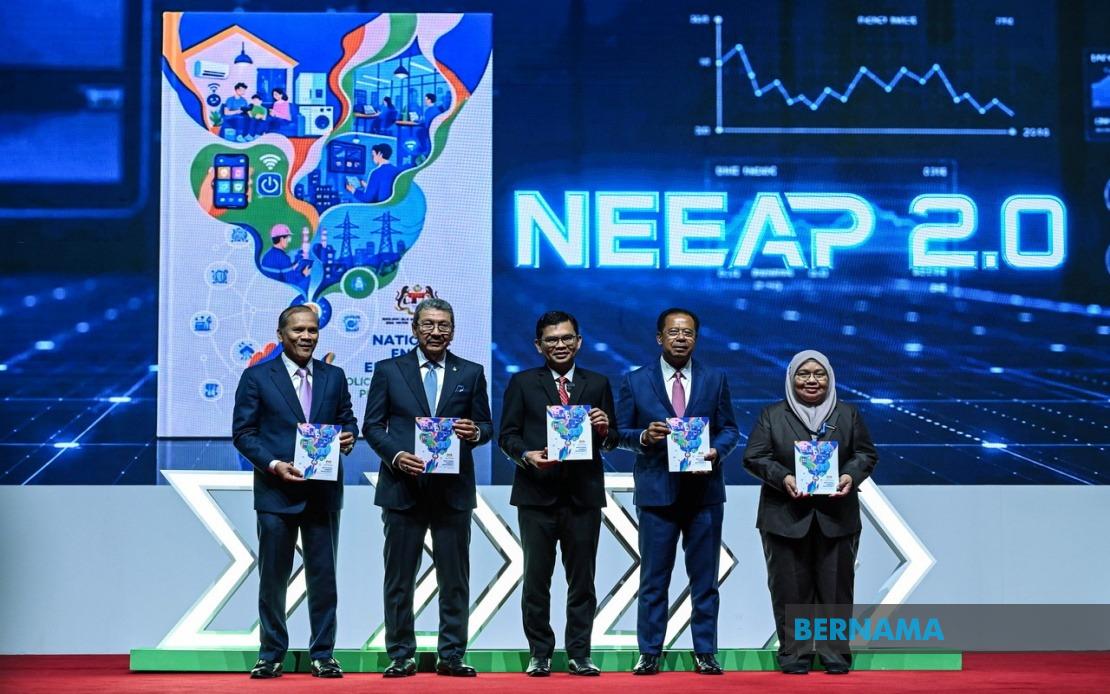
Malaysia has unveiled an ambitious decade-long energy efficiency roadmap designed to reshape how the nation consumes electricity and heat across its industrial, commercial and residential sectors. The National Energy Efficiency Policy and Action Plan 2026-2035, known as NEEAP 2.0, was launched today by the Ministry of Energy Transition and Water Transformation at the 7th International Sustainable Energy Summit in Putrajaya. The initiative represents a comprehensive continuation of Malaysia's previous efficiency efforts, scaling ambition to drive the country toward its net-zero emissions target by 2050.
The economic case for NEEAP 2.0 is compelling for policymakers and private investors alike. Over the next decade, the programme is projected to unlock RM85 billion in net energy savings—a figure that reflects the accumulated financial benefit of reduced consumption across all sectors of the economy. These savings emerge not merely as accounting abstractions but as real reductions in energy bills for households, factories and commercial establishments. Simultaneously, the plan is expected to attract RM36 billion in private sector investment, signalling confidence among businesses that energy efficiency represents a profitable opportunity rather than merely an environmental obligation. This dual dynamic of cost reduction and investment attraction could catalyse a sustainable business ecosystem around efficient technologies and practices.
Job creation stands as a frequently overlooked dimension of energy policy, yet NEEAP 2.0 anticipates the generation of approximately 29,000 new employment opportunities. These positions are likely to span multiple disciplines—from engineers designing efficient systems to auditors assessing building performance, installers implementing upgrades, and technicians maintaining optimised equipment. For a nation seeking to diversify its economy beyond hydrocarbon dependency, such employment represents tangible pathways into green sectors. The distribution of these opportunities across industrial, commercial and domestic spheres means that job benefits could extend beyond urban centres to reach smaller towns and rural areas undertaking efficiency retrofits.
From an environmental perspective, NEEAP 2.0 targets an 11.6 per cent improvement in electricity and thermal energy efficiency compared with a scenario where no new policies were implemented. This metric matters because it isolates the genuine impact of the plan from background efficiency gains that might occur anyway through technological evolution. The cumulative energy savings envisioned—815,000 terajoules—translates into a quantity so vast that it would sustain Peninsular Malaysia's entire electricity requirements for nearly two years. To contextualise this further, the carbon emissions reductions expected from the plan total 26 million tonnes of carbon dioxide equivalent by 2035, positioning Malaysia among the serious actors in Southeast Asia's decarbonisation efforts.
The timing of NEEAP 2.0 aligns strategically with Malaysia MADANI, the government's overarching development framework emphasising prosperity, well-being and sustainability. Energy efficiency sits naturally within this vision because it addresses multiple objectives simultaneously: it reduces household and business energy costs, thereby improving affordability and competitiveness; it diminishes environmental degradation that threatens long-term prosperity; and it creates employment that enhances citizen well-being. By embedding energy efficiency into this broader national narrative, the government signals that climate action and economic development are complementary rather than competing priorities.
Sectorally, NEEAP 2.0 focuses on high-impact domains where efficiency investments yield maximum returns. Industrial facilities consume roughly 40 per cent of Malaysia's electricity, making manufacturing plants prime targets for efficiency intervention. Upgrading motor systems, optimising process heat recovery and implementing building energy management systems in factories can yield payback periods of three to five years while reducing operational costs. The commercial sector—encompassing office towers, shopping centres, hotels and hospitals—offers similarly rich opportunities through LED lighting retrofits, air-conditioning optimisation and smart building controls. Residential efficiency, though more dispersed across millions of homes, represents the largest consumer base and offers significant aggregate savings through appliance standards and building codes.
The policy's success will depend substantially on implementation mechanisms not detailed in today's announcement but critical for realisation. Financing mechanisms—whether through dedicated green banks, concessional credit from development institutions, or performance-based contracting—will determine whether identified savings translate into actual investments. Technical capacity building ensures that engineers, contractors and facility managers possess the expertise to identify, design and execute efficiency projects competently. Regulatory frameworks, including building energy codes and appliance labelling requirements, establish the baseline standards against which efficiency improvements are measured. For Malaysian readers, understanding these implementation dimensions is essential because policy ambitions frequently exceed execution capacity in developing economies.
Regionally, Malaysia's NEEAP 2.0 carries significance extending beyond national borders. As ASEAN's third-largest economy and a crucial energy player in Southeast Asia, Malaysia's efficiency policies influence regional energy markets, technology adoption patterns and climate commitments. Other ASEAN nations facing similar energy demand growth and climate pressures observe Malaysian policy experiments carefully. Should NEEAP 2.0 deliver on its projections, it could establish a replicable model that neighbouring countries adapt to their circumstances. Conversely, implementation shortfalls would suggest that achieving ambitious efficiency targets in developing regional contexts remains elusive.
International climate finance and technology transfer mechanisms may support NEEAP 2.0 implementation. Multilateral development banks, bilateral donors and Green Climate Fund resources could potentially fund portions of the programme, particularly components benefiting low-income communities or supporting vulnerable sectors. Access to international efficiency standards, best practices and advanced technologies—from smart metering systems to industrial efficiency solutions—can accelerate progress beyond what domestic innovation alone would achieve. Malaysia's engagement with these international mechanisms, whether through PETRA's partnerships or bilateral relationships, will substantially influence programme ambition and realism.
The pathway from announcement to realisation presents both opportunities and challenges characteristic of major Malaysian policy initiatives. Stakeholder alignment remains critical—industries must view efficiency investments as strategically sound, financial institutions must develop appropriate lending products, and consumer awareness must shift to value efficiency alongside other property or equipment attributes. Monitoring and verification frameworks must robustly track progress against the 11.6 per cent efficiency improvement target, ensuring that claimed savings represent genuine reductions rather than statistical artefacts. Political continuity matters significantly because energy policy consistency across electoral cycles allows long-term investments to mature and yield expected returns.
For Malaysian businesses contemplating their energy strategies, NEEAP 2.0 signals that efficiency will increasingly shape the competitive landscape. Early adopters of efficient technologies may gain cost advantages over slower competitors. Supply chains increasingly incorporate energy efficiency requirements, making it imperative for Malaysian manufacturers to meet international standards. Regulatory requirements are likely to tighten as NEEAP 2.0 targets propagate into building codes, appliance standards and industrial regulations. Strategic alignment with the policy's direction—rather than reactive compliance—positions enterprises to capture efficiency investments, attract green finance, and participate in the 29,000 emerging employment opportunities.
Ultimately, NEEAP 2.0 represents Malaysia's attempt to decouple economic growth from energy consumption growth—a critical challenge for developing nations pursuing climate commitments without sacrificing development. The RM85 billion in savings and 29,000 jobs suggest that this decoupling can generate prosperity rather than impose sacrifice. Whether implementation matches ambition will determine whether Malaysia establishes a genuine precedent for sustainable development in Southeast Asia or whether NEEAP 2.0 becomes another well-intentioned policy whose transformative potential remains unrealised.

