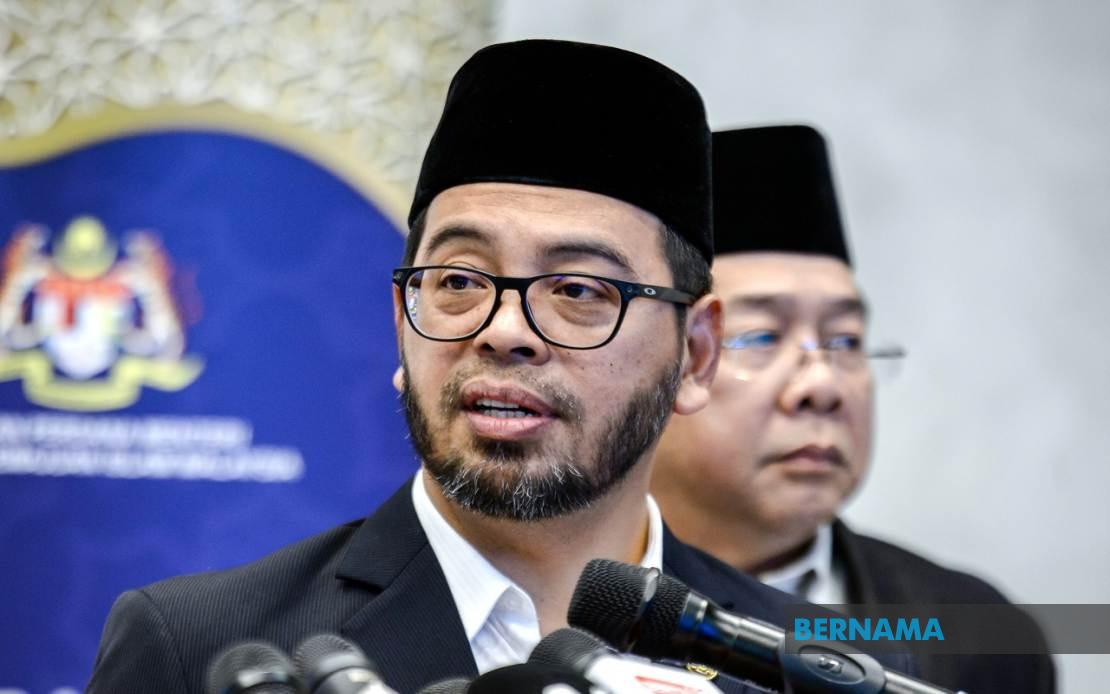
Malaysia's Religious Affairs Minister has issued a forceful condemnation of the detention of the Grand Mufti of Jerusalem and Al-Aqsa Mosque, Sheikh Muhammad Hussein, following his arrest after last Friday prayers. Senator Dr Zulkifli Hasan, serving in the Prime Minister's Department overseeing religious affairs, characterised the incident as a serious breach of religious freedom and an affront to the sanctity of one of Islam's most revered sites. Although the Grand Mufti was later released, the minister's statement underscores Kuala Lumpur's deepening concern over developments affecting Palestinians and Muslim-majority regions under international scrutiny.
The detention represents more than a routine arrest—it occurred at Al-Aqsa Mosque while the religious leader was fulfilling his official duties, a context that elevates the incident within Islamic discourse and regional politics. For Malaysia, which positions itself as a leading voice for Muslim causes within multilateral forums, the timing and nature of the detention strike at broader questions about religious liberty and the protection of spiritual leaders in contested territories. Dr Zulkifli's intervention signals that Kuala Lumpur will not remain silent when incidents undermine what it views as fundamental protections under international humanitarian standards.
Central to Malaysia's response is an appeal to global institutions to intervene decisively. The minister specifically called upon the United Nations and the Organisation of Islamic Cooperation to ensure that the right to worship, the safety of religious leaders, and the institutional integrity of Al-Aqsa Mosque receive proper protection within existing international legal frameworks. This dual appeal—to both secular and Islamic international bodies—reflects Malaysia's hybrid diplomatic approach, appealing simultaneously to universal human rights principles and to the collective interests of the Islamic world. The strategy positions Malaysia as a bridge between Western-centric international law and Islamic solidarity networks.
Beyond immediate condemnation, Dr Zulkifli reaffirmed Malaysia's steadfast solidarity with the Palestinian people, framing support as extending to all efforts advancing a just resolution to the underlying conflict. The statement commits Malaysia to sustained advocacy for Palestinian rights and the elimination of what the minister describes as systemic oppression. This commitment reflects long-standing Malaysian policy, rooted partly in the nation's own post-colonial experience and its constitutional status as a Muslim-majority democracy invested in championing Muslim causes globally. For Malaysian policymakers, Palestinian advocacy remains a core element of national identity and foreign policy positioning.
In a related but distinct initiative, the minister pivoted to commemorate the 31st anniversary of the Srebrenica massacre in Bosnia and Herzegovina, a historical tragedy that killed more than 8,000 Bosniak Muslim men and boys across several days in July 1995. Following the collapse of the UN-declared safe area, Bosnian Serb forces executed thousands of civilians in what remains one of Europe's deadliest atrocities since World War II. More than 1,000 victims remain unaccounted for, with identification and burial efforts continuing across three decades, a reminder of how communal trauma persists across generations and borders.
Malaysia's connection to Srebrenica carries particular historical significance, reflecting the nation's active role in responding to Muslim suffering worldwide. Dr Zulkifli highlighted the foundational diplomatic efforts of former Prime Minister Tun Dr Mahathir Mohamad and current Prime Minister Datuk Seri Anwar Ibrahim in championing Bosnian Muslims' causes within international forums. Additionally, the Muslim Youth Movement of Malaysia (ABIM) undertook early humanitarian initiatives that positioned Malaysia among the first Muslim nations to mobilise assistance for Bosnian refugees and survivors. This legacy underscores how Malaysia has historically extended beyond symbolic solidarity to material support and institutional engagement.
Malaysia's military commitment to the Bosnian crisis further demonstrates the depth of national involvement. Between 1993 and 1998, Malaysia deployed 10,514 officers and personnel from the Malaysian Armed Forces to serve within UN peacekeeping operations, operating under the Malaysian Battalion (MALBAT) and later the Implementation Force (IFOR). These forces provided security, monitoring, and stabilisation efforts across a war-torn region, representing one of Malaysia's largest overseas military deployments in support of peacekeeping. The contribution reflected both humanitarian conviction and Malaysia's determination to influence the resolution of Muslim-majority region conflicts through direct participation in international peacekeeping architecture.
Beyond military deployment, Malaysia extended educational pathways to Bosnian refugees through institutional partnerships, particularly the International Islamic University Malaysia (IIUM). By offering educational opportunities to Bosnian youth and survivors, Malaysia invested in long-term recovery and integration, recognising that post-conflict reconstruction extends beyond security to encompassing human development and cultural continuity. This multi-dimensional response—diplomatic advocacy, humanitarian relief, military peacekeeping, and educational opportunity—illustrates how Malaysian policy addresses Muslim crises through interconnected mechanisms.
Dr Zulkifli's call for Malaysian youth to reflect upon Srebrenica positions the historical tragedy as a pedagogical tool for contemporary society. The minister urged young Malaysians to extract lessons about rejecting hatred, division, and oppression—implicit framing that extends beyond Bosnia to contemporary global conditions. In the context of escalating regional tensions and polarisation, invoking Srebrenica serves to remind younger generations of the catastrophic consequences of unchecked communal violence and ethnic cleansing. The invocation carries additional resonance within Malaysia itself, a multi-ethnic and multi-religious nation where inter-community harmony remains foundational to national stability.
The minister's prayer for the Srebrenica martyrs and surviving families, concluding with the invocation "Allahimanet Bosna" (May Allah protect Bosnia), signals the spiritual and emotional dimensions of Malaysia's engagement with distant Muslim traumas. This ritualistic closure transforms the commemoration from a political statement into an act of collective remembrance within Islamic tradition, embedding Malaysian identity within a broader Muslim consciousness spanning continents. The phrase elevates Bosnia from a geographic entity to a symbolic space within Islamic collective memory, binding Malaysian Muslims to their coreligionists' historical suffering.
Collectively, the minister's statements reflect Malaysia's self-positioning as a guardian of Muslim interests and a custodian of Muslim historical memory within international affairs. Whether addressing immediate crises like the detention of the Jerusalem Grand Mufti or commemorating historical atrocities like Srebrenica, Malaysia articulates a consistent philosophy that Muslim rights, religious freedom, and collective dignity require active advocacy at global forums. For Southeast Asian readers, these statements underscore how regional powers project influence and values through multilateral engagement, using humanitarian and religious concerns as diplomatic leverage while genuinely reflecting constituencies invested in Muslim causes worldwide.

