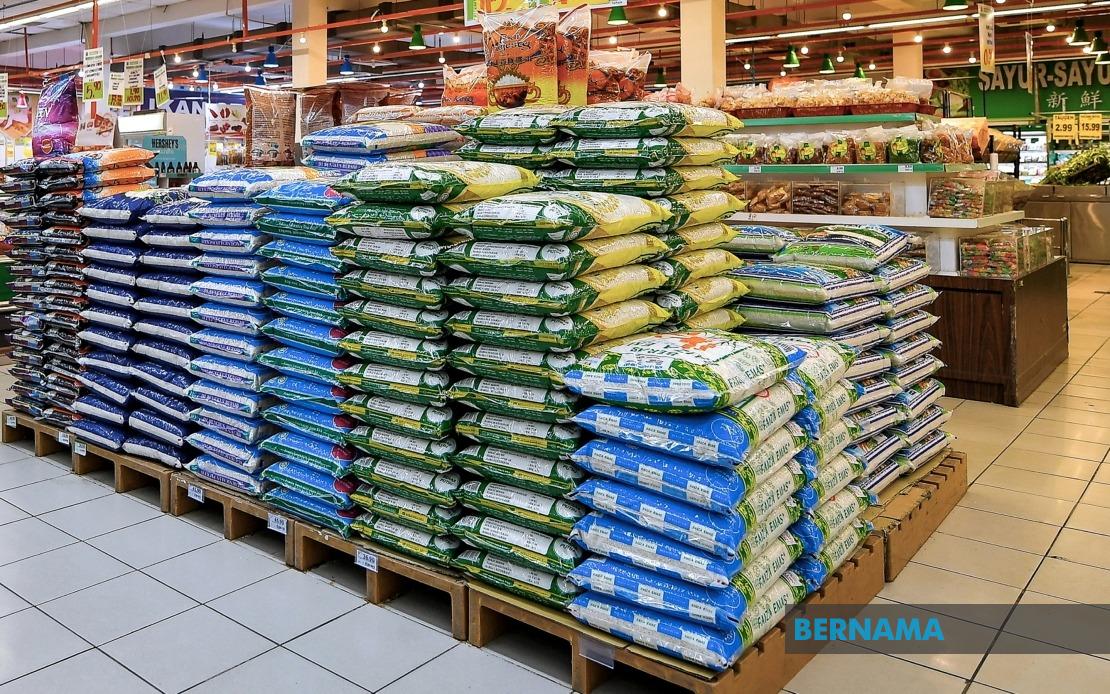
Malaysia's staple food security framework remains robust, with government assurances that domestic rice reserves can sustain the nation's consumption for half a year ahead. Economy Minister Akmal Nasrullah Mohd Nasir delivered the reassurance during a briefing on global supply chain pressures, emphasizing that even as international markets face significant disruption, the country's fundamental food stocks are adequately positioned.
The minister's statement carries particular weight given the turbulent commodity markets that have defined the past eighteen months. Global rice prices have experienced considerable volatility, and several Asian nations have implemented export restrictions to safeguard domestic supplies. By contrast, Malaysia's approach centres on transparent communication about reserves whilst maintaining price discipline that protects household budgets from shock increases. The government's explicit commitment to freeze Local White Rice pricing represents a deliberate policy choice to shield consumers—particularly lower-income households for whom rice constitutes a significant portion of food expenditure.
These assurances emerged from discussions held at the National Economic Action Council, a high-level coordination body chaired by Prime Minister Datuk Seri Anwar Ibrahim. The council's deliberations reflect growing awareness that food security transcends production statistics; it requires integrated strategies spanning reserves management, price controls, farmer support, and contingency planning. Malaysia's six-month buffer provides a comfortable window to navigate supply disruptions whilst seeking alternative sourcing arrangements or boosting domestic production to replenish stocks.
Parallel to these supply-side measures, the government has channelled direct financial support to agricultural producers facing mounting pressures. The Paddy Farmers Plowing Incentive distributed RM45.98 million across 118,908 paddy farmers in Peninsular Malaysia, acknowledging the economic squeeze affecting rural communities. This dual approach—securing consumer prices whilst supplementing farmer incomes—reflects an understanding that agricultural sustainability requires both immediate relief and longer-term viability. Climate variability has intensified production uncertainties, whilst input costs from fertiliser to fuel have climbed substantially, compressing margins for cultivators.
The timing of this intervention is strategically significant for Malaysia's agricultural sector. Monsoon patterns have grown increasingly unpredictable, and several recent seasons delivered suboptimal yields. By providing direct income support during challenging periods, the government aims to prevent farm abandonment and maintain domestic production capacity. Should global rice markets tighten further, sustained local production becomes invaluable as alternative suppliers impose export quotas or price premiums that would amplify costs throughout the supply chain.
For Malaysian consumers, these policy mechanisms translate to practical price stability at a time when regional inflation pressures have mounted. Neighbouring economies have experienced food price increases of five to fifteen per cent annually over recent years, sometimes stretching household budgets severely. By anchoring Local White Rice pricing, Malaysia's government has effectively ring-fenced a critical caloric staple from inflationary pressures, providing predictability for household budgeting and reducing downward pressure on wages elsewhere in the economy.
The six-month buffer stock figure warrants closer examination regarding its implications. This represents sufficient inventory to bridge typical seasonal gaps and accommodate moderate supply disruptions without necessitating emergency purchases at inflated international prices. However, it also signals that the government views this as a prudent reserve level rather than indefinite insurance against catastrophic global disruptions. Should international supply chains deteriorate more severely—for instance, through conflict affecting major producing nations—Malaysia would need to activate additional measures including further incentivisation of domestic production, potential imports from trusted partners, and potentially adjusted rationing protocols.
Regional context amplifies the relevance of Malaysia's supply security posture. Throughout Southeast Asia, rice sufficiency remains politically and economically central, with governments acutely sensitive to any domestic supply disruptions. Thailand, Vietnam, and Cambodia have all employed export controls to manage domestic availability. Malaysia's combination of adequate reserves and price controls positions it relatively favourably within this regional landscape, reducing vulnerability to supplier export restrictions that have periodically affected other importers.
The minister's emphasis on insulating the public from price volatility also reflects demographic and socioeconomic realities. Malaysia's growing urban population and rising living costs mean that food price spikes generate immediate political pressure and can trigger broader inflationary expectations that complicate macroeconomic management. By maintaining rice price discipline, policymakers attempt to anchor consumer confidence and prevent second-round inflation effects across wider baskets of goods and services.
Looking forward, the government's strategy appears oriented toward consolidating supply security through three reinforcing elements: maintaining strategic reserves at prudent levels, supporting domestic agricultural productivity through targeted incentives, and utilising price controls as a social stabiliser. This tripartite approach acknowledges that food security is simultaneously an agricultural challenge, a fiscal management issue, and a social contract commitment to affordable living standards for citizens across income categories. The willingness to deploy RM45.98 million in farmer support demonstrates recognition that consumer price stability ultimately depends upon producer viability, creating a sustainable rather than merely temporary policy equilibrium.

