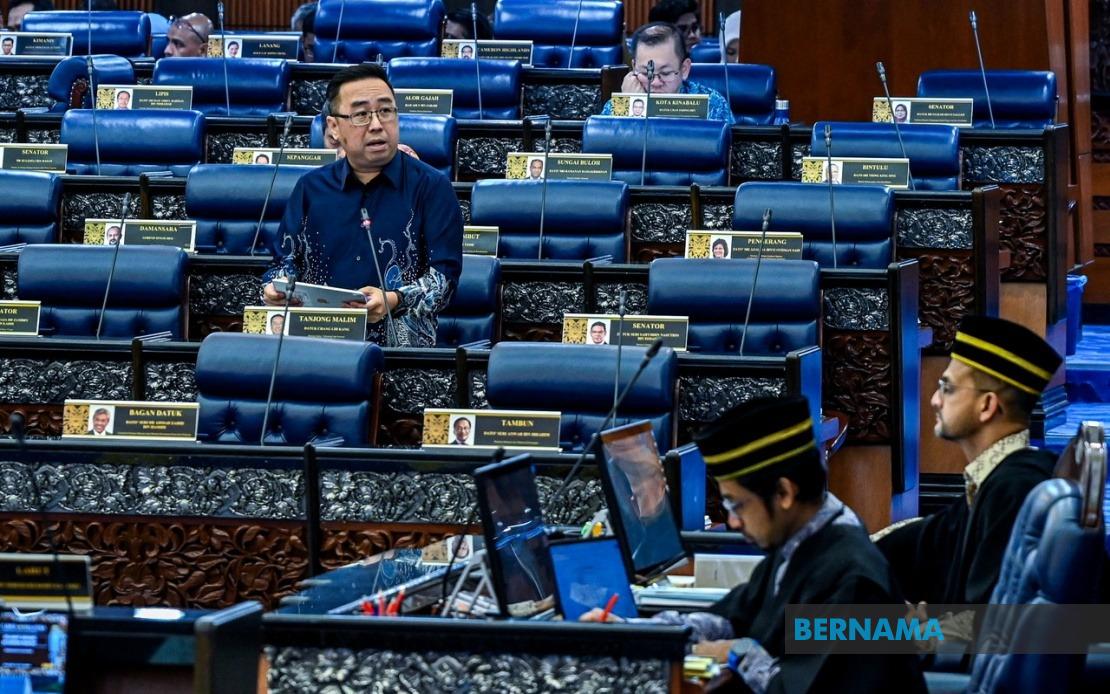
Malaysia is embarking on an ambitious initiative to bring cutting-edge semiconductor packaging technology to market within the next two years, marking a strategic pivot towards higher-value manufacturing in a sector increasingly vital to global supply chains. Science, Technology and Innovation Minister Datuk Chang Lih Kang confirmed in parliament that the government has allocated RM185 million through the Malaysia Science Endowment (MSE) to propel locally-developed advanced packaging technology from research phase to full commercial deployment, representing one of the most significant technology development bids the country has undertaken in recent years.
The project structure reflects a deliberate approach to building sustainable industrial capacity rather than creating government-dependent enterprises. A consortium of five local companies working alongside government institutions forms the backbone of this pilot initiative, tasked with strengthening Malaysia's position within the increasingly competitive global semiconductor supply chain. This collaborative model acknowledges the reality that no single entity—whether government or private—possesses all the expertise and resources required to successfully transition lab innovations into market-ready products at scale.
The RM185 million allocation functions as a focused grant mechanism designed to elevate what technologists call the Technology Readiness Level, or TRL, from its current stage of TRL 5 to the commercial threshold of TRL 9. This progression, while sounding technical, represents the journey from proving that a concept works in controlled laboratory settings to demonstrating that the same technology can function reliably and profitably in real-world industrial environments. The distinction matters enormously for nations seeking to climb manufacturing value chains, as many promising innovations languish in research institutions precisely because the funding and expertise gap between laboratory success and commercial viability proves insurmountable.
The two-year capacity-building window serves dual purposes within this strategy. Most visibly, it provides time and resources for participating Malaysian firms to develop the operational expertise, quality control systems, and workforce capabilities that advanced semiconductor packaging demands—skills that represent years of accumulated technical knowledge. Less obviously but equally critical, it creates an exit strategy for government involvement, preventing the creation of industries that become perpetually reliant on subsidies and protected markets. Minister Chang explicitly stated that after the TRL 9 threshold is reached, responsibility transfers entirely to industry players, who must then secure their own customers and capital.
This approach reflects lessons learned across East Asia, where countries have observed that industries weaned too gently from government support often struggle to compete internationally. By establishing a clear timeline and success metric, Malaysia signals to the participating companies that public funding functions as venture capital, not indefinite welfare. The consortium structure further incentivises genuine competitiveness, as member companies must cooperate sufficiently to develop shared capabilities while competing to establish their own market positions post-commercialisation.
The strategic importance of semiconductor packaging extends well beyond manufacturing statistics. Advanced packaging represents a specialised segment of the semiconductor industry where Malaysia can realistically build genuine technological leadership, rather than chasing dominance in commodity chip production where established players possess insurmountable advantages. Packaging technology directly enables the high-performance computing, artificial intelligence systems, data centre infrastructure, and quantum computing platforms that will define the next generation of technological capability. By securing competency in this domain, Malaysia positions itself as a critical node within value chains that multinational technology companies cannot afford to leave vulnerable to geopolitical disruption.
The applications ecosystem driving demand for this technology spans industries increasingly central to Malaysia's economic future. Smart automotive technologies—particularly autonomous driving systems and vehicle-to-infrastructure communications—require packaging solutions that can reliably manage extreme temperature fluctuations and electromagnetic interference. Data centre expansion, particularly the hyperscale facilities supporting cloud computing and AI training, depends on advanced packaging to manage power consumption and thermal density. Fifth-generation wireless networks and emerging quantum computing platforms similarly depend on packaging innovations that Malaysian companies could eventually supply to global markets.
What distinguishes Malaysia's approach from previous technology development initiatives is the explicit focus on indigenous intellectual property creation. Rather than seeking to become a manufacturing hub for designs created elsewhere, the MSE programme positions Malaysia as a knowledge originator. Success would mean that Malaysian engineers and companies hold patents, understand core principles deeply, and possess the flexibility to adapt technology to different applications and markets. This intellectual capital proves far more resilient and valuable than manufacturing contracts, which can migrate elsewhere as labour costs shift or geopolitical circumstances change.
The pilot's five-company consortium structure suggests careful selection of participants with complementary capabilities, though public details remain sparse. Likely considerations included companies with existing semiconductor sector experience, demonstration of quality management systems, technical depth in relevant engineering disciplines, and sufficient financial stability to survive the transition period and invest in capital equipment and workforce training. The consortium approach also permits cost-sharing and reduces the burden on any single company, increasing the likelihood that participants remain viable through the two-year development phase.
For Malaysia's broader manufacturing ecosystem, this initiative signals a recognition that the country's future prosperity depends less on competing for volume-based, low-margin production and more on developing specialised technical capabilities within high-value sectors. As labour costs in Malaysia continue upward and automation reduces the competitive advantage of low wages, capturing segments of the semiconductor value chain where advanced capabilities matter represents logical strategic positioning. Neighbouring countries, particularly Thailand and Vietnam, pursue similar strategies in different sectors, suggesting that Southeast Asian manufacturers are increasingly competing on technological sophistication rather than cost alone.
The government's role in providing initial capital and creating the institutional framework reflects a pragmatic acceptance that markets alone sometimes undersupply investment in technologies with long development horizons and substantial capital requirements. Semiconductor packaging technology exhibits precisely these characteristics: expensive to develop, requiring years of refinement, and generating network effects where multiple suppliers operating at scale reduces costs for all participants. Without catalytic government investment, Malaysia would likely remain a consumer of packaging technology rather than a developer, perpetually dependent on imported solutions and external expertise.
International precedents provide both encouragement and cautionary tales. South Korea's systematic development of semiconductor capabilities, beginning with government-supported conglomerates and progressively opening markets as domestic companies matured, created a globally competitive sector. Taiwan's semiconductor industry similarly benefited from strategic government intervention in its early phases. Conversely, numerous countries invested in semiconductor initiatives that failed to achieve sustainable commercialisation, often because government support proved temporary, markets changed faster than technology could adapt, or participating companies lacked sufficient technical foundation to execute effectively.
The two-year timeline carries implicit pressure. Advanced packaging technology exists globally, with established players continuously improving their capabilities. Malaysian entrants must progress rapidly from current capabilities to competitive positioning, requiring excellent execution, adequate funding release according to milestones, and realistic assessment of capabilities and market opportunities. Success would represent a meaningful achievement for Malaysian technological ambitions; failure would validate sceptics who argue that technology leapfrogging exceeds Malaysia's current institutional capabilities.

