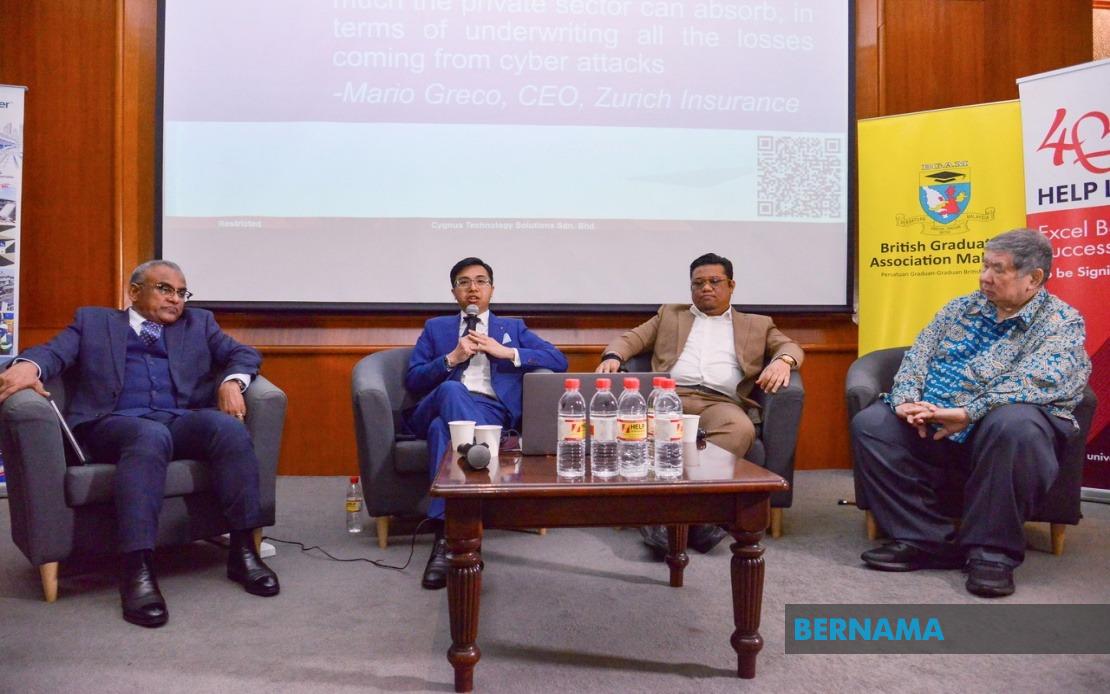
Malaysia's scam epidemic has reached alarming proportions, with authorities recording more than 66,000 online fraud cases that collectively drained approximately RM2.97 billion from victims last year. The scale of the crisis underscores how criminal operations have evolved far beyond opportunistic cheating into organised, technology-enabled enterprises that threaten individual savings, family finances and corporate stability across the nation. Speaking at a scam awareness forum in Kuala Lumpur, Datuk Kamarudin Md Ali, an exco member of the Malaysia Crime Prevention Foundation and president of the British Graduates Association Malaysia, characterised the problem as a transformation from isolated incidents into a systemic national security challenge demanding urgent collective action.
The sophistication of modern scam operations represents a fundamental shift in how cybercriminals operate. Rather than relying on crude deception tactics, syndicates now leverage artificial intelligence, deepfake technology and psychological manipulation to craft convincing fraud schemes that defeat even vigilant victims. The exploitation of social engineering techniques—manipulating human psychology rather than breaking computer defences—has proven devastatingly effective. This evolution reflects how criminal enterprises have adapted to technological advancement, weaponising the same digital tools that legitimate businesses and individuals rely upon daily. The coordination among international scam networks, particularly those operating across Southeast Asia, has created a criminal infrastructure of unprecedented reach and capability.
Regional security experts paint an even more troubling picture. Datuk Seri Ramli Mohamed Yoosuf, former director of Bukit Aman's Commercial Crime Investigation Department, warned that Southeast Asia has become the global epicentre of commercial crime. Scam losses across the region in 2025 are projected between USD88 billion and USD114 billion, with organised criminal compounds in Myanmar, Cambodia, Laos and the Philippines generating approximately USD40 billion annually. These compounds exploit trafficked labour from over 80 countries, creating sprawling criminal operations that function almost like legitimate businesses, complete with hierarchy, specialisation and technological infrastructure. The scale suggests that scam rings represent one of the most lucrative criminal enterprises in the region, rivalling or surpassing traditional organised crime activities.
Malaysia's position within this regional criminal ecosystem places the nation at heightened risk. The country's advanced digital infrastructure, relatively high internet penetration and educated population make it attractive both as a target market for scams and as a source of technical talent that criminals can exploit. Malaysian victims, often assumed to be technologically savvy, may paradoxically be more vulnerable to sophisticated schemes that bypass conventional security awareness. The financial losses translate directly into economic drag—RM2.97 billion represents resources that could have been invested in business expansion, education or consumption, instead flowing to criminal networks likely laundered through cryptocurrency channels and corrupt financial institutions.
Criminal syndicates now employ artificial intelligence and deepfake technology as primary tools, dramatically elevating the effectiveness of fraud schemes. AI systems can generate convincing video or audio impersonations of trusted figures, craft personalised manipulation tactics based on target data and automate mass phishing campaigns at scale impossible for human operators. Cryptocurrency laundering provides criminals with channels to convert stolen funds into assets outside the reach of traditional financial regulation. This technological arsenal places law enforcement in a constant race to counter tactics that evolve faster than detection systems can adapt. The combination of AI, social engineering and cryptocurrency creates a near-perfect environment for large-scale theft with minimal risk of apprehension.
Prof Datuk Seri Dr Akhbar Satar, director of HELP University's Institute of Criminology and Criminal Justice, offered a crucial insight: scammers succeed because they manipulate human psychology rather than exploit computer vulnerabilities. This observation reframes the scam challenge as fundamentally a problem of integrity, critical thinking and decision-making rather than purely a technological or law enforcement issue. Corruption and scams both emerge when integrity collapses, suggesting that addressing fraud requires building a culture of ethical decision-making across society. Universities, in this framing, serve as critical institutions for developing digital literacy and ethical reasoning among graduates who will shape policy, manage institutions and influence community norms around honesty and critical evaluation of suspicious communications.
The Malaysian government has implemented structural responses to combat the crisis. The Cybersecurity Act 2024 provides updated legal frameworks for prosecuting digital crimes, while enhanced compliance with Financial Action Task Force standards aims to restrict money laundering channels. The establishment of a National Scam Response Centre represents institutional recognition that coordinated inter-agency action is essential. However, security experts acknowledge that regulatory measures alone cannot contain a problem rooted in technological sophistication, international organisation and fundamental human psychology. Law enforcement must operate within legal constraints while criminals operate across borders with minimal such restrictions, creating an inherent asymmetry that technological innovation and legal frameworks alone cannot fully overcome.
Tan Sri Dr Syed Hamid Albar, Asia e University chancellor and former Home Minister, emphasised that scam prevention demands a whole-of-society approach centred on education and public awareness. Scams no longer represent merely financial crimes but constitute a broader threat to public trust, social stability and confidence in Malaysia's digital infrastructure. An informed society proves far more resilient than one relying solely on law enforcement intervention after victimisation occurs. This perspective shifts emphasis from reactive prosecution toward proactive prevention through community education. When citizens understand manipulation tactics, recognise social engineering attempts and maintain healthy scepticism toward unsolicited digital communications, they become active defenders against fraud rather than passive victims awaiting police protection.
The international dimension of organised scam compounds adds complexity to Malaysia's defensive efforts. Criminals operating from jurisdictions with weak governance, corruption or explicit state tolerance for criminal enterprise enjoy operational security that Malaysian authorities cannot replicate. Diplomatic coordination, cross-border law enforcement cooperation and international pressure on harbouring nations become essential tools, yet progress remains slow given competing state interests and the profitable nature of scam industries for some neighbouring regimes. The USD40 billion annual output from regional compounds suggests financial incentives powerful enough to override international law enforcement cooperation in some contexts. Malaysia's response therefore requires not only domestic coordination but active engagement with regional and international partners to address the enabling conditions that allow scam syndicates to flourish.
Industry practitioners, cybersecurity professionals and academic institutions gathered at the BGAM lecture series to develop practical defences and prevention strategies. The forum covered emerging scam trends, investigative techniques, digital security practices and individual protective measures. This multi-stakeholder engagement reflects recognition that no single institution—neither government nor private sector nor education—possesses sufficient resources or expertise to address the challenge unilaterally. Financial institutions must enhance transaction monitoring and customer verification. Technology providers must develop AI systems capable of detecting deepfakes and suspicious patterns. Educational institutions must integrate digital literacy into curricula. Media organisations must promote critical evaluation of information. Community organisations must facilitate neighbourhood-level awareness campaigns. This distributed responsibility model acknowledges both the scale of the threat and the complexity of solutions required.
The path forward demands sustained commitment to awareness, technological innovation and institutional coordination. Malaysia has demonstrated willingness to invest in legal frameworks, establish response centres and convene stakeholder coalitions—important steps that signal serious intent. However, scam losses continue rising as criminal syndicates evolve tactics faster than defensive measures adapt. The challenge requires viewing scam prevention not as a problem to be solved but as an ongoing strategic priority requiring continuous adaptation, adequate resourcing and cultural emphasis on digital literacy and critical thinking. For Malaysian citizens, businesses and institutions, the recognition that scams represent a persistent threat worthy of sustained attention and cautious digital behaviour offers the most practical protection available.

