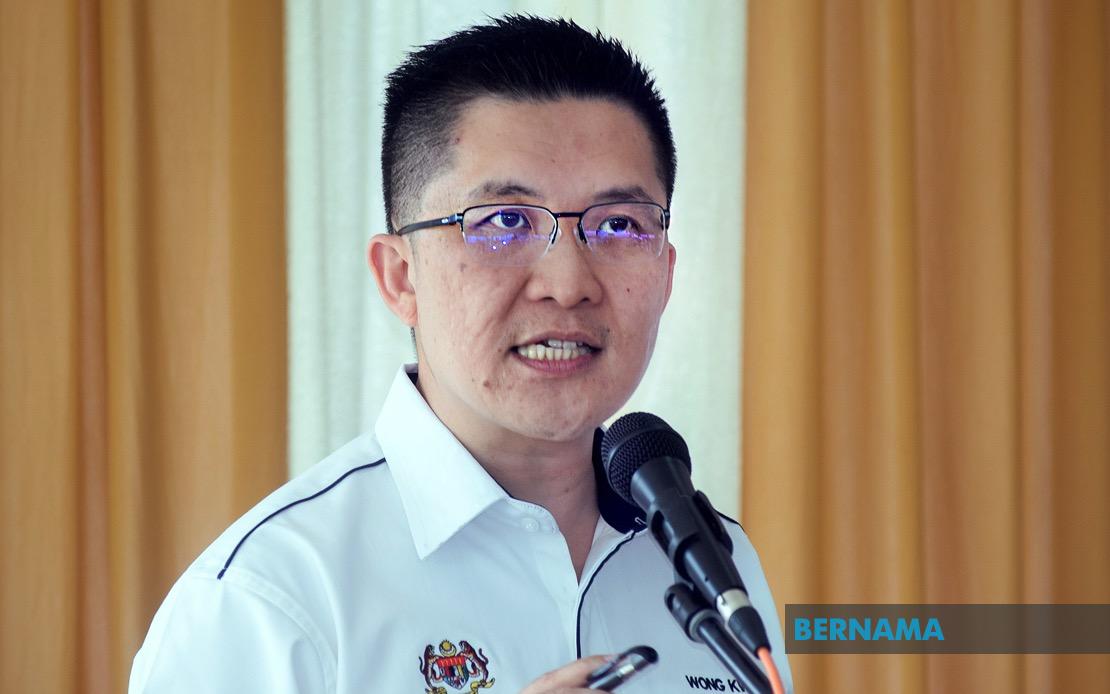
The Tamil-medium education system in Malaysia continues to serve a significant student population, with 528 Tamil national-type schools (SJKT) currently operating across the country and collectively enroling 78,501 pupils as of the end of May 2026. Deputy Education Minister Wong Kah Woh disclosed these figures during a parliamentary session, highlighting the ongoing relevance of Tamil language education within Malaysia's diverse schooling landscape. The nationwide network represents a substantial institutional commitment to preserving and promoting Tamil as a medium of instruction, a cornerstone of the country's multicultural education framework.
Despite the breadth of the SJKT system, examination participation data reveals a gradual decline in candidates sitting for Tamil language subjects at the Sijil Pelajaran Malaysia (SPM) level. The downward trajectory is evident: 8,023 candidates registered for SPM Tamil in 2023, followed by 7,925 in 2024, 7,693 in 2025, and 7,494 registrations expected for the current year. This pattern warrants attention from education stakeholders, as it suggests shifting enrolment dynamics or changing subject preferences among Tamil-medium school students. The Ministry of Education has responded by reinforcing its commitment to sustaining Tamil language offerings across the examination system, ensuring that the subject remains a viable choice for students regardless of their school's primary medium of instruction.
Under the upcoming 2027 School Curriculum framework, the Education Ministry is pursuing a multifaceted strategy to strengthen Tamil language education. The initiative extends beyond maintaining examination availability to encompassing pedagogical enhancement and resource development. Particular emphasis has been placed on enriching Tamil literature instruction and bolstering teaching quality, recognising that curriculum modernisation requires updating both content and methodology. These efforts acknowledge that Tamil language education must evolve to meet contemporary educational standards while preserving its cultural and linguistic significance. Additionally, the ministry has clarified that students enrolled in schools without Tamil-medium instruction can still elect to sit for Tamil SPM examinations, provided they meet standard registration criteria, thereby expanding access to formal Tamil language assessment.
Johor represents a significant concentration of SJKT provision, with 71 schools serving 12,906 pupils statewide. Within Johor Bahru district alone, 15 schools operate with a combined enrolment of 7,840 students, demonstrating the district's role as a regional hub for Tamil education. Four institutions in Johor Bahru have achieved notably high enrolment figures: SJKT Taman Tun Aminah leads with 1,529 pupils, followed by SJKT Ladang Rini with 1,055, SJKT Jalan Yahya Awal with 890, and SJKT Masai with 768 students. These schools exemplify institutions with strong community demand and robust enrolment bases, yet they also underscore the uneven distribution of student populations across the SJKT network.
The Ministry of Education is actively investing in infrastructure development to accommodate growing demand at high-performing institutions and to improve overall facility standards. Two flagship projects currently underway involve SJKT Ladang Rini and SJKT Kulai Besar, each receiving RM4.3 million in funding to construct new buildings capable of accommodating an additional 200 to 300 pupils. These investments signal confidence in the continued viability of Tamil education and reflect efforts to prevent overcrowding in popular schools while maintaining quality learning environments. Such capital projects are essential for maintaining the institutional strength of the SJKT system, particularly as demographic patterns and residential development reshape student catchment areas.
Conversely, the SJKT network faces persistent challenges related to under-enrolment in certain locations, a structural problem affecting many schools nationwide. As of May 31, 2026, two schools in Johor Bahru exemplify this difficulty: SJKT Ladang Sungai Plentong and SJKT Ladang Mados both operate with fewer than 30 pupils, raising sustainability and pedagogical concerns. Rather than pursuing wholesale closures, the Ministry of Education has adopted a flexible remedial approach centred on three principal strategies. Multi-grade classroom structures, wherein students of different year levels are taught together under adapted curricula, have been implemented in 135 under-enrolled schools nationwide. Additionally, 36 SJKTs have received approval for relocation to areas with stronger demographic potential, allowing these institutions to rebuild enrolment in communities with greater demand for Tamil education. School retention is assessed against specific local needs, ensuring decisions remain contextually grounded rather than purely formulaic.
Teacher supply has improved significantly, with staffing levels now exceeding ministry requirements at both primary and secondary levels. The SJKT system requires 1,334 qualified Tamil language option teachers for primary schools, yet current staffing has reached 1,733—a surplus of 399 educators. At secondary level, the requirement stands at 584 teachers, with the actual workforce at 648, providing a buffer of 64 additional instructors. This improved ratio represents the fruit of sustained teacher training and recruitment initiatives, addressing long-standing concerns about educator availability. However, this favourable staffing position must be strategically allocated to ensure even distribution across high-performing and under-resourced institutions, preventing concentration of qualified educators in already-popular schools.
Questioning about examination grading mechanisms has prompted the ministry to clarify its assessment philosophy and procedures. The Education Ministry emphasised that SPM grade boundaries are determined through rigorous, merit-based evaluation rather than predetermined quotas or percentage targets requiring specific numbers of students to achieve particular grades. Instead, assessment panels comprising subject specialists, curriculum experts, and educational measurement professionals conduct systematic reviews of candidate performance against established competency standards and curriculum objectives. This approach aligns with international best practices employed by major examination bodies globally, lending credibility to the assessment framework. Grade boundaries may fluctuate annually based on the specific candidate cohort's performance characteristics and the technical properties of examination instruments in a given year, a practice that ensures fairness while maintaining consistency with international standards.
The transparency emphasis reflects broader concerns about public confidence in examination systems, particularly in Malaysia's increasingly competitive educational environment. Parents, educators, and policymakers require assurance that grading mechanisms operate objectively and consistently, free from political or administrative interference. The ministry's detailed explanation of procedural safeguards—involving multiple expert panels and alignment with international practices—addresses these concerns directly. This approach also acknowledges that educational assessment must evolve beyond simple percentage-based systems to incorporate sophisticated measurement methodologies that account for variation in candidate ability distributions and question difficulty across examination cycles.
For Malaysian policymakers and regional education observers, the SJKT system's trajectory reflects broader tensions between preserving minority language education and adapting to contemporary demographic and economic realities. The network's resilience—maintaining over 78,000 students across 528 institutions—demonstrates persistent community commitment to Tamil medium instruction. However, declining SPM participation rates and pockets of severe under-enrolment signal that traditional patterns of Tamil school attendance may be shifting. Future sustainability likely depends on whether ministry initiatives—infrastructure investment, curriculum modernisation, and flexible management of under-performing schools—can stabilise and gradually reverse enrolment trends. Simultaneously, ensuring equitable resource distribution and teacher quality across the entire network remains essential for maintaining educational equity within Malaysia's multicultural system.
The Education Ministry's integrated approach to SJKT development encompasses infrastructure, human resources, curriculum renewal, and responsive management of structural challenges. This comprehensive strategy recognises that supporting minority language education requires coordinated effort across multiple dimensions rather than isolated interventions. For Southeast Asian nations with similar linguistic diversity, Malaysia's SJKT framework offers instructive precedent—demonstrating both the feasibility of operating substantial minority-language school networks and the practical challenges requiring ongoing policy adaptation. As Malaysia progresses toward implementing the 2027 School Curriculum, Tamil education stakeholders will monitor whether these initiatives successfully arrest the declining participation trend and reinvigorate community engagement with formal Tamil language learning.