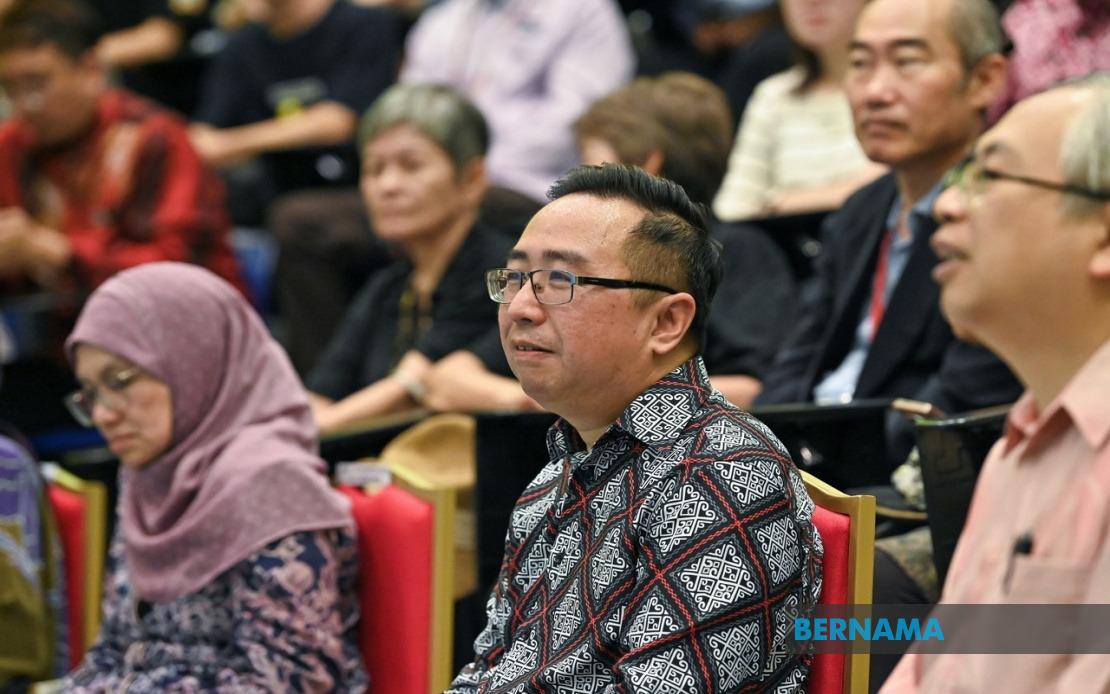
Science and technology students in Malaysia need not harbour concerns about their career prospects upon graduation, as the country experiences a significant wave of high-tech capital inflows that are generating substantial demand for skilled professionals. This reassurance came from Science, Technology and Innovation Minister Datuk Chang Lih Kang, who underscored that the employment landscape for graduates in these fields remains exceptionally favourable. Speaking at the 20th Malaysia Festival of the Minds held at Universiti Tunku Abdul Rahman (UTAR) Kampar Campus, he emphasised that the gap between available positions and qualified candidates in the science and technology sectors has become increasingly pronounced, positioning new graduates in an advantageous negotiating position.
The minister's confidence stems from observable market dynamics within Malaysia's technology sector. The nation is witnessing a notable acceleration in high-tech, high-value capital commitments from both domestic and foreign investors, creating a structural imbalance whereby skilled talent requirements significantly exceed current supply levels. This mismatch represents a fundamental shift in Malaysia's labour market, where university graduates with STEM qualifications find themselves in the enviable position of having multiple employment options. The private sector's aggressive expansion into advanced technological domains has created vacancies across multiple specialisations, from semiconductor manufacturing to artificial intelligence development, software engineering, and biotechnology research.
Central to Datuk Chang's messaging is a direct effort to counter widespread anxieties about technological disruption and automation. Public concern that artificial intelligence and advanced machinery will displace human workers remains pervasive, particularly among students considering their educational pathways. The ministry has recognised this psychological barrier and deliberately designed the Malaysia Festival of the Minds as an engagement platform to communicate its perspective directly to the student community. Rather than permitting misinformation or speculation to dominate student discourse, MOSTI chose to initiate proactive dialogue, explaining how technological advancement fundamentally reshapes rather than simply eliminates employment categories. This educational outreach strategy addresses a critical gap in public understanding about the evolving nature of work in technology-driven economies.
Government strategy in addressing Malaysia's talent pipeline involves deepening collaboration between educational institutions and industrial stakeholders. Universities are being encouraged to expand enrolment in science and technology programmes, while industry partners participate actively in curriculum development and student mentoring. This ecosystem approach recognises that talent development cannot occur in isolation within academic settings; rather, it requires alignment between what universities teach and what employers require. The government's active role in facilitating these connections demonstrates a comprehensive understanding that creating job opportunities means little unless graduates possess precisely the capabilities that employers demand. The coordination between MOSTI, universities, and private enterprises represents a deliberate policy effort to eliminate the traditional lag between skills development and market needs.
The government's commitment extends beyond rhetorical reassurance into concrete financial commitments. Datuk Chang announced that Malaysia Science Endowment has allocated RM92 million over the next two years specifically to strengthen the nation's advanced packaging technology capabilities, a critical component of the semiconductor manufacturing value chain. This substantial investment reflects recognition that certain technologies require significant capital deployment to develop competitively on a regional scale. Advanced packaging technology represents a strategic node within semiconductor production, sitting between chip design and final product assembly. By developing local capabilities in this domain, Malaysia can potentially capture greater value from semiconductor manufacturing operations and reduce dependence on foreign companies for this essential service.
Particularly noteworthy is the financing structure underlying this initiative. Rather than relying exclusively on government resources, the arrangement incorporates matching contributions from five industry partners totalling RM93 million. This hybrid funding model creates mutual investment in outcomes, ensuring that private companies possess direct financial stakes in achieving technological milestones. When industry partners commit equivalent resources to government investment, their subsequent participation in implementation and commercialisation becomes far more engaged. The RM185 million combined commitment represents a significant bet on Malaysia's capacity to develop advanced packaging capabilities within a two-year timeframe, signalling confidence among sophisticated technology companies that Malaysia possesses the foundational expertise and ecosystem required for success.
The advanced packaging technology initiative addresses a structural vulnerability in Malaysia's semiconductor sector. While the country hosts numerous semiconductor manufacturing facilities, the capacity to perform advanced packaging operations—which require sophisticated equipment and highly trained workforces—remains concentrated in specific geographic regions. Developing indigenous capability in this domain would strengthen Malaysia's positioning within regional semiconductor supply chains and provide employment for engineers, technicians, and production specialists. The initiative simultaneously serves multiple policy objectives: creating skilled employment opportunities, enhancing sectoral competitiveness, reducing technology dependence, and demonstrating Malaysia's capacity to move up the value chain within electronics manufacturing.
For students contemplating their educational choices, the convergence of strong labour demand, government investment in strategic technologies, and industry commitment creates a compelling case for STEM pursuits. The employment market for science and technology graduates reflects not temporary demand fluctuations but structural shifts driven by sustained capital inflows and technological upgrading across multiple sectors. Graduates entering the workforce over the next two to three years will encounter not saturated markets but expanding opportunities across semiconductor manufacturing, artificial intelligence, renewable energy, biotechnology, and digital infrastructure development. The challenge facing graduates will increasingly involve selecting among multiple offers rather than competing desperately for limited positions.
The positioning of this announcement within the broader context of Southeast Asian technological competition adds further significance. Regional nations including Vietnam, Thailand, and Indonesia actively compete for technology investment and talent. Malaysia's proactive communication about employment opportunities and concrete investment in strategic technologies serves a dual purpose: reassuring domestic students while simultaneously signalling to international investors that the nation possesses committed human resources. Countries demonstrating talent abundance and alignment between education systems and industry requirements attract investment more readily than those appearing to face skills shortages. The minister's public statements and the accompanying financial commitments function as signals to potential investors that Malaysia takes workforce development seriously.
While Datuk Chang expressed confidence that the two-year timeline for advancing packaging technology capabilities is achievable, he acknowledged genuine challenges exist, particularly regarding funding adequacy and technological complexity. Developing manufacturing expertise in sophisticated domains requires not merely capital deployment but access to technical knowledge, sustained talent retention, and iterative problem-solving. The RM185 million commitment, while substantial, must support equipment acquisition, facility construction, workforce training, and research activities simultaneously. The minister's candid acknowledgment of obstacles combined with maintained optimism about overcoming them suggests realistic rather than merely promotional expectations about what can be accomplished.
The broader implication of this policy direction concerns Malaysia's strategic positioning within global technology supply chains during a period of significant restructuring. Supply chain diversification, driven by geopolitical considerations and risk management imperatives, has created opportunities for nations capable of rapidly developing technological capabilities and maintaining skilled workforces. Malaysia's investments in advanced packaging technology, combined with government commitment to expanding the STEM graduate pipeline, represent calculated efforts to capture market share within these restructured supply chains. For STEM students, this means graduating into an environment where their skills address genuine economic needs rather than theoretical labour market predictions, a situation creating not merely employment but genuine career development opportunities.

