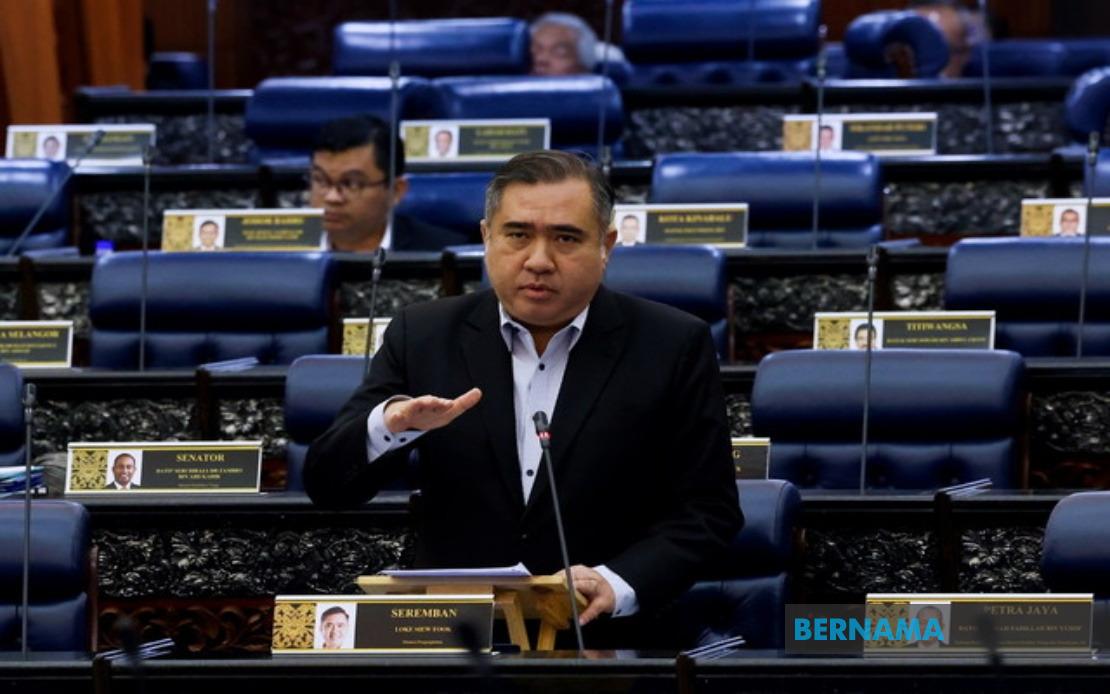
The Malaysian Transport Ministry is moving forward with legislative reforms designed to provide financial redress for victims of serious road accidents and their bereaved families. In a parliamentary address, Transport Minister Anthony Loke outlined proposals to amend the Road Transport Act 1987, creating a formal mechanism that would allow courts to mandate compensation payments from convicted offenders. This development marks a significant shift in how Malaysia's legal framework treats those responsible for fatal or catastrophic driving incidents, treating them as serious criminal acts rather than routine traffic violations.
Under the envisioned amendments, judges would gain explicit authority to impose compensation orders on individuals found guilty of the most serious driving offences covered by the act. The compensation determination would be tailored to individual circumstances, with courts weighing multiple considerations including the extent of physical harm or death caused, the financial losses sustained by victims and their dependents, and the offender's capacity to pay. This approach acknowledges that standardised penalties often fail to address the profound economic hardship visited upon families who lose breadwinners or face lifelong disability costs resulting from reckless driving.
Loke's remarks underscored the government's philosophical position that drivers who kill through dangerous behaviour deserve punishment that reflects the gravity of their actions. Those engaged in high-speed street racing or other forms of hazardous driving will no longer be processed through the standard traffic offence system but instead face criminal prosecutions matching the severity of their culpability. This recalibration responds to mounting public concern about racing culture and preventable deaths on Malaysian highways, where enforcement has historically struggled to deter persistent offenders.
The government has already advanced the Road Transport Amendment Bill 2026, which parliament approved and which introduces a dedicated offence for illegal racing through new Section 42A. The penalties are structured to escalate with repeat behaviour. First-time offenders face fines between RM2,000 and RM10,000, with possible imprisonment for up to two years. Those convicted a second or subsequent time face substantially harsher consequences: fines ranging from RM5,000 to RM20,000 combined with potential five-year prison sentences. This two-tier system aims to impose meaningful deterrence while reserving maximum punishment for habitual offenders.
A crucial innovation in the amended legislation is its ability to prosecute racing participants before any accident occurs. Previously, the system could only impose penalties after harm had materialised, leaving authorities unable to interrupt dangerous behaviour in its early stages. The revised framework empowers law enforcement to intervene during racing activities themselves, disrupting street racing operations and removing dangerous drivers from roads before they cause casualties. This preventive capacity represents a fundamental change in the authority available to police tackling this persistent problem.
Loke highlighted recent enforcement successes demonstrating the commitment to implement these tougher standards. A large-scale operation in Johor culminated in 16 arrests and the seizure of 260 motorcycles connected to illegal racing activities. These results illustrate the scale of underground racing communities and the enforcement capacity being mobilised. The government is also applying rigorous legal frameworks to high-profile cases, with the Attorney-General's Chambers directing that investigations into the tragic June 1 incident at Km27 of Jalan Renggam-Simpang Renggam in Johor—which killed five people—proceed under Section 302 of the Penal Code, the most serious homicide statute.
The minister acknowledged that enforcement action alone cannot solve the road safety crisis, which claims more than 6,000 lives annually across Malaysia. Sustainable improvements require complementary shifts in driver behaviour and public attitudes toward road safety. Educational campaigns, community engagement, and consistent messaging about the consequences of reckless driving must accompany stronger legal measures. Loke called for a cross-ministerial national strategy incorporating input from government departments, local leaders, and civil society organisations to address illegal racing as a systematic problem requiring coordinated responses.
The push for holistic road safety reflects emerging international best practice, where countries have achieved significant reductions in traffic fatalities by combining enforcement with behavioural interventions. Malaysia's announcement signals recognition that penalties alone, however severe, produce limited deterrence without simultaneous public education addressing the cultural attractions of street racing and dangerous driving. Young drivers in particular require alternative outlets for their interest in automotive performance and community identity.
Loke stressed that road safety transcends party politics and should unite legislators across the spectrum. The politicisation of traffic safety initiatives risks undermining unified implementation and inconsistent messaging to the public. This appeal comes amid broader debates about traffic fatality reduction and reflects tensions between demands for stricter enforcement and concerns about fairness in sentencing. The minister's emphasis on evidence-based policy and collaborative governance suggests a desire to depoliticise what remain polarising issues in Malaysian society.
The compensation mechanism represents meaningful progress for accident victims who currently have limited pathways to recover losses beyond civil lawsuits often unaffordable for families already devastated by tragedy. Court-ordered compensation provides a faster, more certain remedy while reinforcing the principle that causing death through dangerous driving carries severe financial consequences. For families of the five Johor victims and countless others, such reforms offer modest recompense and acknowledgment of the irreplaceable value of lives lost to preventable accidents.
The road ahead requires sustained political commitment and adequate resources for enforcement across all states and federal territories. Inconsistent implementation would undermine deterrence and suggest that consequences vary by jurisdiction. The success of these initiatives will ultimately depend on police capacity, judicial consistency, and public cooperation in reporting illegal racing activities. Malaysia's capacity to reduce traffic deaths will be tested by how effectively these legislative innovations are translated into enforcement reality over coming months and years.

