Malaysia's revamped Technical and Vocational Education and Training (TVET) 2.0 framework will undergo a comprehensive accreditation overhaul designed to embed direct recognition from major industrial employers, the Dewan Rakyat heard this week. The transformation represents a strategic pivot to synchronise vocational learning standards with real-world workplace requirements, ultimately widening employment prospects for graduates whilst tackling the persistent challenge of skills mismatch across the economy.
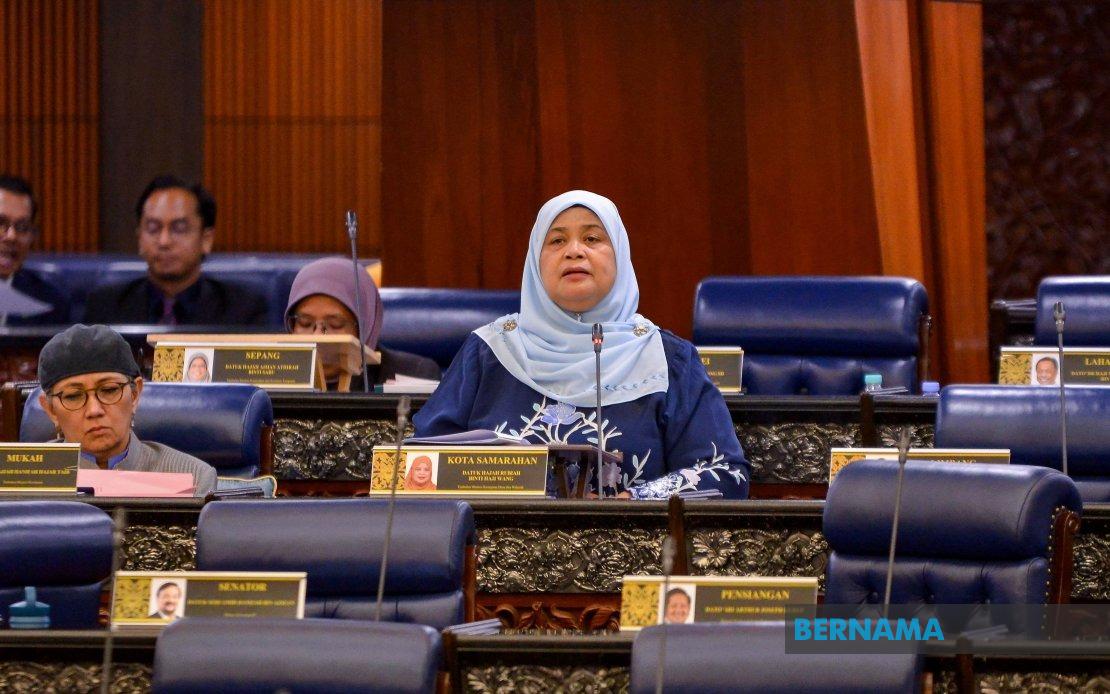
Deputy Minister of Rural and Regional Development Datuk Rubiah Wang articulated the government's vision during parliamentary proceedings, emphasising that the Ministry of Rural and Regional Development (KKDW) is repositioning vocational education as a cornerstone of Malaysia's economic development strategy. The accreditation shift signals recognition that traditional certification methods alone have failed to adequately prepare trainees for contemporary labour market demands, particularly in emerging technological sectors where employer validation carries substantial weight in hiring decisions.
Central to TVET 2.0 is the commitment to cultivate graduates who transcend conventional technical competency. Instead, the framework targets the development of multi-dimensional talent equipped not merely with proficiency in advanced technologies but also with entrepreneurial mindsets capable of generating employment and stimulating economic activity, particularly in rural regions where economic diversification remains critical. This dual emphasis reflects broader policy objectives to reduce rural-urban migration pressures whilst building sustainable local economies.
The initiative encompasses an ambitious expansion of specialised training in cutting-edge technological domains. KKDW's network of institutions is strategically distributing expertise across multiple sites to maximise training effectiveness and resource allocation. TVETMARA Petaling Jaya has been designated as the focal point for Internet of Things training, whilst TVETMARA Besut concentrates on cloud computing infrastructure, and TVETMARA Pasir Mas operates as a dedicated Building Information Modelling centre. This geographic specialisation allows institutions to develop deep sectoral expertise whilst reducing duplication and encouraging cross-institutional knowledge exchange.
The technological scope of TVET 2.0 extends across the contemporary digital landscape, encompassing artificial intelligence, cybersecurity frameworks, automation systems, robotics applications, and Industry 4.0-aligned smart manufacturing protocols. These specialisations directly correspond to workforce demands articulated by multinational corporations and domestic industrial players increasingly requiring technical talent proficient in digitalised production environments. By anchoring vocational curricula to these technologies, Malaysia positions graduates competitively within regional labour markets and global supply chains.
The German-Malaysian Institute represents a particularly significant institutional asset within this ecosystem, serving as the primary conduit for transferring advanced German manufacturing methodologies grounded in Industrial Revolution 4.0 principles. This partnership arrangement provides Malaysian vocational trainees direct exposure to world-class technical standards whilst establishing bridges to German industrial certification pathways. Such international alignment enhances graduate mobility and credential recognition across the European Union and beyond, expanding employment horizons substantially.
At the tertiary level, Universiti Kuala Lumpur has been positioned as Malaysia's leading institution for Advanced TVET, offering programmes including the Bachelor of Artificial Intelligence Technology. This pyramidal structure—spanning technical diplomas through advanced degree programmes—creates seamless progression pathways for ambitious trainees seeking to advance from foundational vocational training into specialised graduate-level study. The institutional hierarchy mirrors international best practices observed in countries with mature vocational ecosystems such as Switzerland and the Netherlands.
A particularly innovative component involves the TVET Tahfiz programme, which integrates Islamic character development and spiritual formation with digital technical skill acquisition. This approach recognises Malaysia's distinctive cultural context whilst ensuring vocational graduates possess balanced development combining ethical grounding with technological capability. The initiative addresses concerns that rapid industrialisation and technological advancement might erode traditional values, instead proposing that technical and spiritual education reinforce rather than undermine one another. Tahfiz trainees emerge equipped to compete globally whilst remaining anchored to Malaysian and Islamic values.
The accreditation transformation fundamentally restructures how TVET credentials are validated and recognised. Rather than relying exclusively on government-administered certification, the framework incorporates direct endorsement from industry leaders whose hiring decisions ultimately determine graduate employability. This market-driven validation mechanism creates powerful feedback loops encouraging vocational institutions to remain responsive to evolving workplace requirements. When employers actively participate in accreditation processes, curriculum designers gain unmediated insight into genuinely valued competencies, reducing the lag between skills taught and skills demanded.
For Malaysia's broader economic strategy, TVET 2.0 addresses a critical infrastructure challenge. As the economy transitions toward higher-value manufacturing and knowledge-intensive services, the availability of technically skilled workers becomes increasingly decisive for competitiveness. Developing nations throughout Southeast Asia face similar pressures, yet Malaysia's comprehensive institutional approach—combining public vocational colleges, specialised manufacturing institutes, and tertiary TVET pathways—positions it advantageously within regional competition for foreign direct investment in technology-intensive sectors.
The policy implications extend into human capital planning and social mobility. By positioning vocational training as a prestigious, technology-forward pathway rather than a residual option for academically underperforming students, Malaysia can broaden access to middle-class employment opportunities. International evidence consistently demonstrates that strong vocational systems reduce youth unemployment, enhance income distribution, and strengthen social cohesion by providing economically viable alternatives to traditional university pathways.
Implementing TVET 2.0 effectively requires sustained institutional investment, educator development, and employer engagement. The framework's success ultimately depends on whether Malaysia's manufacturing sector, service industries, and emerging tech companies genuinely commit to hiring TVET graduates and participating meaningfully in accreditation processes. This represents a cultural shift away from educational credentialism toward pragmatic skills-based recruitment, requiring coordination across government, educational institutions, and private enterprise to achieve transformative outcomes.

