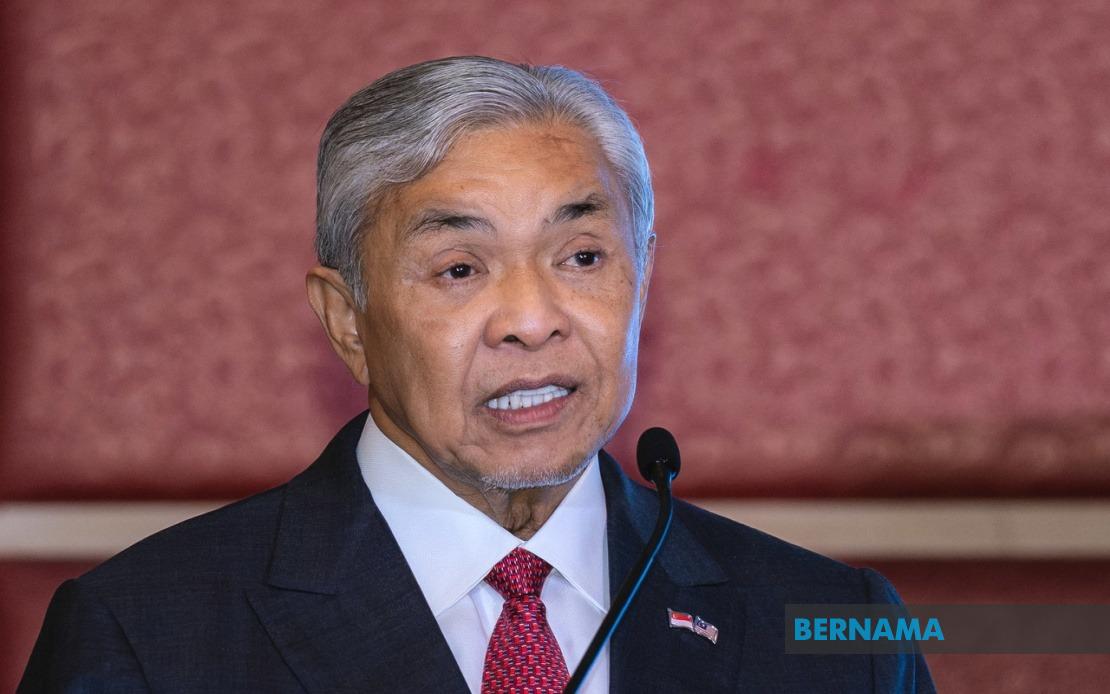
Malaysia's government is taking a proactive stance on technical and vocational education, with Deputy Prime Minister Datuk Seri Dr Ahmad Zahid Hamidi announcing that TVET graduates are achieving a 100 per cent employability rate through systematic coordination between training institutions and industry partners. The initiative represents a fundamental shift in how Malaysia approaches skills training, moving away from the traditional model where students complete courses and then search for work.
The strategy hinges on early and continuous dialogue between TVET institutions and employers to ensure that curriculum content directly mirrors industry requirements and labour market demands. By aligning courses with real workplace needs, the government has eliminated what has long been a persistent problem in vocational education across Southeast Asia: the mismatch between what students learn and what employers actually need. Ahmad Zahid, who also serves as Rural and Regional Development Minister and chairs the National TVET Council, emphasised that this collaborative approach prevents graduates from facing unemployment, wage disputes, or being overqualified or underqualified for available positions.
The practical outcome of this partnership model is remarkable: job offers are being extended to students before they finish their studies. This arrangement transforms the traditional employment pathway and provides graduating students with immediate career security. It also signals to prospective TVET students that enrolling in these programmes is a pathway to employment rather than an uncertain gamble on future job prospects. For a region grappling with youth unemployment and skills mismatches, this represents a significant policy achievement that other Southeast Asian nations are closely monitoring.
Central to this success is the introduction of High TVET courses, which the government is actively promoting as the next tier of vocational education. These advanced programmes are designed to produce graduates with specialised technical skills that align with higher-value industries and emerging sectors. The emphasis on High TVET suggests Malaysia is not content with basic vocational training but is instead positioning itself to develop a workforce capable of competing in advanced manufacturing, digital industries, and technology-driven sectors.
Ahmad Zahid made these remarks while addressing Malaysia's contingent for the WorldSkills Shanghai 2026 competition, scheduled for September 22 to 27 in Shanghai, China. The TVET@KKDW contingent comprises nine participants from three major institutions: MARA TVET, Universiti Kuala Lumpur (UniKL), and GIATMARA. These competitors will represent Malaysia in nine skill categories spanning diverse technical fields, including Fashion Technology, Cyber Security, and Electronics, among others. The diversity of competition categories underscores Malaysia's commitment to developing expertise across multiple sectors rather than concentrating narrowly on traditional trades.
The government has framed Malaysia's participation in WorldSkills Shanghai 2026 not merely as competitive participation but as an opportunity to showcase Malaysian technical prowess on an international platform. Ahmad Zahid urged the contingent to demonstrate mental resilience and emotional fortitude, recognising that competing against the world's best technical practitioners requires not just technical skill but psychological strength. His message reflects an understanding that international competition at this level tests not only knowledge and capability but also the ability to perform under pressure.
With two months remaining before the Shanghai competition, Ahmad Zahid emphasised the importance of continuous skill development, enhanced discipline, and sustained focus among participants. This preparation period is critical, as competitors will be refining their techniques, optimising their performance under time constraints, and building the consistency required to excel against international rivals. The compressed timeline suggests that Malaysia's contestants are already at advanced levels of competency and that final preparation will concentrate on precision and consistency rather than foundational learning.
The broader policy context reveals that Malaysia views TVET not as a secondary educational option but as a strategic national priority aligned with economic development goals. By ensuring 100 per cent graduate employability, the government sends a powerful message that vocational training is a viable and desirable career path. This perspective helps counteract the persistent stigma in some Asian societies where vocational education is viewed as a fallback option rather than a legitimate and rewarding career choice. In Malaysia's case, the government's commitment to industry partnerships and job guarantees is actively working to reshape perceptions.
For Malaysian employers, the coordination between TVET institutions and industry represents an opportunity to shape a workforce tailored to their specific needs rather than adapting generalist graduates to their requirements. This arrangement reduces on-the-job training costs and accelerates the time new employees reach full productivity. Companies can also provide input into curriculum development, ensuring that graduates arrive with the specific competencies their operations demand. This collaborative framework benefits all stakeholders: students gain employment security, employers receive trained workers aligned with their needs, and educational institutions can point to measurable employment outcomes.
The emphasis on international competition through WorldSkills also serves a strategic purpose domestically. By showcasing Malaysian technical talent at a global event, the government bolsters domestic confidence in TVET pathways and attracts top-performing students to vocational programmes. Success on the international stage translates into enhanced prestige for TVET careers, making them more attractive to young Malaysians and their families. International medals and recognition create aspirational figures and provide concrete evidence that vocational excellence can lead to recognition and opportunity.
Looking forward, the government's TVET strategy appears poised to address one of Southeast Asia's most persistent economic challenges: creating a skilled workforce positioned between low-wage manufacturing and high-level professional services. By guaranteeing employment, emphasising advanced technical skills, and competing internationally, Malaysia is demonstrating a comprehensive approach to vocational education that moves beyond simply providing training certificates. The success of this model will likely influence how other regional governments approach skills development and employer engagement.

