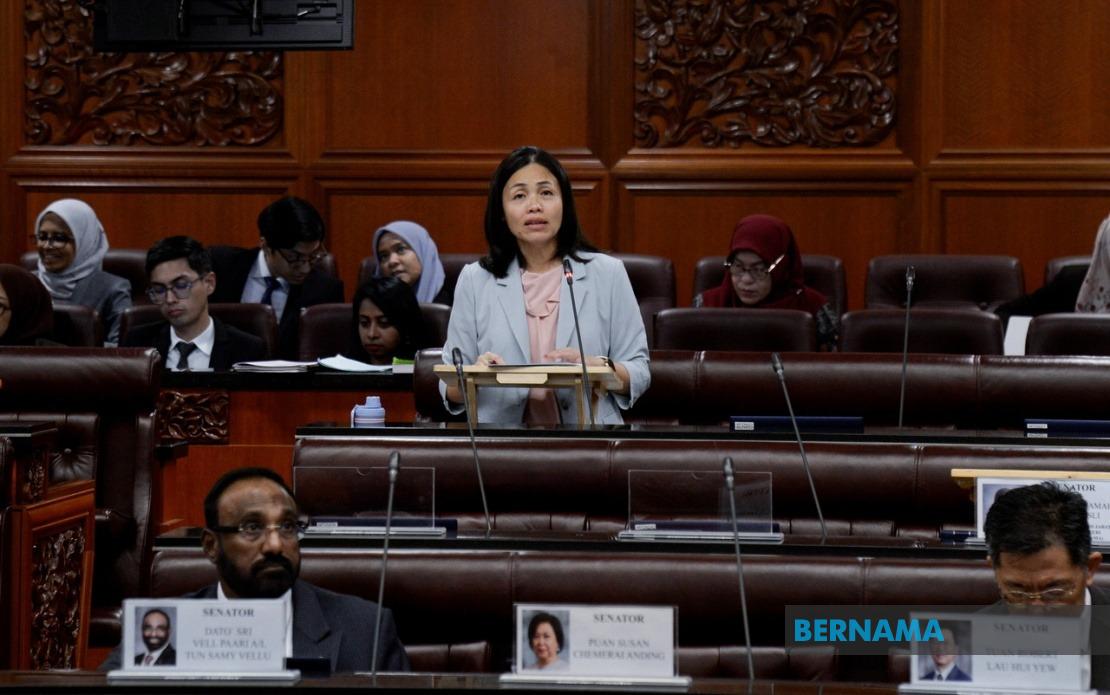
Malaysia's Dewan Negara has endorsed the Communications and Multimedia Commission (Amendment) Bill 2026, marking a significant legislative step toward fortifying the country's digital regulatory framework. The upper chamber passed the legislation following substantive deliberations among 11 senators, with the vote demonstrating broad parliamentary support for modernising how the communications industry operates in an increasingly complex technological landscape.
The amendment represents a response to evolving challenges within Malaysia's digital ecosystem, particularly the proliferation of unauthorised online gambling platforms and content that threatens public safety. Deputy Minister of Communications Teo Nie Ching outlined impressive enforcement metrics during the bill's conclusion, revealing that the Malaysian Communications and Multimedia Commission (MCMC) has removed over 222,000 instances of online gambling content within the first seven months of 2026 alone. This figure underscores accelerating digital enforcement operations across the nation's regulatory bodies.
The trajectory of content removal demonstrates exponential growth in MCMC's capacity and effectiveness. The commission recorded merely two instances of content takedowns in 2022, a baseline figure that expanded substantially to 18,814 removals by 2023. The rate of increase intensified further, reaching 189,484 removals in 2024 and jumping to 289,486 in 2025. As of July 31, 2026, the tally of 222,257 gambling-related content removals already approaches previous yearly totals, reflecting increasingly aggressive operational protocols. Complementing these removal efforts, MCMC has successfully blocked 6,982 gambling websites across the period spanning 2022 through July 2026, creating substantial friction for operators attempting to circumvent Malaysian restrictions.
The operational framework governing gambling enforcement involves collaborative mechanisms between law enforcement and regulatory bodies. While the Royal Malaysia Police assumes primary jurisdiction over gambling activities themselves, MCMC functions as a technical facilitator, providing digital forensic analysis, access-blocking capabilities, and infrastructure support based on formal requests from enforcement agencies. This division of labour allows specialised expertise to concentrate on respective domains while maintaining coordinated action against illicit operations.
Beyond enforcement metrics, the amendment introduces structural reforms addressing governance independence—a component that attracted particular attention from participating senators. The legislation explicitly prohibits politicians from serving as MCMC chairman, establishing a critical separation between legislative bodies and regulatory authority. The prohibition extends comprehensively, barring Members of Parliament and state assemblymen from occupying the top position. This restriction aims to insulate the commission from political influence and ensure appointments prioritise qualifications over partisan considerations.
Senator Datuk Abdul Halim Suleiman contextualised the amendments within broader strategic considerations, emphasising that communications and multimedia infrastructure has transcended its historical identity as a conventional economic sector. The sector now functions as critical national infrastructure underpinning economic activity, public communication, and national security. Accordingly, regulatory frameworks must reflect this elevated status through enhanced enforcement powers and operational capabilities. Effective implementation, however, hinges not merely on statutory authority but on MCMC's capacity to execute functions with professional competence, institutional transparency, and demonstrable effectiveness protecting citizen interests.
Senator Muhammad Hasbie Muda introduced a complementary perspective, stressing that reform extends beyond distributing additional regulatory powers. Rather, substantive modernisation demands rigorous attention to expertise and merit-based selection processes for commission members. Granting expanded authority without corresponding emphasis on appointment quality risks creating powerful institutions lacking requisite competence. Hasbie advocated that each regulatory function, regardless of scope, must remain subject to transparent implementation, effective execution, and clear accountability mechanisms answerable to the public constituency affected by regulatory decisions.
The bill encompasses 17 clauses addressing multiple dimensions of MCMC's mandate. A particularly significant amendment modifies Section 16 of Act 589, clarifying the commission's functions in developing and regulating digital infrastructure and platform standards. This clarification addresses evolving technological complexity, as Malaysian communications increasingly rely on sophisticated digital platforms requiring nuanced regulatory approaches distinct from legacy telecommunications infrastructure.
The legislation's passage through Dewan Negara follows approval by the Dewan Rakyat on July 15, 2026, establishing clear parliamentary consensus regarding regulatory modernisation. For Malaysian stakeholders—from telecommunications operators to content platforms and ordinary citizens—the amendment signals government commitment to more proactive digital governance addressing contemporary challenges including online gambling proliferation, platform accountability, and infrastructure standards. The reforms reflect recognition that passive regulatory frameworks prove inadequate for managing digital sector complexities.
Regional observers note that Malaysia's approach aligns with broader Southeast Asian trends emphasising stronger digital regulation and platform governance. Neighbouring countries including Singapore, Thailand, and Indonesia have implemented comparable reforms addressing similar concerns around content moderation, operator accountability, and cross-border digital challenges. Malaysia's legislative progress contributes to regional convergence on governance standards, potentially facilitating future policy coordination and operational harmonisation among Southeast Asian communications regulators.
Implementation of these reforms requires MCMC to develop operational capabilities matching expanded statutory authority. The commission must recruit technically skilled personnel capable of conducting sophisticated digital forensic analysis, managing sophisticated blocking infrastructure, and coordinating effectively with international partners addressing cross-border platforms. Resource allocation, staff training programmes, and technological infrastructure investments will substantially influence whether legislative intent translates into tangible regulatory outcomes benefiting Malaysian digital users and businesses.

