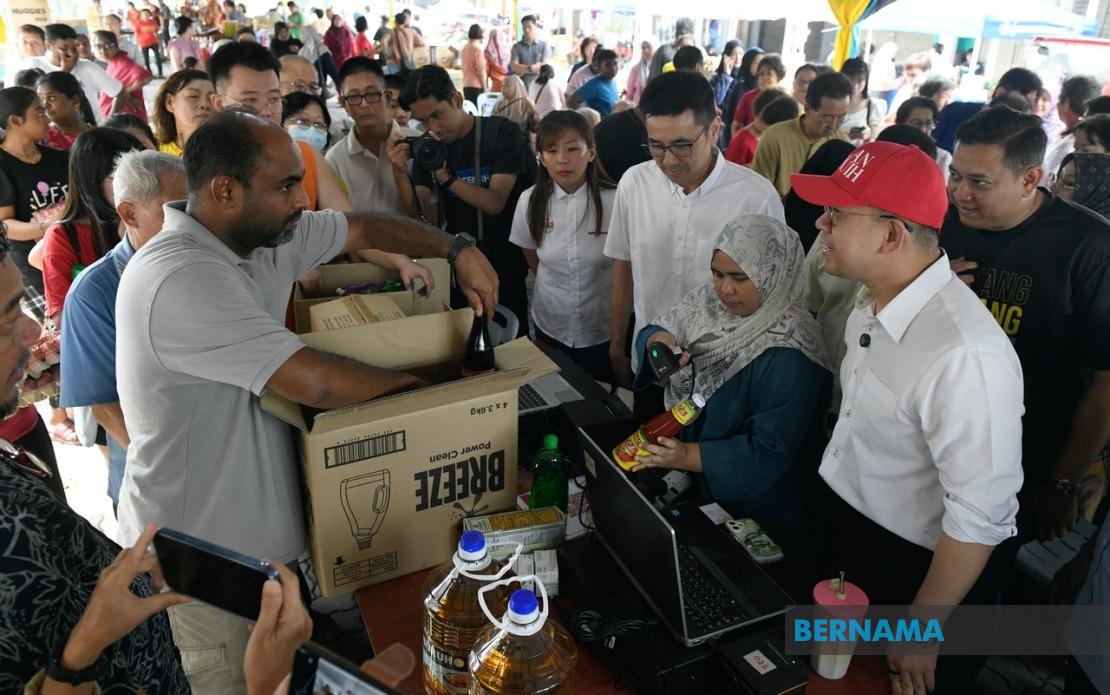
Malaysia's wholesale and retail trade sector is experiencing robust expansion, with the government intensifying support for micro, small and medium enterprises and cooperatives seeking to capitalise on rising consumer demand. The Ministry of Entrepreneur and Cooperatives Development, known as KUSKOP, has positioned itself as the focal point for grassroots economic empowerment, rolling out initiatives designed to connect smaller traders with the sector's expanding market opportunities. Minister Steven Sim Chee Keong unveiled this commitment during the launch of the Jualan MADANI KUSKOP programme in the Jawi state constituency, underscoring the administration's determination to distribute economic gains broadly across society.
The sector's momentum is undeniable. Official figures from the Department of Statistics Malaysia reveal that wholesale and retail trade achieved sales valued at nearly RM175 billion in April 2026, representing a year-on-year increase of 15.3 per cent. This trajectory reflects sustained consumer spending power and indicates that domestic demand remains a reliable engine driving commercial activity across the country. The acceleration suggests that Malaysian households and businesses continue to spend despite macroeconomic headwinds, a signal that purchasing capacity has expanded even as economic growth remains contested globally.
The government attributes this performance to deliberate policy choices aimed at reducing living costs, stabilising commodity prices, and enhancing worker incomes. These structural measures have apparently provided consumers with greater disposable income and reduced anxiety about essential expenses, outcomes that translate into higher spending in retail environments. The convergence of improved household finances with a stable pricing environment has created conditions favourable for both established retailers and aspiring entrepreneurs seeking entry into the trade sector.
However, Malaysia's positive trajectory occurs within a challenging global context. Minister Sim acknowledged that tariff disputes, trade tensions, and regional geopolitical instability continue to buffet international commerce. As an economy dependent on open trade and integrated regional supply chains, Malaysia faces inherent vulnerability to external shocks. Yet despite these headwinds, the domestic wholesale and retail sector has demonstrated resilience, suggesting that local consumption patterns are decoupled sufficiently from international disruptions to sustain growth.
This disconnect between global uncertainty and domestic strength creates a distinctive opportunity for Malaysian entrepreneurs. The government argues that the sector's expansion opens pathways for MSMEs, cooperatives, and small traders to penetrate new customer segments, develop alternative distribution channels, and strengthen their positions within supply chains. Rather than remain passive consumers of foreign-sourced goods, local businesses can participate more actively in the value creation process, capturing margins that would otherwise flow to larger, better-capitalised competitors.
KUSKOP's programmatic approach reflects an understanding that opportunity alone is insufficient; smaller enterprises require targeted assistance to navigate regulatory requirements, access financing, and develop competitive capabilities. The Jualan MADANI KUSKOP initiative exemplifies this philosophy, creating platforms where MSMEs and cooperatives can display products, build customer relationships, and demonstrate viability to potential lenders or investors. By taking initiatives directly to constituencies, the government signals that economic development is not a passive process reserved for commercial hubs but an active commitment to geographic inclusion.
For Malaysian readers, this sector's growth carries particular significance. The wholesale and retail trade represents one of the largest employment sectors in the country, and its expansion typically correlates with job creation and skills development opportunities. As larger retailers invest in infrastructure and expand operations, they generate demand for logistics, distribution, administration, and customer service roles. Simultaneously, KUSKOP's focus on cooperative development promises that growth benefits are channelled through institutions designed to return profits to members rather than concentrate wealth among distant shareholders.
The cooperative model deserves particular attention in the Southeast Asian context. Unlike pure commercial enterprises, cooperatives distribute surpluses proportionally to member participation and investment, creating democratic economic structures with deeper community rootedness. As Malaysia strengthens cooperative participation in wholesale and retail trade, it is essentially building alternative pathways for wealth accumulation that differ fundamentally from conventional corporate models. This approach resonates with broader regional trends toward inclusive economic development and community-based entrepreneurship.
Minister Sim's framing of the challenge emphasises the government's commitment to ensuring that economic growth translates into tangible benefits for ordinary Malaysians rather than accruing narrowly to large corporations or foreign entities. This ideological positioning reflects awareness that growth measured purely in GDP terms can mask inequality and leaving broader populations behind. By actively mobilising KUSKOP to support smaller traders, the government is making an explicit wager that inclusive growth—where smaller enterprises capture meaningful market share—produces superior social outcomes compared to growth concentrated in large commercial entities.
The timing of KUSKOP's intensified engagement also reflects demographic realities. Younger Malaysians increasingly seek entrepreneurial independence, viewing self-employment as preferable to conventional corporate careers. The wholesale and retail sector, with relatively lower capital barriers compared to manufacturing, appeals to this cohort. Government programmes that provide training, financing, mentorship, and market access potentially convert entrepreneurial aspiration into sustainable livelihoods, creating employment that does not depend on government payrolls.
Looking forward, the sector's 15.3 per cent growth rate suggests momentum likely to persist through 2026 and beyond, assuming macroeconomic stability endures. For MSMEs and cooperatives, this window represents a genuine opportunity to strengthen market positions before retail consolidation advances further. Larger retailers continue expanding, potentially squeezing smaller competitors; however, niche segments serving specific communities, providing specialised products, or emphasising convenience and personal service remain viable. KUSKOP's role involves helping smaller enterprises identify and exploit these niches rather than compete directly with retail behemoths.
The wholesale dimension of sector growth deserves distinct consideration. While retail tends to receive consumer attention, wholesale trade—distributing bulk quantities to retailers, restaurants, and institutional buyers—involves lower margins but higher volumes and frequently demands less sophisticated marketing. Cooperatives serving small retailers by aggregating their purchasing power can achieve cost savings significant enough to enhance margins and competitive positioning. This vertical integration, where cooperatives move upstream into wholesale operations, strengthens resilience and captures additional value.
Ultimately, KUSKOP's grassroots initiatives represent a calculated bet that inclusive economic participation produces superior outcomes to models where growth concentrates narrowly. By empowering MSMEs and cooperatives to participate meaningfully in a RM175 billion sector, Malaysia is potentially building a more resilient, diversified commercial foundation less vulnerable to corporate consolidation or external shocks. The government's sustained commitment to these initiatives suggests recognition that inclusive growth strategies, while more complex administratively, deliver political legitimacy and social stability that growth alone cannot achieve.

