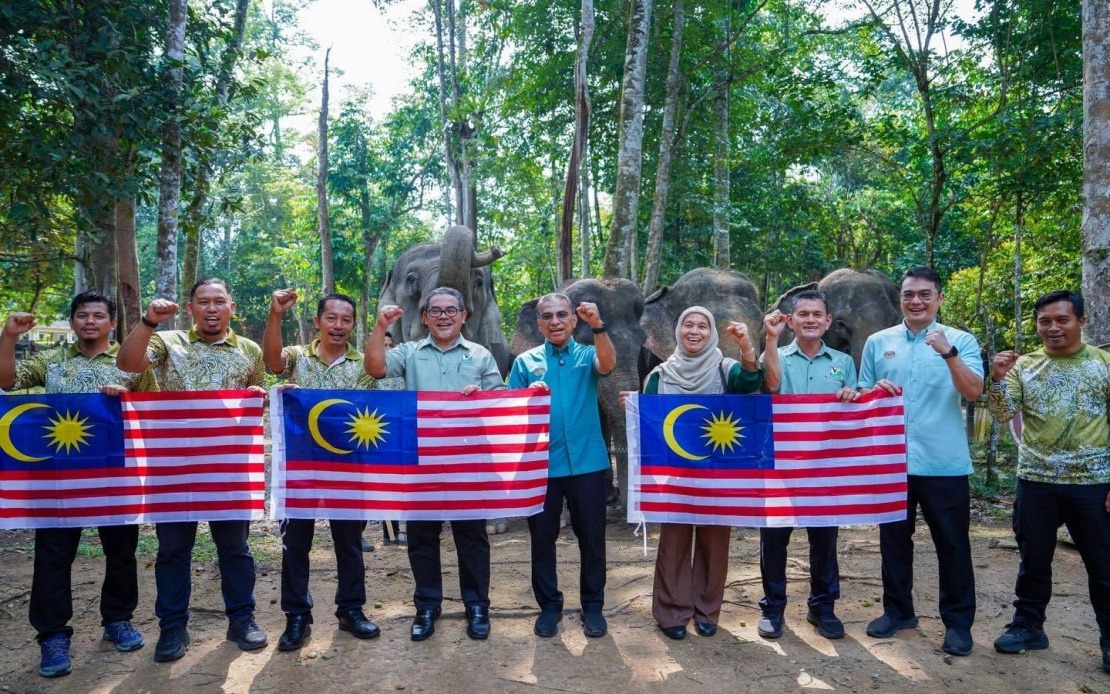
The Ministry of Natural Resources and Environmental Sustainability (NRES) is moving to devise innovative strategies aimed at curbing the rising tide of dangerous encounters between humans and wild animals, with particular focus on elephant behaviour. Deputy Minister Syed Ibrahim Syed Noh outlined the ministry's commitment to tackling what has become an increasingly urgent challenge for the Department of Wildlife and National Parks (Perhilitan), as wildlife incursions threaten both human safety and animal welfare across the country.
The escalating nature of these conflicts reflects a fundamental tension shaping Malaysia's development landscape. As urbanisation and agricultural expansion continue to reshape vast tracts of forest, wild animals—especially elephants—find their traditional migration routes and feeding grounds progressively squeezed. Rather than viewing this simply as a wildlife management problem, the ministry recognises it as a complex issue requiring sustained monitoring and adaptive intervention strategies that balance conservation with human safety concerns.
Syed Ibrahim emphasised that Perhilitan's approach prioritises understanding animal behaviour rather than resorting to aggressive control measures. The agency maintains continuous surveillance of conflict zones and animal movements, gathering data that will inform the formulation of more effective long-term solutions. This philosophy extends to individual animals: rather than forcibly containing or relocating elephants in ways that violate their natural instincts, the ministry advocates allowing them freedom of movement while implementing sophisticated tracking systems.
The case of Sulong Chalil exemplifies both the challenges and the ministry's evolving response. This adult male elephant, after being relocated to a new forested reserve in Gerik, Perak, travelled hundreds of kilometres overland despite carrying an injury, driven by an imperative to return to its original habitat in Gua Musang, Kelantan. The incident demonstrates that elephants possess strong site fidelity and cannot simply be transplanted to alternative locations without significant welfare and management consequences. Rather than viewing this as a failure, Perhilitan used the experience to better understand elephant psychology and develop more nuanced relocation protocols.
The emerging strategy reflects recognition that elephants possess distinctive behavioural characteristics that make them unsuitable for conventional wildlife management approaches. Confining or restricting their movements often triggers stress responses and escape attempts, potentially creating more dangerous human-wildlife encounters. By allowing monitored freedom while maintaining protective surveillance, the ministry aims to reduce the adversarial dynamics that frequently characterise human-wildlife interactions. This requires substantial investment in tracking technology, personnel training, and inter-agency coordination.
The root cause of escalating conflicts lies in habitat fragmentation and land-use conversion across Peninsular Malaysia. Development pressures have progressively reduced the forest corridors that historically allowed elephant populations to move seasonally between ranges. Agricultural expansion, settlement development, and infrastructure projects have created a patchwork landscape where wildlife and human activities overlap with increasing frequency. Without addressing this underlying issue, tactical conflict-reduction measures can only provide temporary relief.
Syed Ibrahim confirmed that NRES and Perhilitan are currently collaborating with multiple stakeholders to study and formulate comprehensive solutions. This multi-party approach suggests involvement of state governments, local authorities, conservation NGOs, and possibly international wildlife experts. The complexity of developing effective strategies reflects the interconnected nature of the problem: solutions must satisfy conservation objectives, protect human communities, minimise animal suffering, and accommodate legitimate development needs.
The ministry's approach contrasts with historical practices in which problem animals faced culling or indefinite captivity. Modern wildlife management increasingly emphasises coexistence strategies, recognising that long-term human and environmental wellbeing depends on maintaining functional wildlife populations and ecosystems. For Malaysia, where iconic megafauna like elephants and tigers represent important national and regional conservation assets, such approaches carry particular significance.
Implementing these strategies demands sustained political will and resource allocation. Training Perhilitan personnel in advanced tracking and behavioural monitoring, establishing early-warning systems for potential conflicts, and creating buffer zones between wildlife habitat and human settlements all require significant investment. Building community acceptance of living alongside large wildlife also demands public education programmes that contextualise conservation within broader sustainability frameworks.
For Southeast Asian readers, Malaysia's experience offers important lessons. The region faces similar pressures from rapid development and habitat loss affecting large mammal populations. Countries throughout Southeast Asia are grappling with escalating human-wildlife conflicts as elephant, tiger, and rhinoceros populations face shrinking ranges. Malaysia's emphasis on understanding animal behaviour rather than simply controlling problem animals through elimination represents a more sophisticated, humane, and ultimately more sustainable approach to these challenges.
The success of the ministry's initiative will depend on consistent implementation and willingness to adapt strategies based on ongoing research. Early indications suggest genuine commitment to moving beyond reactive crisis management toward proactive conflict prevention. However, the fundamental challenge remains: without addressing habitat loss and fragmentation at landscape scales, even the most sophisticated management techniques will struggle to reduce conflicts significantly. The real test will be whether NRES can sustain momentum in developing integrated approaches that protect both wildlife and human communities.

