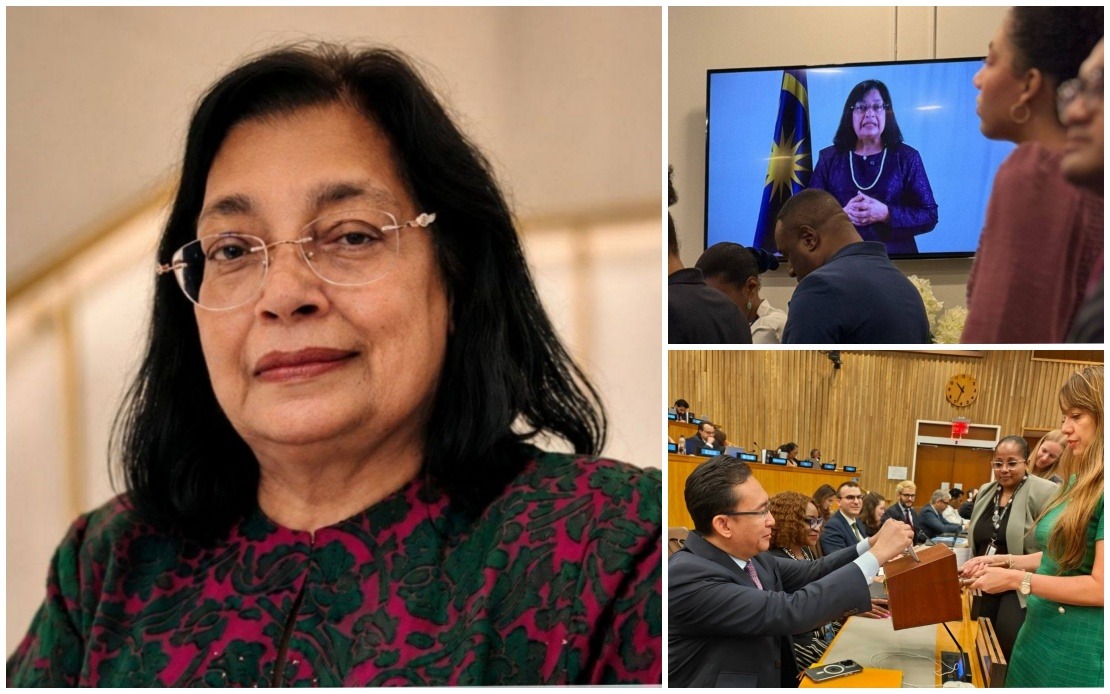
Malaysia has secured a prominent position on a key international human rights body with the election of Datuk Yasmeen Muhamad Shariff to the United Nations Committee on the Rights of the Child for the 2027–2031 term. The election took place during the 21st Meeting of States Parties to the Convention on the Rights of the Child at UN Headquarters in New York on Tuesday, with Yasmeen commanding the support of 136 out of 189 voting member states. Her commanding victory—she attracted the highest number of votes among all candidates—underscores the standing Malaysia has built within the international community on child welfare and protection matters.
This represents a return engagement for Yasmeen, who previously served on the committee during the 2013–2017 term. Her reappointment signals continuity in Malaysia's engagement with global child rights advocacy and suggests that her contributions during her first stint earned sufficient respect among UN member states to warrant another mandate. The Foreign Ministry, in a statement released on Wednesday, highlighted that the result reflects international recognition of her professional expertise and sustained commitment to advancing the welfare and protection of children at the global level.
The Committee on the Rights of the Child functions as the principal UN monitoring body responsible for overseeing how signatory states implement the Convention on the Rights of the Child, one of the world's most widely ratified human rights treaties. Committee members serve in their individual capacity as independent experts rather than as representatives of their governments, a distinction that underscores the importance of professional independence in the role. As a committee member, Yasmeen will engage in dialogue with governments about their compliance with child protection obligations, review periodic reports from states, and contribute to developing interpretative guidance on how the convention should be applied in contemporary contexts.
The significance of this appointment extends beyond ceremonial recognition. The committee's mandate encompasses monitoring implementation of the convention across diverse cultural, economic and political contexts, promoting dialogue between nations on child welfare standards, and advocating for rights-based approaches to issues affecting young people globally. These responsibilities carry meaningful influence over how international standards on child protection evolve and are understood. As a returning member with prior experience, Yasmeen enters her second term with institutional knowledge that can accelerate her effectiveness in shaping the committee's work during a period when childhood experiences worldwide have been profoundly shaped by pandemic aftereffects, conflicts, and climate-related displacement.
For Malaysia specifically, the election result projects the country's commitment to child welfare beyond its borders. The Foreign Ministry's statement emphasised that the appointment reflects international recognition of Malaysia's domestic efforts to advance children's rights through legislative reforms, inclusive policy frameworks, and targeted programmes. This framing matters because it positions Malaysia not merely as a participant in international governance structures but as an active developer of progressive approaches to protecting young people. At a regional level in Southeast Asia, where child trafficking, child labour, and inadequate education access remain persistent challenges, Malaysia's representation on influential UN bodies helps ensure that regional perspectives and experiences inform global child rights policy.
The election also highlights the expanding role of women in senior international positions. Yasmeen's prominence—achieving the top vote count—demonstrates that capable women professionals can command broad international support for positions of influence. This has practical implications for the committee's work itself; research on governance bodies consistently shows that diverse expertise, including gender diversity, enhances the quality of deliberation and decision-making on complex social issues.
The Ministry of Women, Family and Community Development collaborated closely with the Foreign Ministry in securing Yasmeen's nomination and election, a partnership that the government explicitly acknowledged. This inter-ministerial coordination reflects recognition that child welfare requires integrated governance approaches spanning legal, social, health and economic domains. For Malaysian readers, this signals that child protection is conceptualised at the highest levels as a cross-cutting priority rather than a siloed concern.
The current global context makes the committee's work particularly consequential. As the Foreign Ministry noted in its statement, the international landscape has grown increasingly complex, with children facing threats from armed conflict, environmental degradation, pandemic-related disruptions to education, and digital safety concerns that scarcely existed during the convention's original drafting in 1989. The committee must interpret decades-old language in ways that address contemporary threats while maintaining fidelity to the convention's core principles. Yasmeen's reappointment gives Malaysia a voice in these interpretations during a critical period.
Moreover, the substantial majority support Yasmeen received—136 of 189 votes represents 72 percent backing—signals that her candidacy faced no significant opposition from any geopolitical bloc. In an era when UN bodies are sometimes divided along predictable lines, this consensus suggests her professional reputation transcends the usual political divisions. Such broad backing typically reflects recognition that candidates bring technical competence and impartial judgment rather than representing narrow national interests.
The committee's upcoming 2027–2031 term will operate against a backdrop of evolving international child welfare priorities. The UN Sustainable Development Goals, which target the eradication of child labour and expansion of quality education, require consistent international oversight and accountability. Regional variations in how countries approach these goals—particularly differences between wealthy nations and developing countries—mean that committee work requires nuanced understanding of diverse contexts. Yasmeen's previous experience with Southeast Asian situations, combined with her global expertise, positions her well to contribute meaningfully to these discussions.
Looking forward, Malaysia's successful nomination demonstrates the country's capacity to influence international agendas in areas where it has developed genuine expertise and commitment. Child welfare advocacy has become increasingly important to Malaysia's international identity and to its regional leadership within ASEAN. Yasmeen's election thus carries symbolic weight beyond her individual appointment, affirming Malaysia's status as a constructive international actor on human rights matters and suggesting the country will continue prioritising child protection both domestically and in its participation within global governance structures.