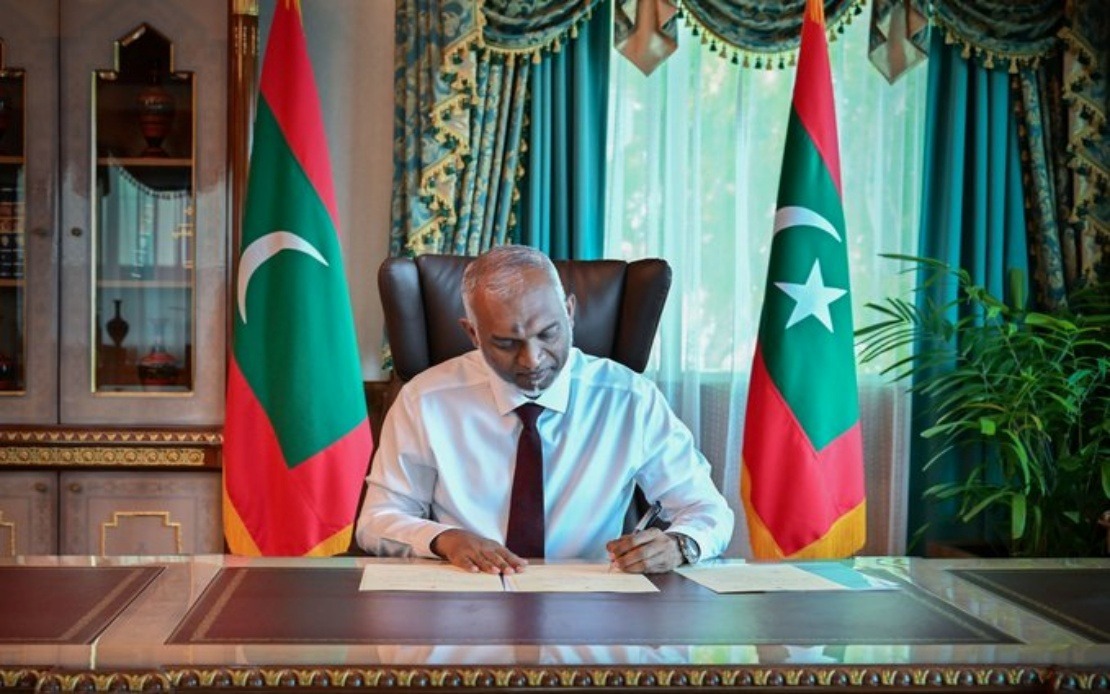
Maldives President Mohamed Muizzu has underscored the deep and historic bonds linking his island nation to Malaysia, extending warm National Day greetings that reflect the two countries' shared commitment to strengthening their diplomatic partnership. Speaking on Monday through separate messages to His Majesty Sultan Ibrahim, King of Malaysia, and Prime Minister Datuk Seri Anwar Ibrahim, Muizzu framed the occasion as an opportunity to reaffirm the foundation of respect and cooperation that has sustained Malaysia-Maldives relations across five decades of engagement.
In his formal correspondence to the Malaysian monarch, the Maldivian leader highlighted the trajectory of bilateral relations, characterizing them as warm, enduring, and rooted in mutual respect. According to a statement from the Maldivian presidency, Muizzu specifically referenced the strength of the friendship between the two nations and explicitly committed to pursuing further advancement of both bilateral ties and concrete areas of cooperation. This rhetorical emphasis on forward momentum reflects a broader diplomatic pattern in which regional leaders use anniversaries and ceremonial occasions to signal their intent to deepen institutional engagement.
The separate message directed to Prime Minister Anwar Ibrahim took a complementary approach, with Muizzu identifying people-to-people exchanges and high-level political engagements as the dual engines driving the relationship closer together. By highlighting "brotherly relations," the Maldivian president employed language that conveys familial closeness rather than merely formal diplomatic association, suggesting that Malaysia-Maldives ties occupy a distinctive tier within Maldives' broader regional engagement strategy. The presidency statement noted that Muizzu expressed confidence in the trajectory of this friendship, framing it as a pathway to expanded economic opportunities and mutually beneficial development for both populations.
For Malaysia, these gestures carry particular significance given the country's role as a key economic and diplomatic anchor in the Indian Ocean region. The Maldives, despite its small geographic footprint and population, occupies strategic importance due to its location along vital maritime trade routes and its influence within the Indian Ocean Rim Association and other regional forums. Malaysia's diplomatic engagement with Male reflects recognition of these dynamics and broader efforts to cultivate partnerships with regional states that share similar development aspirations and strategic interests in maintaining regional stability.
The timing of Muizzu's statements also merits consideration. Since assuming office, the Maldivian president has navigated complex geopolitical currents, including questions about the country's alignment within broader Indo-Pacific dynamics and its relationships with major powers. By emphasizing partnership depth with Malaysia and affirming commitment to strengthened ties, Muizzu is positioning his administration within a framework of South Asian and Southeast Asian cooperation that prioritizes mutual benefit and incremental institutional growth over more transactional or contingent engagement models.
Beyond the Maldives, Malaysia's National Day also prompted congratulations from other major regional and global actors, signalling the country's continued relevance and the value other nations place on bilateral relationships. Pakistan's Ministry of Foreign Affairs extended formal greetings through social media, characterizing Malaysia as a brotherly nation and expressing wishes for enduring peace and prosperity. India's Minister of External Affairs Subrahmanyam Jaishankar similarly conveyed warm sentiments while explicitly referencing the Comprehensive Strategic Partnership framework that structures modern India-Malaysia relations, indicating New Delhi's interest in advancing cooperation across strategic dimensions.
These multilateral expressions of goodwill underscore Malaysia's positioning at the intersection of multiple regional and civilizational frameworks. The country maintains significant relationships with South Asian powers including India and Pakistan, with ASEAN partners, with Middle Eastern and Islamic-world actors, and with major global powers. National Day occasions thus serve as touchstones for diplomatic renewal and as opportunities for Malaysia's partners to publicly reaffirm their commitment to sustained engagement.
For Malaysia specifically, the diplomatic messaging from both the Maldives and other regional players reflects recognition of the country's economic dynamism, political stability relative to some neighbouring states, and capacity to serve as a constructive partner in addressing shared regional challenges. Malaysian foreign policy under Prime Minister Anwar's administration has emphasized regional integration, economic cooperation, and pragmatic engagement with diverse partners—an approach that appears to resonate with capitals from Male to New Delhi.
The emphasis in Muizzu's messages on "expanded economic engagement" warrants particular attention for Malaysian business and policymaking communities. The Maldives, while modest in size, represents potential areas of cooperation in tourism, maritime commerce, fisheries management, and Islamic finance—sectors where Malaysian firms and institutions possess competitive advantages. Strengthened bilateral frameworks could facilitate deeper commercial ties and create opportunities for Malaysian enterprises to participate in Maldivian development initiatives.
Moving forward, the diplomatic undertones evident in these National Day messages suggest that Malaysia and the Maldives are likely to pursue deeper institutional integration through mechanisms such as bilateral commissions, expanded people-to-people exchange programs, and potentially enhanced trade and investment frameworks. The reference to "regular high-level engagements" in Muizzu's message implies that official visits and ministerial-level meetings will remain features of the diplomatic calendar, maintaining momentum in the bilateral relationship.
The convergence of warm sentiments from the Maldives, India, and Pakistan also illustrates Malaysia's distinctive position as a country capable of maintaining productive relationships across different regional groupings and with nations that themselves navigate complex bilateral dynamics. This diplomatic flexibility has long been a hallmark of Malaysian foreign policy and continues to provide the country with strategic advantages in an increasingly multipolar regional environment where smaller and medium powers must skilfully manage multiple alignments.

