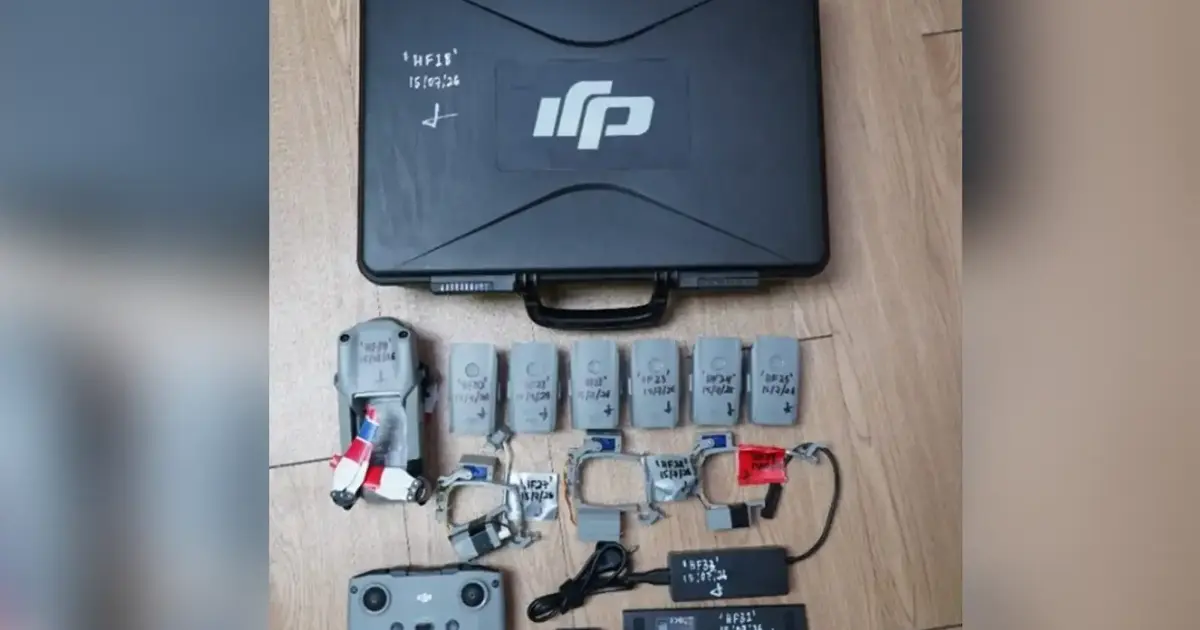
Authorities in Melaka have apprehended a couple suspected of orchestrating an operation to deliver contraband tobacco into the state prison via an unmanned aerial vehicle, marking another incident in an ongoing struggle against illicit goods entering correctional facilities across Malaysia. The arrests highlight the increasingly sophisticated methods being employed by those seeking to supply prohibited items to incarcerated individuals, a persistent security challenge facing the nation's prison system.
According to the Melaka police chief, the attempted smuggling operation appeared to have been coordinated with at least one detainee housed within the facility. Such collaborative schemes typically involve inmates arranging supply chains from outside, often leveraging family connections or criminal associates to circumvent traditional detection methods employed at prison gates and checkpoints. The use of drone technology represents an escalation in these attempts, as unmanned systems can bypass perimeter security and deliver items directly into prison grounds without requiring physical entry by the smugglers themselves.
The incident comes amid heightened concerns about contraband entering correctional institutions nationwide. Prison administrators and law enforcement agencies have increasingly documented attempts to smuggle narcotics, mobile phones, tobacco products, and other prohibited items. These materials often serve as currency within prison economies, enabling inmates to purchase favours, maintain communication networks, or settle debts, thereby potentially compromising institutional order and security.
Drone-based smuggling represents a particularly vexing challenge for prison security personnel. Unlike traditional methods requiring accomplices with access to perimeter areas, drone operations can be launched from considerable distances, making the identification and apprehension of perpetrators more difficult. The low cost and ready commercial availability of consumer drones have democratised this smuggling method, enabling groups with minimal technical expertise or resources to attempt such operations.
Tobacco products, while legal outside prisons, are typically prohibited within correctional facilities in Malaysia due to regulations governing prison life. However, the high demand for such items among inmates has created lucrative black markets within prison walls. This underground economy incentivises external suppliers and facilitates the coordination between inside and outside networks that authorities are working to dismantle.
The investigation into this particular case will likely focus on establishing the full extent of coordination between the arrested couple and the inmate or inmates allegedly involved in receiving the contraband. Police will seek to determine whether this represented an isolated incident or part of a broader smuggling operation. Intelligence gathered could provide insights into how such networks operate and what communication methods prisoners are utilising to coordinate with accomplices outside.
From a broader security perspective, this arrest underscores vulnerabilities in current prison perimeter protection systems. While physical barriers and staffing levels play crucial roles in preventing escape or unauthorised entry, the three-dimensional nature of drone threats requires additional technological countermeasures. Several prison systems internationally have invested in drone detection and interdiction technology, ranging from radar systems to electronic jamming devices, though widespread adoption remains limited in Malaysia.
The case also raises questions about the adequacy of current regulations governing personal drone operations near sensitive facilities. While aviation authorities have established restricted zones around airports and certain government installations, prison facilities may not have equivalent legal protections. Strengthening such frameworks could provide law enforcement with additional investigative and prosecutorial tools when responding to contraband delivery attempts.
For Malaysian correctional officials, this incident reinforces the need for multi-layered security strategies combining traditional surveillance, intelligence gathering, and emerging technological solutions. Enhanced staff training in identifying and preventing contraband entry, coupled with intelligence sharing between prisons and external law enforcement agencies, remains essential to disrupting smuggling networks at their source.
The detention of the couple sends a signal that authorities remain committed to addressing the contraband problem, though the effectiveness of such individual enforcement actions depends on consistent application across multiple facilities and regions. Given Malaysia's geographically dispersed prison network and resource constraints, developing scalable solutions remains an ongoing challenge for prison administrators and policymakers alike.
As the Melaka case progresses through investigation and potentially into the courts, it will provide valuable lessons for correctional authorities nationwide regarding emerging threats and the sophistication of smuggling operations. The outcome may also influence policy discussions about necessary upgrades to prison security infrastructure and the resources required to maintain institutional integrity in an increasingly challenging operational environment.

