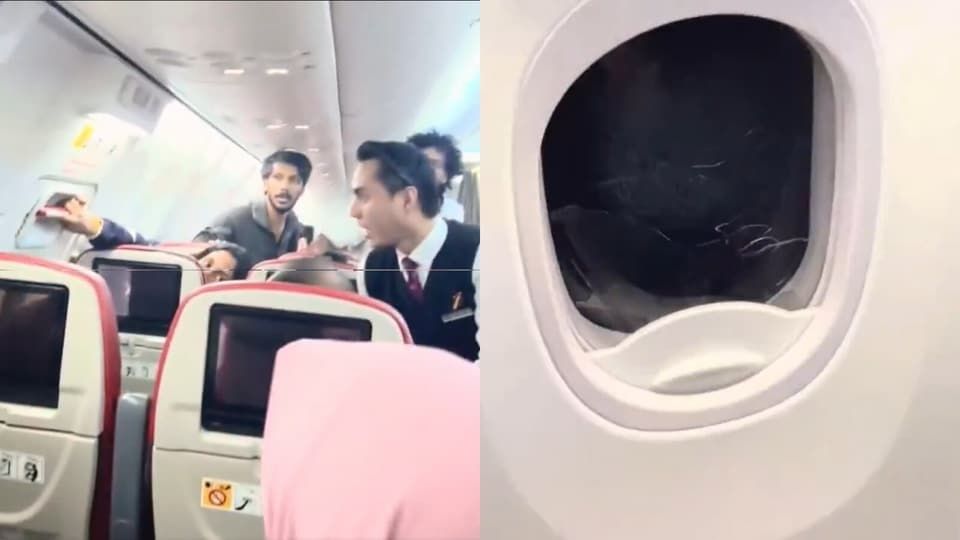
A 36-year-old man has been taken into custody following a harrowing mid-air incident aboard a Batik Air Boeing 737 operating the Kuala Lumpur to Kochi route. Jamsheer Athanikkal, a resident of Sreemoolanagaram originally from Palakkad, allegedly attempted to breach the aircraft's emergency exit while the aircraft was airborne on Wednesday evening, triggering panic among passengers and triggering swift intervention from fellow travellers and cabin staff. The incident underscores persistent challenges facing aviation authorities across the region in managing disruptive passenger behaviour at cruising altitude, where options for intervention are inherently limited and consequences potentially catastrophic.
According to the First Information Report filed by authorities in Kerala, the disturbance unfolded between 9.30pm and 11.05pm as flight OD231 traversed the night sky. Jamsheer allegedly used his foot to damage the inner window panel of the emergency exit situated in his row, subsequently attempting to prise open the door itself. His actions were accompanied by threatening behaviour directed at both fellow passengers and members of the cabin crew, escalating an already tense situation at an altitude where such incidents carry amplified danger. The Boeing 737, a workhorse of regional aviation with thousands in service worldwide, was designed with safeguards that ultimately prevented catastrophe in this instance.
Passenger accounts paint a vivid picture of the moment when the breach attempt commenced. Matty Mathew, one of those aboard, subsequently shared footage on social media documenting the aftermath, describing how most travellers had been asleep during the late-night service when they were suddenly jolted awake by the sound of rushing air coursing through the cabin. This acoustic alarm indicated that something was fundamentally amiss with the aircraft's sealed environment. The rapid depressurisation that might have ensued never materialised, a factor Mathew attributed to the aircraft's inherent design characteristics and the cabin pressure maintained by the aircraft's pressurisation system, which prevented the door from yielding despite the apparent damage inflicted upon the window panel.
The swift response of other passengers and Batik Air crew members proved decisive in preventing an escalation of the crisis. These individuals moved rapidly to physically restrain Jamsheer, preventing further damage and any potential catastrophic outcome. In his social media account of events, Mathew emphasised that despite the alarming nature of the experience, the collective action of those aboard ensured the safety of all passengers and crew. He noted that the experience, though profoundly frightening, concluded with everyone accounted for and unharmed—a far more favourable outcome than might have unfolded had the individual remained unrestrained or had the aircraft's engineering proved insufficient to contain the breach.
When flight OD231 landed in Kochi early on Thursday morning, Jamsheer was immediately handed into the custody of Kerala Police pending investigation. The arrest came swiftly, with authorities launching a comprehensive enquiry into the incident. The case has been registered under multiple provisions of Indian law reflecting the gravity of the transgression. These include Section 351(3) of the Bharatiya Nyaya Sanhita, which addresses criminal intimidation and threatening behaviour; Section 11A of the Aircraft Act, which governs violations of aviation safety and security protocols; and Section 118(e) of the Kerala Police Act, concerning acts that imperil public welfare. The multiplicity of charges reflects the seriousness with which Indian authorities regard disruptions to aviation safety.
This incident arrives at a particularly sensitive moment for aviation safety across the Indian subcontinent and Southeast Asia. Merely two days prior to the Batik Air emergency, another major carrier operating in the region experienced a distinct but equally alarming event. Air India flight AI2379, departing from Phuket, Thailand, and bound for Delhi, encountered a sudden and unexplained loss of altitude during its cruise phase on Tuesday. The aircraft was carrying 137 passengers and eight crew members when the incident occurred, representing a substantial number of lives placed in immediate jeopardy by the anomalous descent.
The Air India flight managed to recover and continue to Delhi, where it executed a successful landing despite the earlier incident. However, the psychological and physical toll on those aboard proved considerable. Following arrival, thirteen passengers and four crew members required hospital admission for treatment of injuries and shock-related conditions sustained during the altitude loss event. Air India's management maintained a supportive presence at medical facilities, ensuring that affected individuals received appropriate care and assistance. The airline initiated immediate cooperation with relevant aviation regulators and notified the aircraft manufacturer, a seven-year-old Airbus, of the incident to facilitate thorough investigation.
These two episodes, occurring within such close temporal proximity, have reignited discussions about aviation safety protocols across the region. The Batik Air incident highlights vulnerabilities related to passenger misconduct and the limited safeguards available during flight operations, particularly on overnight services when vigilance may be reduced. The Air India event raises separate but equally critical questions regarding aircraft maintenance, systems integrity, and the detection of anomalies before they manifest as dangerous altitude variations. Both incidents underline the multifaceted nature of aviation risk in the modern era, encompassing not merely mechanical failure but also unpredictable human behaviour.
For Malaysian travellers and those throughout Southeast Asia, these events carry particular resonance given the region's reliance on air connectivity. Malaysian airports serve as crucial transit hubs for regional travel, and the country's own carriers operate extensively throughout South Asia. The incidents underscore the importance of robust pre-flight screening procedures, trained crew capacity to manage behavioural crises, and aircraft engineering standards that can contain emergencies. Airlines operating routes connecting Malaysia with India—a significant travel corridor for business, tourism, and diaspora communities—must ensure that safety protocols remain paramount.
The Batik Air incident also raises questions about the adequacy of current systems for identifying individuals who may pose a threat to aviation safety prior to boarding. While immediate restraint prevented disaster in this case, the broader question remains whether enhanced screening procedures or behavioural assessment protocols might identify high-risk individuals before they board commercial aircraft. Mental health assessments, previous disruptive behaviour records, and comprehensive security vetting all merit consideration as potential layers of defence against such incidents.
As investigations into both incidents progress, regulatory bodies across India, Malaysia, Thailand, and other regional aviation authorities will undoubtedly scrutinise their own procedures and protocols. The Air India situation will likely trigger technical inspections of similar aircraft models, while the Batik Air case will prompt renewed emphasis on crew training for managing disruptive passengers and maintaining cabin security. Insurance companies and aviation safety consultants will analyse these events to identify systemic weaknesses that might be addressed through industry-wide improvements.
The ultimate resolution of these incidents will inform ongoing debates about aviation safety standards in an increasingly interconnected Southeast Asian and South Asian aviation network. Airlines, regulators, and airport authorities must balance the operational demands of high-frequency services with the paramount requirement to maintain passenger and crew safety. Both the Batik Air emergency and the Air India altitude incident remind stakeholders that complacency remains aviation's greatest adversary, and that vigilance across all operational dimensions—from pre-flight screening through in-flight crew readiness to aircraft maintenance—remains non-negotiable.

