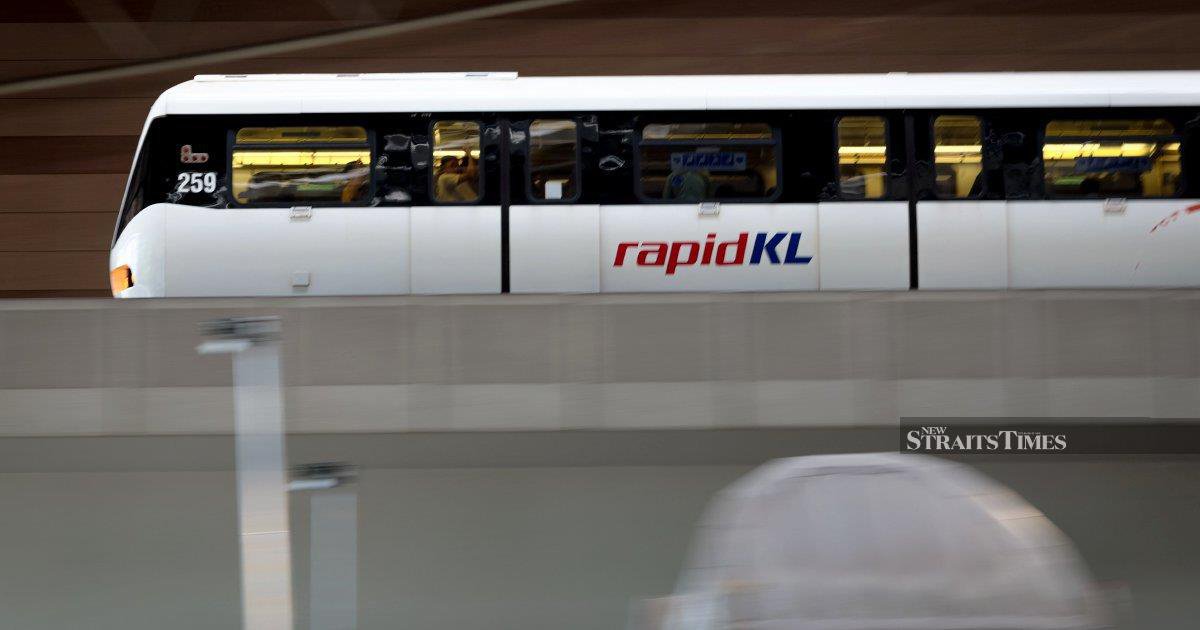
An individual was detained by authorities after breaching the security perimeter of the Shah Alam Line at Jalan Meru Station, prompting a temporary suspension of rail services operated by Rapid KL in the early hours of the day. The unauthorized access to the tracks triggered immediate response protocols from transit operators, who halted services pending a safety assessment and the conclusion of the law enforcement operation.
The incident underscores the persistent security challenges facing the Greater Kuala Lumpur public transportation network, where railway lines require continuous monitoring to prevent unauthorized access. The Shah Alam Line, which serves as a critical arterial route connecting residential and commercial districts across the Klang Valley, experienced service delays that rippled across the morning commute pattern for hundreds of passengers dependent on rail connectivity for their daily movement.
Rapid KL's operational team moved swiftly to contain the situation, implementing standard protocols for track incursion events. These procedures typically involve halting all train movements on the affected segment, securing the area, and coordinating with police to safely apprehend the intruder and restore normal operations. The efficiency of this response demonstrates the maturity of the operator's emergency management systems, though the underlying vulnerability that permitted unauthorized track access remains a matter of operational concern.
Jalan Meru Station, situated within the broader Shah Alam Line corridor, serves as a transit interchange for passengers accessing multiple districts within the metropolitan area. The temporary service disruption imposed during peak morning travel periods compounds the inconvenience for commuters who rely on punctual rail services for their workplace journeys and connecting transportation legs. Beyond individual passenger inconvenience, such disruptions carry economic implications for the region's mobility ecosystem, potentially affecting business operations and logistical schedules across the Klang Valley.
Railway security incidents of this nature—whether stemming from unauthorized trespassing, suicidal ideation, or other motivations—regularly disrupt services across Malaysia's expanding light rail transit networks. The common thread across these incidents is the vulnerability of open track segments to determined individuals, despite existing perimeter controls and surveillance infrastructure. Operators face an ongoing balancing act between maintaining cost-effective operational budgets and implementing increasingly sophisticated security measures.
The detention of the individual involved in today's incident marks the visible component of the response, yet the root causes driving unauthorized track access deserve systemic attention. Whether the breach was motivated by desperation, curiosity, or deliberate disruption, addressing the underlying drivers requires engagement from public health services, community support networks, and law enforcement in tandem with transit security enhancement.
For the traveling public in the Klang Valley, incidents such as this serve as reminders of the infrastructure vulnerabilities that punctuate daily commuting experiences. The Shah Alam Line remains a vital transportation artery for districts reliant on efficient rail connectivity, and recurring service disruptions—regardless of cause—accumulate opportunity costs for workers, students, and service sector employees dependent on predictable transit schedules.
Rapid KL has not disclosed the duration of the service suspension or the extent of passenger impacts, though typical track incursion incidents result in service restoration within hours of police clearance. The operator's communication protocols during such events remain under periodic scrutiny from commuter advocacy groups who argue for more transparent and timely passenger notifications regarding service disruptions and estimated resumption times.
The incident adds to a broader pattern of operational challenges afflicting the Klang Valley's public transportation network, extending beyond the Shah Alam Line to encompass the wider Rapid KL system and associated modal integration points. As the region's urban density intensifies and commuter volumes grow, the pressure on aging transit infrastructure to maintain service reliability without interruption grows correspondingly. Security enhancements across rail systems remain both technically feasible and financially challenging for a public transit operator managing multiple competing operational priorities.
Investigators will likely examine the circumstances surrounding the unauthorized track access to establish whether the incident reflected a one-off security lapse or a pattern requiring enhanced protective measures. Such analysis informs decision-making around technology deployment, personnel training, and perimeter fortification strategies. The detention of the individual involved provides law enforcement with an opportunity to understand the motivation behind the track breach and assess whether similar incidents may recur absent corrective measures.

