Authorities in Negeri Sembilan have detained a suspect in connection with a social media post that allegedly contained disrespectful remarks about members of the state's royal family. The arrest marks another instance of law enforcement taking action against online content deemed offensive to Malaysian royalty, a sensitive matter under local law.
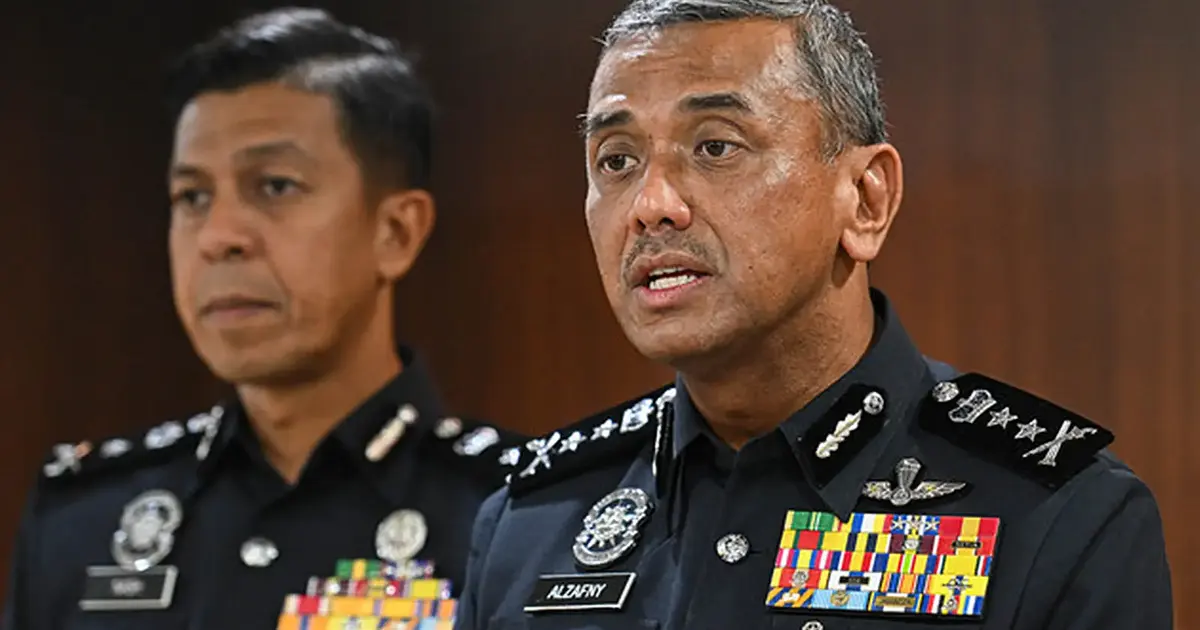
Negeri Sembilan police chief Alzafny Ahmad confirmed that the suspect's mobile phone was confiscated as part of the investigation into the case. The device is expected to be examined for evidence related to the allegedly insulting post and any other relevant material that may shed light on the circumstances surrounding the incident.
The arrest underscores the serious stance Malaysian authorities maintain regarding respect for the monarchy, a cornerstone of the nation's constitutional framework. Under the Sedition Act and other relevant legislation, making derogatory comments about members of royal families can result in criminal charges, substantial fines, and imprisonment. Such laws exist across all Malaysian states, including Negeri Sembilan.
Social media has become a frequent battleground for enforcement of these regulations, with police regularly monitoring online platforms for content that breaches laws protecting royal dignity. The ease with which posts can spread across networks has prompted law enforcement agencies to act swiftly when such material is brought to their attention or discovered during routine monitoring operations.
This incident reflects the broader tension in Malaysia between digital freedom and legal protections afforded to the monarchy. While the nation prides itself on its democratic values and constitutional rights, including freedom of expression, these freedoms are constrained when they venture into territory considered insulting or seditious toward royal institutions.
For those unfamiliar with Malaysia's legal landscape, it is important to understand that each state maintains its own royal family with significant ceremonial, cultural, and constitutional roles. Negeri Sembilan, located in the west-central region of Peninsular Malaysia, has a unique system of governance where the Yang di-Pertuan Besar, the state's monarch, holds considerable symbolic authority alongside the state government.
The investigation into this case will likely involve forensic examination of the suspect's communications history, identification of the post in question, and potential determination of intent. Police will need to establish whether the content was genuinely insulting or merely critical commentary that fell within acceptable bounds of public discourse—a distinction that has generated considerable debate among legal experts and civil society observers in recent years.
Such arrests occasionally generate discussions about the proportionality of legal responses and whether social media posts, particularly those made in the heat of the moment or without malicious intent, warrant criminal investigation. However, Malaysian authorities have consistently maintained that protecting royal dignity is a non-negotiable principle that transcends modern communication platforms.
The seizure of the mobile device is standard procedure in such investigations, allowing forensic specialists to extract metadata, deleted messages, browsing history, and other digital evidence. This data can prove crucial in establishing not only that the post was made but also contextual information about its creation and distribution.
Regional observers have noted that Malaysia's approach to online speech governing royalty is stricter than some neighbouring democracies, though regional variations exist across Southeast Asia. Singapore, for instance, maintains similarly stringent protections through its own laws, while other nations have adopted somewhat more lenient standards. The contrast reflects different constitutional frameworks and cultural priorities across the region.
For Malaysia's digital community, this arrest serves as a reminder of the legal boundaries surrounding online expression. Content creators, commentators, and ordinary users must exercise caution when discussing matters related to the monarchy, as the line between legitimate criticism and insulting speech remains subject to interpretation by prosecutors and courts.
The Negeri Sembilan police have not disclosed additional details about the suspect's identity, the specific nature of the post, or the platform through which it was shared. Such information typically emerges during court proceedings or official statements as the investigation progresses through Malaysia's criminal justice system.
As the case develops, it will likely attract attention from civil liberties advocates, media freedom organisations, and legal commentators who monitor the intersection of digital rights and traditional protections. The outcome could carry implications for how authorities balance law enforcement with evolving social media practices and public discourse norms in the years ahead.

