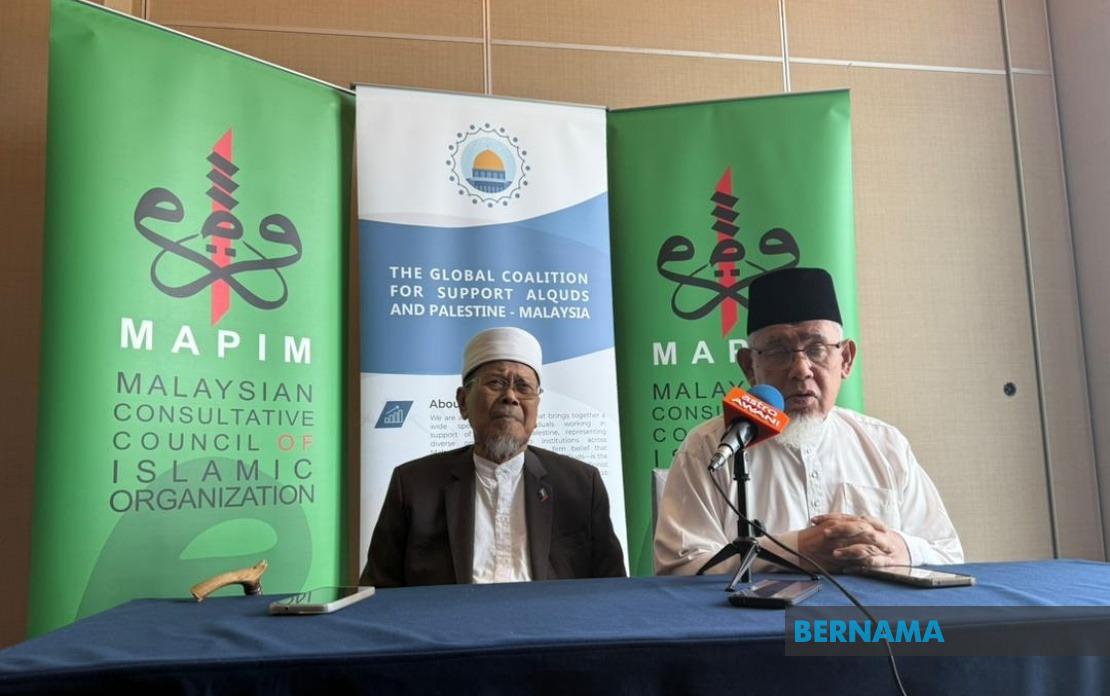
The Malaysian Consultative Council of Islamic Organisations (MAPIM), working alongside the Perak Islamic Religious Department (JAIPk), is preparing to launch a significant two-day gathering in Ipoh beginning tomorrow. The Regional Mosque Conference 2026 will assemble roughly 400 mosque leaders and representatives from across Malaysia and a broad cross-section of neighbouring nations, creating what organisers describe as a crucial platform for strengthening Islamic institutional cooperation throughout Southeast Asia and beyond. The conference venue is set at a prominent hotel in the state capital, with participants expected to arrive from Indonesia, Singapore, Brunei, Timor-Leste, Myanmar, Cambodia, Thailand and Vietnam, alongside delegations from Turkiye, Iran and Pakistan.
MAPIM president Mohd Azmi Abdul Hamid explained at a press briefing that the conference deliberately coincides with World Mosque Day, an annual observance held on August 21 that memorialises the devastating arson attack on Al-Aqsa Mosque in Jerusalem in 1969. Rather than treating this commemoration as a perfunctory yearly ritual, Mohd Azmi emphasised that MAPIM views the occasion as an opportunity to revitalise the mosque's foundational purpose within Muslim societies. He stressed that mosques must reclaim their historical role as anchors of community strength, resilience and collective identity, a concept particularly resonant in Malaysia where religious institutions carry deep social significance.
The gathering operates around seven core strategic objectives designed to create measurable institutional improvements across the region. These include establishing a formalised network of regional cooperation amongst mosque authorities, fostering meaningful youth engagement within Islamic spaces, and encouraging communal economic participation that strengthens local Muslim societies. Additionally, the conference aims to deepen collaborative ties with Islamic non-governmental organisations operating across the region, recognising that effective mosque management increasingly requires partnerships with civil society bodies.
One distinctive feature of this conference is its commitment to producing actionable outcomes beyond the typical speeches and declarations. Organisers plan for participating mosques and Islamic NGOs to jointly develop a formal declaration, coupled with a detailed and sustainable action plan that delegates can implement in their respective jurisdictions following the conclusion of the two days. This approach reflects growing recognition amongst Islamic leaders that regional gatherings must translate rhetorical commitments into concrete, measurable initiatives.
The conference programme encompasses academically rigorous presentations, substantive international dialogue sessions, and dedicated discussions centring on the situation in Palestine and the status of Al-Aqsa Mosque. These discussions respond to widespread concern throughout the Muslim world regarding developments in the Middle East, with the conference offering a space for Islamic institutions across Southeast Asia to articulate their perspectives and coordinate advocacy efforts. For Malaysian participants particularly, these conversations align with longstanding official support for Palestinian causes and Islamic solidarity principles embedded within Malaysian foreign policy.
Three major initiatives will debut at the conference, each designed to extend MAPIM's influence beyond the immediate gathering. The first involves launching a regional mosque coalition specifically focused on Palestine advocacy, creating an institutional mechanism through which mosques across Southeast Asia can channel support for Palestinian causes. The second initiative comprises publishing a comprehensive book examining the contemporary role and responsibilities of mosques in modern societies, contributing to Islamic thought leadership in the region. The third represents an innovative fundraising instrument: the MAPIM Gold Dinar, a financial product intended to facilitate public contributions toward the Al-Aqsa Mosque Fund, thereby democratising support for this significant Islamic site.
Mohd Azmi articulated the underlying philosophy animating these initiatives, emphasising that MAPIM's primary concern extends beyond domestic Malaysian interests toward addressing global humanitarian concerns, particularly regarding Palestine and Al-Aqsa. The Gold Dinar scheme exemplifies this approach by removing barriers to public participation, enabling ordinary Muslims with modest means to contribute meaningfully to preservation efforts at a mosque of immense theological and historical significance. The accessibility of this mechanism reflects broader Islamic principles emphasising communal responsibility and inclusive participation in collective causes.
MAPIM's leadership has set ambitious expectations for the conference's regional impact, hoping the gathering will transmit a powerful message throughout Muslim communities across Southeast Asia. The underlying message emphasises that mosques must remain proactive agents in advancing Islamic interests and community wellbeing, rather than retreating into passive or purely ceremonial roles. This vision carries particular resonance in Malaysia, where mosque institutions have historically wielded considerable social influence and where religious organisations continue attracting significant public engagement.
The conference represents an expansion of Malaysia's role as a convener of Islamic discourse in Southeast Asia, positioning Ipoh as host to a summit of considerable symbolic and practical importance. By assembling leadership from such geographically and politically diverse nations, MAPIM demonstrates the capacity of Islamic institutional networks to transcend national borders and facilitate dialogue amongst Muslim-majority societies with varying political systems and development trajectories. This regional dimension is particularly significant for Malaysia, which has invested substantially in positioning itself as a responsible voice within Islamic civilisation and a bridge between diverse Muslim communities.
For Malaysian mosque administrators and Islamic officials, the conference offers valuable opportunities to benchmark practices, exchange operational expertise, and participate in shaping regional standards for mosque governance and community engagement. The gathering also signals to the broader Muslim world that Southeast Asian Islamic institutions are taking active responsibility for supporting global Islamic causes, moving beyond passive observation toward concrete institutional commitments and coordinated action.

