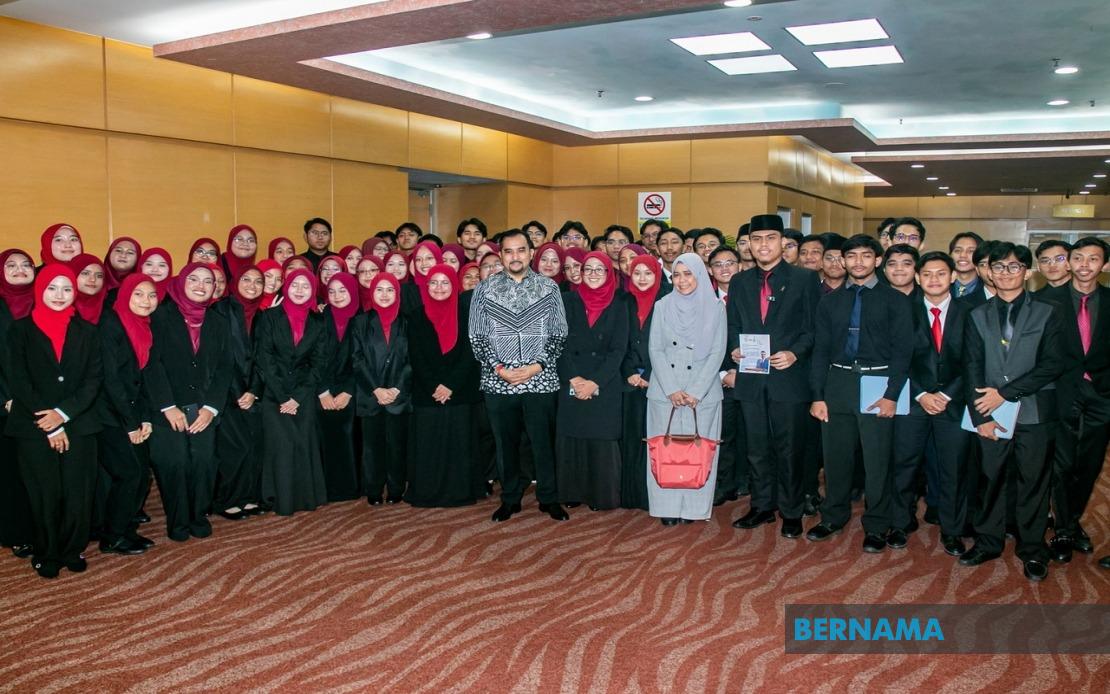
Majlis Amanah Rakyat (MARA) has officially resumed its medical student sponsorship scheme at Al-Azhar University in Egypt, marking a significant milestone in the agency's overseas education strategy. Following Cabinet approval, the first cohort of 78 medical students will begin their studies this year, representing a major expansion of MARA's commitment to developing Malaysia's medical workforce through international partnerships. The resumption comes after a seven-year hiatus since the programme was discontinued in 2019, signalling renewed confidence in the Egyptian institution as a viable training ground for future Malaysian healthcare professionals.
MARA chairman Datuk Dr Asyraf Wajdi Dusuki disclosed that the financial arrangement represents a substantial shift in accessibility for Malaysian students seeking medical qualifications abroad. With each student's five-year course projected to cost RM350,000 including accommodation, the overall expense per graduate falls dramatically below domestic alternatives. The figure reflects a generous 50 per cent discount generously extended by Al-Azhar University, a gesture that underscores the institution's commitment to strengthening ties with Malaysia. In comparison, pursuing medicine through private Malaysian institutions can exceed RM700,000 to RM800,000 per student, making the Al-Azhar pathway considerably more economically viable for middle-income families seeking quality medical education.
The decision reflects broader policy considerations within Malaysia's government regarding human capital development and the strategic value of maintaining diverse international educational partnerships. Prime Minister Datuk Seri Anwar Ibrahim's approval of the initiative demonstrates official confidence in Al-Azhar's medical credentials and pedagogical standards. MARA's resumption of this programme signals an intentional investment in ensuring that talented Malaysian students have access to internationally recognised medical training without prohibitive financial barriers that might otherwise exclude capable candidates from less affluent backgrounds. The agency's historical relationship with Al-Azhar, despite the seven-year interruption, evidently retained sufficient institutional trust to warrant this substantial re-engagement.
Beyond the medical cohort, MARA's broader overseas scholarship network continues expanding at an impressive scale. Approximately 600 students who have completed their studies at MARA preparatory centres will commence international programmes in phases beginning the following week, deploying from three key residential institutions: Kolej MARA Seremban in Negeri Sembilan, Kolej MARA Banting in Selangor, and Kolej MARA Kuala Nerang in Kedah. This dispersed intake structure across multiple feeder colleges demonstrates MARA's commitment to geographic equity and ensuring that opportunities extend beyond Klang Valley concentrations. The students will pursue diverse academic disciplines across multiple countries, reflecting a sophisticated matching of individual aptitudes with institutional strengths.
The geographical and institutional diversity of MARA's sponsorship destinations reflects contemporary realities of global higher education hierarchies and Malaysian workforce requirements. Sending students to New Zealand, Canada, Australia, South Korea, the United Kingdom, and Egypt acknowledges that excellence in different disciplines clusters in different regions. Australia and New Zealand possess world-leading agricultural and veterinary science programmes crucial for Malaysia's agribusiness sector; Canada and the United Kingdom offer strong engineering and research facilities; South Korea represents emerging excellence in technology and innovation sectors. Egypt's particular niche in medical training, alongside its cultural and religious alignment with Malaysian society, provides unique pedagogical and social integration advantages that Western institutions cannot replicate.
MARA's achievement in securing placements for its sponsored students at elite international institutions reflects both the quality of preliminary preparation and the agency's established reputation with overseas universities. Eleven students from this year's cohort have already secured places at Imperial College London, one of Britain's most selective institutions, demonstrating the calibre of talent flowing through MARA's pipeline. The broader statistics underscore even more impressive outcomes: forty MARA-sponsored students have gained acceptance to universities ranked within the world's top ten, whilst a further 107 have been admitted to top-twenty ranked institutions globally. These figures suggest MARA's selection processes effectively identify high-potential students and that its preparatory college system adequately equips students for competitive international application environments.
The Al-Azhar medical programme resumption carries particular significance for Malaysian healthcare planning and professional development strategy. Medical education represents one of the longest and most capital-intensive academic pathways, yet remains critical to national healthcare security and professional advancement. By securing Egyptian training for 78 medical students annually, MARA contributes meaningfully to supplementing domestic medical school output and diversifying the professional experiences and international perspectives of Malaysia's future physician cohort. These graduates will return with training influenced by different clinical practices, healthcare systems, and research methodologies, potentially enriching Malaysian medical practice through comparative knowledge and innovation transfer.
The financial efficiency of the Al-Azhar arrangement extends beyond simple cost comparison with domestic alternatives. The RM350,000 figure, whilst substantial, represents remarkable value when evaluated against comparable four or five-year professional programmes at reputable international institutions. Al-Azhar University, founded in 970 CE, carries prestige extending far beyond its Islamic heritage into contemporary medical science and research. The institution's medical faculty maintains modern facilities, internationally qualified faculty, and curriculum standards aligned with global medical education frameworks. For Malaysian families of moderate means, this programme pathway opens doors to recognised professional qualification that might otherwise remain closed due to financial constraints, thereby widening talent pool access across socioeconomic boundaries.
The seven-year interruption in the Al-Azhar medical programme reflects previous policy recalibrations or resource constraints that MARA faced during the 2019-2026 period. The resumption now, combined with the apparent expansion of overall overseas scholarship numbers, suggests improved fiscal capacity or adjusted budgetary prioritisation within MARA's mandate. The agency's dual mission—fostering bumiputera economic participation whilst developing human capital—necessarily involves periodic reassessment of international versus domestic investment allocation. The current climate evidently favours renewed international engagement, particularly where cost-effectiveness and institutional prestige align as strongly as they do with Al-Azhar.
Looking forward, the sustained operation of this medical programme will establish longitudinal data regarding graduate outcomes, professional registration success, and career advancement trajectories of Al-Azhar-trained Malaysian physicians. Success metrics will extend beyond academic completion to include Malaysian Medical Council licensing pass rates, specialisation placements, and return-service contributions to Malaysian healthcare institutions. The medical profession's self-regulatory frameworks and established professional hierarchies mean that international medical graduates face particular scrutiny regarding qualification equivalence and clinical competency. Demonstrable success from MARA's Al-Azhar cohorts will strengthen the programme's long-term sustainability and potentially influence expansion discussions.
The programme's resumption also reflects Malaysia's ongoing engagement with Middle Eastern and North African educational institutions as part of broader diplomatic and educational exchange architectures. Maintaining strong educational partnerships across diverse geographies serves Malaysia's positioning as a multiconfessional, globally-engaged nation with sophisticated understanding of varied cultural and institutional contexts. Egyptian universities, particularly Al-Azhar's standing within Islamic academic traditions, offer unique value propositions that purely Western or East Asian alternatives cannot replicate. This balanced approach to educational sourcing demonstrates strategic thinking about developing versatile, internationally-exposed professional cohorts capable of functioning effectively in Malaysia's multicultural and increasingly globalised working environments.
For prospective medical students in Malaysia, particularly those from middle-income backgrounds or outside prime urban centres, the Al-Azhar pathway now represents a tangible, financially accessible route to internationally recognised medical qualification. The eight-year interval since last intake generated likely pent-up demand among students and families seeking credible overseas medical education options. The 78-student intake, whilst substantial, may indicate measured pacing rather than maximum capacity, suggesting potential for expansion in subsequent years if outcomes meet expectations. MARA's demonstrated ability to negotiate significant institutional discounts with Al-Azhar—the 50 per cent reduction is noteworthy—suggests institutional relationships could potentially extend to additional educational programmes or specialised clinical training partnerships, further broadening the scope of Malaysia-Egypt educational exchange.

