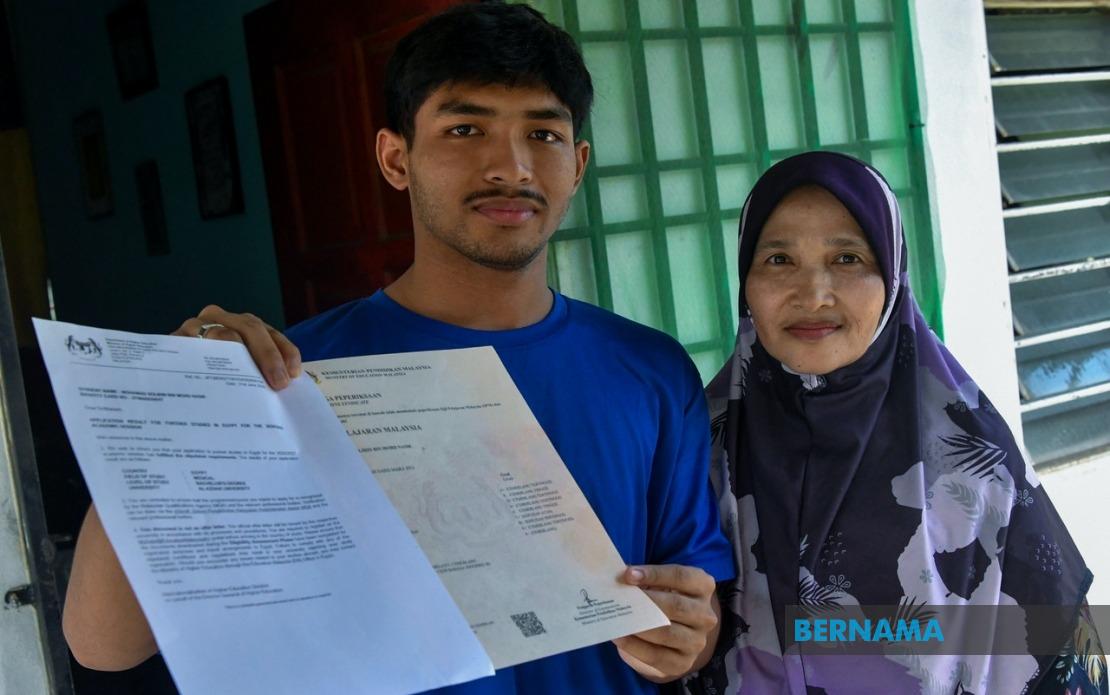
A 19-year-old student from Kelantan nearly surrendered an opportunity to study medicine at Al-Azhar University in Egypt because his family lacked the means to cover an estimated RM100,000 in tuition and living expenses over five years, before Majlis Amanah Rakyat (MARA) intervened with financial support. Mohamad Solihin Mohd Nasir, a former student of MARA Junior Science College Jeli, faced an agonising dilemma when his June 15 acceptance arrived—pursuing a lifelong ambition versus accepting the financial reality of his household.
The young scholar's predicament reflects a broader challenge facing high-achieving Malaysian students from disadvantaged backgrounds: institutional excellence alone cannot guarantee access to premier educational opportunities when family resources fall short. Mohamad Solihin's circumstances exemplify this tension particularly acutely. His father, Mohd Nasir Abdul Rahman, died of a heart attack in 2014 when the boy was in primary school, fundamentally reshaping his family's economic landscape. His mother, Faridah Mohamad, aged 60, manages a chronic thyroid condition and relies on financial contributions from her other children. As the youngest of five siblings, Mohamad Solihin carries the emotional weight of his early loss alongside the practical constraints of poverty.
Rather than accepting defeat, the student's school community mobilised support. Teachers at MARA Junior Science College Jeli organised fundraising initiatives while the family submitted assistance applications to multiple organisations spanning government, religious, and charitable bodies—including MARA itself, the Kelantan Islamic Religious and Malay Customs Council, the Kelantan Islamic Foundation, and the Kelantan Darulnaim Foundation. This coordinated effort between institution, family, and civil society demonstrates how Malaysian educational ecosystems attempt to identify and nurture talent regardless of socioeconomic circumstance.
MARA chairman Datuk Dr Asyraf Wajdi Dusuki responded swiftly and expansively during a video call at Mohamad Solihin's home in Kampung Kubang Keranji, Kota Bharu. Rather than offering a single pathway, the agency presented two strategic options. The first involves MARA sponsorship to support his Egyptian medical education, including preparation through an Arabic language course to meet institutional entry requirements before commencing degree studies. The second option redirects him toward medical training at Universiti Sains Malaysia Health Campus under MARA sponsorship, eliminating international mobility concerns while maintaining access to quality medical education.
This dual-track approach reveals MARA's sophisticated understanding of student circumstances. Some Malaysian medical aspirants prefer studying overseas for exposure to international standards and credentials, while others face visa, cultural adjustment, or family obligations that make domestic study preferable. By offering both pathways, MARA acknowledges these varied considerations and empowers the student to make an informed decision rather than imposing a single institutional solution.
Ashraf Wajdi emphasised that MARA consciously prioritises high-achieving students from economically disadvantaged backgrounds, particularly those who have experienced parental loss. Mohamad Solihin's profile—a stellar cumulative grade point average of 3.96 from Kelantan Matriculation College combined with orphanhood and family financial hardship—precisely matches the agency's intervention criteria. This targeting reflects a deliberate policy choice to view educational investment in such cohorts as especially high-impact, recognising that financial obstacles disproportionately affect capable students without family wealth buffers.
Monamad Solihin's aspirational trajectory adds profound personal dimension to this policy rationale. Rather than pursuing medicine as an abstract professional goal, his ambition crystallised through tragedy. His father's 2014 death from cardiac disease kindled a specific calling: to become a cardiothoracic surgeon. This specialised motivation—transforming grief into purpose—suggests an exceptional capacity for sustained commitment through the demanding medical curriculum. Students driven by such personal missions often demonstrate resilience and dedication that purely grades-based selection cannot capture.
The timing of his departure remains conditional on funding confirmation. If sponsorship arrangements solidify, Mohamad Solihin is scheduled to depart for Egypt between August 21 and 29, providing a compressed window for finalising visa documentation, language preparation, and logistical arrangements. This tight timeline underscores the urgency of coordinated institutional response and reflects how Malaysian bureaucratic systems must occasionally accelerate normal processes to accommodate exceptional cases.
Matriarch Faridah Mohamad articulated the family's predicament with clarity and dignity, expressing simultaneous pride in her son's achievement and despair at her inability to finance it. Her statement—that the family possessed no resources yet harboured hopes for institutional assistance—encapsulates the experience of many Malaysian families at education's economic frontier. Parents sacrifice profoundly to support their children's advancement, yet encounter ceiling points where family capacity genuinely exhausts. Government agencies like MARA and charitable foundations exist partly to bridge precisely these gaps, transforming institutional promise into lived educational opportunity.
The intervention also highlights MARA's evolving institutional identity. Originally established to develop Malay-Muslim commercial and professional capacity, the agency has matured into a comprehensive scholarship provider serving as Malaysia's primary mechanism for democratising access to elite professional education. Its willingness to span multiple pathways—from domestic medicine to international Islamic university study—demonstrates organisational flexibility responsive to diverse student circumstances and aspirations.
Moreover, this case illuminates enduring disparities within Malaysia's education-to-profession pipeline. Matriculation college students achieving exceptional grades originate disproportionately from families with educational capital and social networks that facilitate scholarship awareness and application. Students without such advantages—like Mohamad Solihin navigating systems unfamiliar to his extended family—risk remaining invisible to funding institutions despite meeting all substantive criteria. His school's proactive advocacy and MARA's responsive engagement represent best-practice institutional responsiveness, yet such outcomes remain insufficiently systematic.
For other Malaysian families confronting similar financial barriers, Mohamad Solihin's case offers both hope and practical guidance. It demonstrates that rejecting educational offers due to financial constraints, while sometimes necessary, need not constitute final decisions. Parallel applications to multiple sponsorship sources, coordinated school advocacy, and public communication of individual circumstances can activate institutional support mechanisms designed precisely for such situations. Additionally, it validates the persistence required: Mohamad Solihin contemplated decline before exhaustively exploring alternatives, yet maintained openness to assistance when offered.
As Mohamad Solihin awaits final confirmation and prepares for potential departure within weeks, his journey from near-resignation to supported advancement encapsulates contemporary Malaysia's continuing negotiation between meritocratic aspiration and socioeconomic reality. MARA's intervention, framed through Asyraf Wajdi's commitment to supporting capable students from disadvantaged backgrounds, signals institutional recognition that talent transcends economic circumstance. Whether Mohamad Solihin ultimately studies in Cairo or Kuala Lumpur, his pathway reflects a Malaysian state machinery consciously working to transform promise into possibility.

