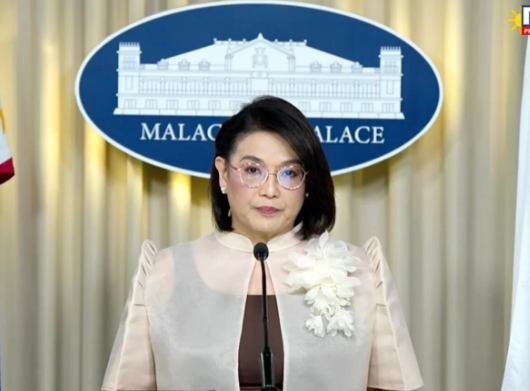
President Ferdinand Marcos Jr has demonstrated unwavering confidence in the Philippine Armed Forces despite mounting evidence of potential internal security threats. The assurance came from Palace Press Officer Claire Castro during a media briefing, as revelations emerged that the National Bureau of Investigation had identified active uniformed military personnel as persons of interest in an alleged assassination conspiracy targeting the President.
The investigative developments surfaced during proceedings related to the impeachment trial of Vice President Sara Duterte on Wednesday. NBI Director Melvin Matibag disclosed that alongside active duty military officers, another person under investigation belongs to the Vice President's own security contingent, raising troubling questions about the integrity of protective services at the highest levels of government. This dual revelation suggested the alleged plot involved coordination across multiple security apparatus, presenting a complex security vulnerability within the state.
Castro's statements reflected the administration's delicate balancing act between acknowledging legitimate security concerns and maintaining institutional confidence in military leadership. She emphasised that the President's trust in the armed forces remained intact, framing the investigation as a necessary mechanism to identify and neutralise individuals who might deviate from their constitutional duties. The Press Officer's comments suggested that rather than wholesale distrust of the military institution, the focus should be on isolating rogue elements willing to perpetrate criminal acts against the state.
The Palace position carried implicit recognition that infiltration of security forces by individuals with personal or factional loyalties represented an internal discipline challenge rather than a systemic institutional failure. Castro indicated that identifying those who might attempt to exploit their positions to advance private interests or protect individual politicians took precedence over broader loyalty examinations within the defence establishment. This approach sought to preserve the military's institutional legitimacy while acknowledging that some personnel had strayed from their mandate to serve the state impartially.
Castro further clarified that no comprehensive loyalty verification programme was being implemented across the armed forces at present, characterising such matters as the responsibility of the security sector and military leadership itself. This delegation of accountability suggested confidence in the command structure's ability to conduct internal investigations and enforce discipline without presidential intervention. However, the statement also implied limits to presidential oversight of military institutions, a recurring tension in Philippine civil-military relations.
The implications of these developments extend beyond immediate security concerns to broader questions about institutional integrity within the Philippine government. The involvement of personnel from the Vice President's security detail alongside military officers suggested potential coordination between different security services, possibly motivated by political divisions at the apex of government. Such fragmentation of loyalty within security structures historically presages deeper institutional instability.
Vice President Duterte herself had made cryptic and alarming statements during the impeachment proceedings, reportedly instructing an unnamed individual that should any harm befall her, the person should ensure that President Marcos, his sister Liza Araneta, and cousin Martin Romualdez met similar fates. Though Duterte characterised these remarks as emphatic rather than serious, the statements reflected deteriorating personal relations between the President and his Vice President, creating a political context in which security threats could flourish. The apparent absurdity of her claims—delivered during formal impeachment proceedings—underscored the increasingly fractious nature of Philippine elite politics.
The NBI subsequently attempted to compel Duterte's cooperation through formal subpoena, but the Vice President declined to comply, further complicating the investigation. This non-cooperation from a constitutionally significant office holder illustrated the structural limitations facing investigators when political figures resist accountability mechanisms. Her resistance also suggested confidence that her position afforded protection from investigative pressure, a concerning indicator of how political rank might shield individuals from security inquiries.
For Malaysian and Southeast Asian observers, the Philippine situation illustrates vulnerabilities in democracies where strong personalised politics creates competing loyalty networks within security institutions. When military officers perceive that their career advancement or personal safety depends on loyalty to individual politicians rather than democratic institutions, the resulting fragmentation of command authority creates precisely the conditions for both conspiracy and institutional decay.
The broader regional context matters here. Southeast Asia has witnessed multiple instances of security forces being weaponised by factional elites, from Thailand's repeated military interventions to Indonesia's security sector dynamics. The Philippines' experience demonstrates how investigative transparency can coexist with institutional loyalty—the President's confidence in the military institution need not require concealment of wrongdoing by individual members. However, whether Philippine institutions possess sufficient resilience to contain the apparently widening rift between the presidency and vice presidency remains an open question with profound implications for regional stability.
The investigation's trajectory will reveal much about Philippine institutional health. If security personnel can be identified, prosecuted, and removed without triggering broader institutional collapse or military backlash, it would demonstrate mature institutional capacity to police internal threats. Conversely, if investigations stall or become entangled in political manoeuvring, confidence in security sector impartiality would erode further, potentially accelerating the factionalisation that allegedly motivated the conspiracy in the first place.

