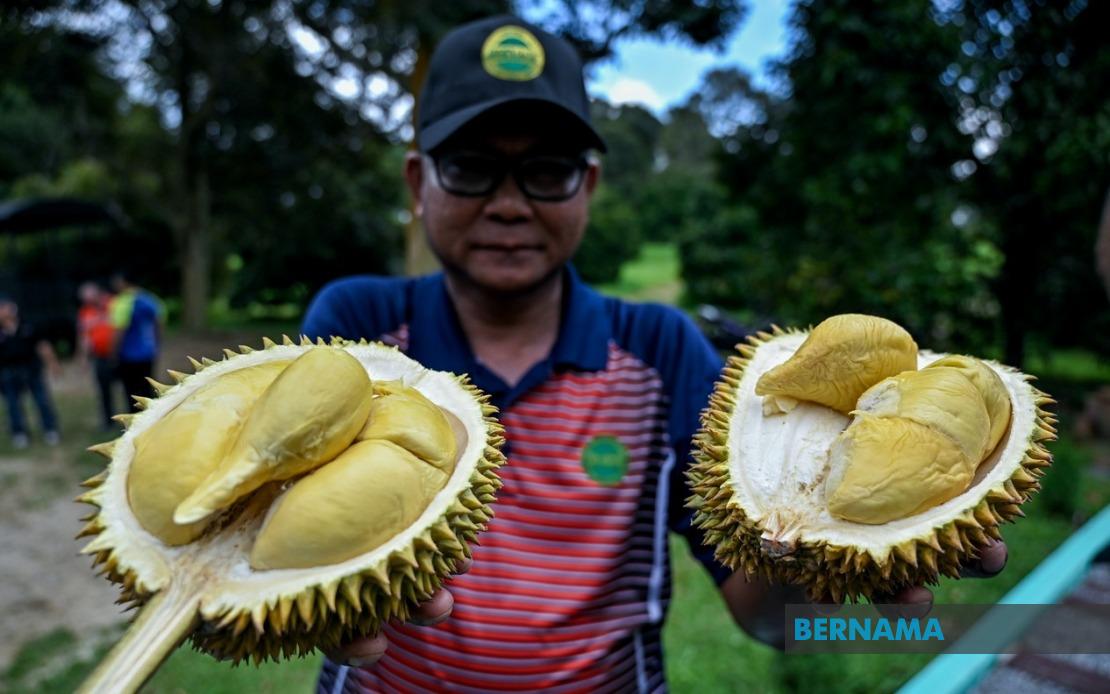
The Malaysian Agricultural Research and Development Institute (MARDI) has significantly expanded its durian breeding programme, with approximately 25,000 trees of the MS88 hybrid variety now planted across the country. According to Datuk Dr Mohamad Zabawi Abdul Ghani, MARDI's director-general, this substantial planting initiative spans roughly 242 hectares, with the majority concentrated in Selangor and the eastern coastal regions of Peninsular Malaysia. The announcement underscores the government's commitment to developing locally-bred durian varieties that can compete in a globally competitive tropical fruit market.
The MS88 hybrid represents one of three premium durian varieties that MARDI has brought to market since the early 2000s. The other two established cultivars, MDUR78 and MDUR79, have garnered considerable popularity among durian connoisseurs and commercial growers seeking reliable, high-quality fruit production. These varieties were developed through years of research and genetic selection, positioning MARDI as a significant player in durian innovation within Southeast Asia. The institute's work reflects broader efforts across the region to enhance agricultural productivity and develop indigenous crop varieties that suit local growing conditions.
Beyond the successful deployment of existing varieties, MARDI is actively engaged in the next phase of durian improvement. The institute is currently advancing three additional hybrid durian varieties through its selection programme, with the objective of introducing these as premium options that respond to both market demands and consumer preferences. This pipeline approach demonstrates strategic planning within Malaysia's agricultural sector, recognising that durian cultivation remains economically vital for smallholder farmers and large-scale growers across the country.
The new varieties under evaluation are being subjected to rigorous testing protocols to assess multiple critical factors. Fruit quality metrics—including size, flavour profile, texture, and shelf-life characteristics—are being systematically measured to ensure the hybrids meet consumer expectations. Simultaneously, MARDI researchers are gathering consumer acceptance data through taste trials and market feedback, understanding that even scientifically superior fruit must resonate with growers and buyers. The evaluation process also prioritises agronomic suitability, examining whether the new hybrids can be successfully cultivated by farmers using existing practices and resources, rather than demanding substantial investment in new infrastructure or specialised knowledge.
MARDI has deliberately withheld the official names of these emerging varieties, preferring to unveil them during the durian season when they can be physically presented to the public. This marketing strategy allows consumers and farmers to simultaneously encounter the fruit, taste samples, and learn about cultivation requirements in a real-world context. Such a launch approach generates anticipation and media coverage while accommodating the durian market's seasonal nature, when public interest and purchasing behaviour peak.
The expansion of MARDI's durian portfolio carries implications for Malaysia's broader agricultural economy. Durian cultivation supports livelihoods across multiple regions, from Selangor and Pahang to Terengganu and Kelantan, where the crop represents a significant income source. By developing locally-adapted, high-yielding varieties, MARDI contributes to farmer profitability and rural sustainability. The MS88 and forthcoming hybrids also enhance Malaysia's competitive position in the international fresh fruit trade, particularly with rising demand from China and other Asian markets where premium durian commands premium prices.
From a regional perspective, Malaysia's investment in durian research reflects the crop's growing economic importance across Southeast Asia. Thailand, Indonesia, and Vietnam have all expanded durian cultivation substantially in recent decades, transforming the fruit from a regional delicacy into a globally traded commodity. MARDI's focus on developing superior hybrids positions Malaysia to maintain its historical reputation for quality, even as regional production increases and new competitors enter the market. The institute's work exemplifies how agricultural research can drive economic development in tropical developing economies.
The Duriotourism MARDI Kuala Kangsar programme, during which these announcements were made, illustrates how research institutions are increasingly engaging with media and the public to promote awareness of agricultural innovation. By opening its facilities and demonstrating ongoing research activities, MARDI fosters appreciation for the science behind crop development while building support for continued public investment in agricultural research. Such engagement is particularly valuable in Malaysia, where agriculture competes with manufacturing and services for policy attention and government resources.
The timing of MARDI's durian development work also reflects changing consumer preferences and production challenges. Climate variability, soil degradation, and pest pressures have motivated research into more resilient varieties. Additionally, as incomes rise across the region, consumer demand has shifted towards premium durian varieties with distinctive flavour characteristics and superior fruit quality. By developing MS88 and its successor hybrids, MARDI addresses these dual imperatives of resilience and quality, ensuring that Malaysian durian remains commercially viable and consumer-preferred.
Looking ahead, the successful establishment of 25,000 MS88 trees demonstrates that MARDI's breeding work translates into commercial adoption. Farmers recognising the yield, quality, and market advantages of these hybrids have planted them across substantial acreage, validating years of research investment. As the three new varieties complete their evaluation phase and enter commercial release, similar adoption rates are anticipated, further consolidating Malaysia's position as a premium durian producer and supporting rural incomes across the country's key growing regions.

