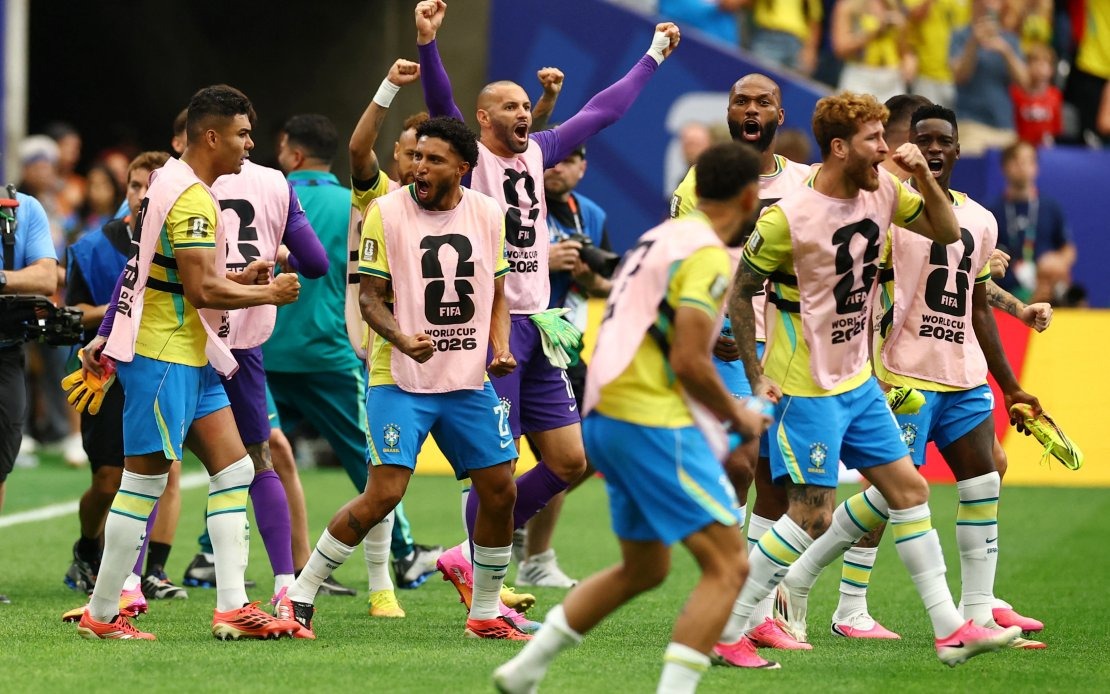
Gabriel Martinelli proved to be Brazil's unlikely hero on Monday evening as the five-time World Cup champions staged a dramatic comeback to overcome Japan 2-1 in their round-of-32 encounter in Houston. The winger's clinical finish in stoppage time delivered Brazil a passage to the knockout round's later stages, where they will face either Côte d'Ivoire or Norway. The victory capped a tense contest that saw the South American giants dominate much of the play without initially converting their superiority into goals, before Japan's early breakthrough was eventually overturned through sustained pressure and clinical finishing.
Both sides arrived at this fixture undefeated from the group phase, representing the strongest possible foundation for their knockout ambitions. Brazil had commandingly won Group C with seven points accumulated across their three matches, demonstrating the attacking prowess and defensive solidity expected from a team of their calibre. Japan, meanwhile, had negotiated a tougher Group F situation to secure second place, accumulating only four points through a single victory and two draws. The contrasting paths to this stage suggested Brazil held the advantage, yet the unpredictability inherent in knockout football ensured no outcome was predetermined.
Historically, Brazil has maintained a formidable record against Japan, with their sole previous World Cup meeting resulting in a comprehensive 4-1 Brazilian victory. However, recent meetings between the nations have painted a more nuanced picture of Japanese improvement. Most notably, Japan had secured a remarkable 3-2 triumph over Brazil in their most recent encounter the previous year, overturning an initial deficit to snatch an unexpected victory. This result illustrated that Japan had developed the tactical sophistication and mental fortitude required to compete with South American heavyweights, lending credibility to their underdog status despite Brazil's historical dominance.
The opening exchanges saw Brazil establish territorial control and force the issue through sustained possession. Matheus Cunha created an early opportunity in the 14th minute, compelling Japan goalkeeper Zion Suzuki into a difficult one-handed save that demonstrated both the Brazilian threat and Japanese goalkeeper's alertness. Despite this dominance, Brazil struggled to translate their midfield control and attacking positioning into clear-cut goalscoring opportunities, as Japan organised their defensive shape with discipline and prevented the South Americans from consistently breaking through with quality chances.
Japan's breakthrough came almost from nowhere in the 29th minute, capitalising on a careless Brazilian moment in the middle third. Danilo's imprecise pass was intercepted by Kaishu Sano, who seized upon the turnover with impressive athleticism and awareness. Sano surged forward with purpose, evading Casemiro's challenge before unleashing a powerful strike that found its way beyond goalkeeper Alisson into the net. The goal silenced the Brazil contingent and provided Japan with a psychological lift, suggesting that the underdogs possessed sufficient quality to trouble their illustrious opponents even while absorbing considerable pressure.
Brazil's response after conceding demonstrated their championship mentality and attacking resources. The five-time champions generated several additional opportunities in the first-half aftermath, though few genuinely tested Suzuki's reflexes or forced him into uncomfortable decisions. The Japanese goalkeeper remained largely untroubled, indicating that while Brazil dominated possession statistics, the clinical execution required to break down an organised defensive setup remained elusive during this opening period.
The second half witnessed Brazil elevate their intensity with greater urgency now reflected in their approach. Bruno Guimaraes saw a promising strike denied, whilst Casemiro's header encountered a Japanese defender's blocking intervention. The equaliser arrived in the 56th minute through Casemiro's redemptive header from a Bruno Guimaraes cross, levelling the contest and restoring parity after Japan's first-half shock. Shortly thereafter, Vinicius Jr orchestrated a moment of individual brilliance, embarking upon a mazy dribbling run that ultimately culminated disappointingly when his strike struck the goalpost rather than nestling in the net, indicating fortune had not yet fully shifted Brazil's direction.
Brazil's persistent offensive waves eventually yielded decisive reward in the closing moments when Gabriel Martinelli was positioned unmarked inside the Japanese penalty area following Bruno Guimaraes' precisely-weighted pass. The Brazilian winger demonstrated composure under pressure, executing a calm one-on-one finish past Suzuki deep into stoppage time to secure Brazil's progression. Japan pressed urgently for a late leveller in response, yet could not manufacture the necessary breakthrough, leaving Brazil as victors despite the encounter's competitive balance across large segments.
The victory carries significance for Brazilian championship credentials and Southeast Asian implications. As a five-time World Cup winner, Brazil represents the tournament's traditional heavyweight and demonstrated here the resilience required to progress despite adversity. For Japan, the performance exemplified how regional nations can genuinely compete with established powerhouses on football's grandest stage, even if ultimate success remained elusive. The result further shapes the knockout bracket, positioning Brazil as formidable opponents for their subsequent opponents and reinforcing expectations that South American representation will extend deep into the tournament's latter stages.

