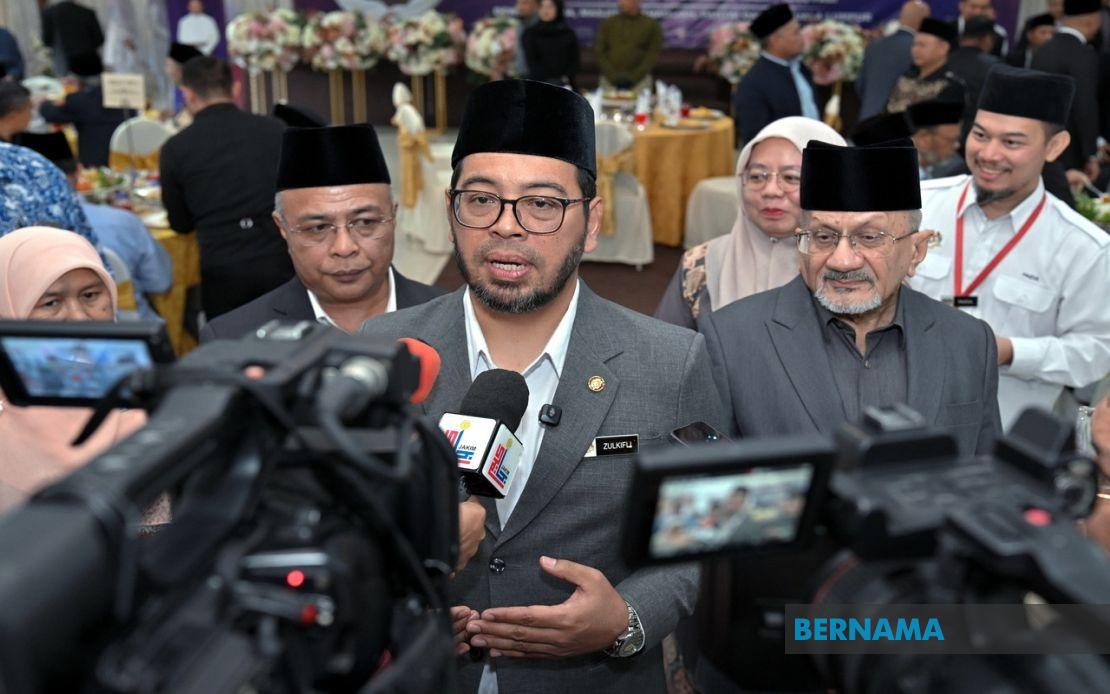
Malaysia's Religious Affairs Minister Dr Zulkifli Hasan has confirmed that construction of Masjid Warisan, situated in the vicinity of the Tun Razak Exchange (TRX) development in Kuala Lumpur, will move forward according to existing timelines. The minister made the announcement while addressing journalists on June 23, emphasising that the project represents a carefully considered initiative designed to strengthen the role of mosques as institutions fostering social cohesion and community wellbeing.
The Masjid Warisan development has been under consideration for a considerable period and forms part of the government's broader strategy to enhance religious infrastructure in Malaysia's capital. Dr Zulkifli articulated confidence in the initiative, stating that implementation would proceed with divine blessing. The project's advancement reflects the administration's dedication to realising long-term religious development plans despite the passage of time and competing priorities in urban planning.
Opposition to the mosque construction has surfaced from unnamed quarters, with critics arguing that the facility could generate social friction and provoke public dissatisfaction. These concerns have circulated through media channels, creating a discourse around the appropriateness of the project's location and scope. The minister's decisive response signals the government's willingness to persist with the initiative regardless of localised resistance, viewing such opposition as manageable through dialogue and community engagement.
To address legitimate concerns from residents and stakeholders, Dr Zulkifli encouraged those with questions or reservations to engage directly with the Federal Territories Islamic Religious Council (MAIWP). This approach enables transparent discussion between the council and concerned parties, allowing officials to provide detailed explanations regarding the project's design, operational framework, and anticipated community benefits. The mechanism reflects administrative confidence that proper communication can alleviate misunderstandings and build broader acceptance.
The minister contextualised the project within a global framework, noting that major cities worldwide successfully accommodate mosques as integral urban components. He highlighted that the Islamic call to prayer represents a source of spiritual tranquillity rather than a disruptive element, challenging narratives suggesting incompatibility between mosque functionality and metropolitan living. This international perspective positions Malaysia's approach within established precedents of coexistence between religious facilities and contemporary urban environments.
Beyond the Masjid Warisan announcement, Dr Zulkifli presided over a significant administrative exercise involving Federal Territories mosque leadership. He distributed formal appointment letters to members of mosque committees and Friday prayer surau councils designated for the 2026-2029 term during a ceremony at Masjid Al-Khadijah in Kampung Pantai Dalam. This appointment process represents routine governance of Malaysia's religious institutional infrastructure, ensuring continuity of leadership within the Federal Territories' mosque network.
The appointment cycle attracted substantial participation from Malaysia's Muslim community, with 3,010 individuals submitting nominations across 91 mosques and 124 Friday prayer suraus throughout the Federal Territories. This extensive candidate pool reflects genuine engagement with mosque governance structures among ordinary believers and community stakeholders. The high nomination rate suggests widespread recognition of the importance these committees carry in shaping congregational life and religious programming.
The selection process incorporated rigorous integrity screening mechanisms, demonstrating institutional commitment to appointing leadership of appropriate moral and ethical standing. Candidates underwent vetting coordinated across multiple governmental agencies, including the Royal Malaysia Police, the Malaysian Anti-Corruption Commission, and the Insolvency Department. This multi-agency approach ensures that appointed committee members meet exacting standards regarding personal conduct and financial responsibility.
Of the 3,010 nominees submitted, 2,914 individuals secured appointment following successful completion of the integrity assessment process. The appointment rate exceeding ninety-six percent indicates that most candidates satisfied the verification requirements. The systematic vetting process, while rigorous, has not created bottlenecks preventing qualified individuals from serving, suggesting well-calibrated standards that balance institutional accountability with accessibility to community participation.
The Masjid Warisan decision represents a test case for Malaysia's capacity to implement religiously-motivated infrastructure development amid competing urban interests. The TRX location carries symbolic significance as a financial hub, and positioning a mosque prominently within this landscape reflects deliberate policy to affirm religious identity within Malaysia's commercial and modern spaces. The project's advancement indicates the government's determination to proceed with religious development priorities regardless of concerns from certain constituencies.
For the broader Malaysian context, the mosque construction and committee appointments underscore how religious governance operates within Malaysia's federal structure. The Federal Territories Islamic Religious Council functions as a key institutional actor managing mosque operations, personnel selection, and community relations. The government's allocation of resources toward religious infrastructure and administrative capacity building signals ongoing commitment to maintaining religious institutions' prominence within national life.
The unfolding situation also reflects evolving dynamics in Malaysian urban planning, where religious facilities increasingly occupy contested spaces within developed commercial and residential areas. Rather than confining mosques to designated zones, Malaysia's approach increasingly integrates them into mixed-use developments. This integration challenges some residents' expectations regarding urban soundscapes and religious observance, yet reflects national consensus regarding Islam's organic presence throughout Malaysian society.
Looking forward, the Masjid Warisan project will likely serve as a benchmark for future mosque construction initiatives in similarly sensitive locations. How the government manages community concerns and implements the facility will influence future decisions regarding religious infrastructure in Malaysia's major urban centres. The outcome may also demonstrate whether transparent engagement, as encouraged by Dr Zulkifli, effectively transforms initial opposition into community acceptance through dialogue and shared understanding.