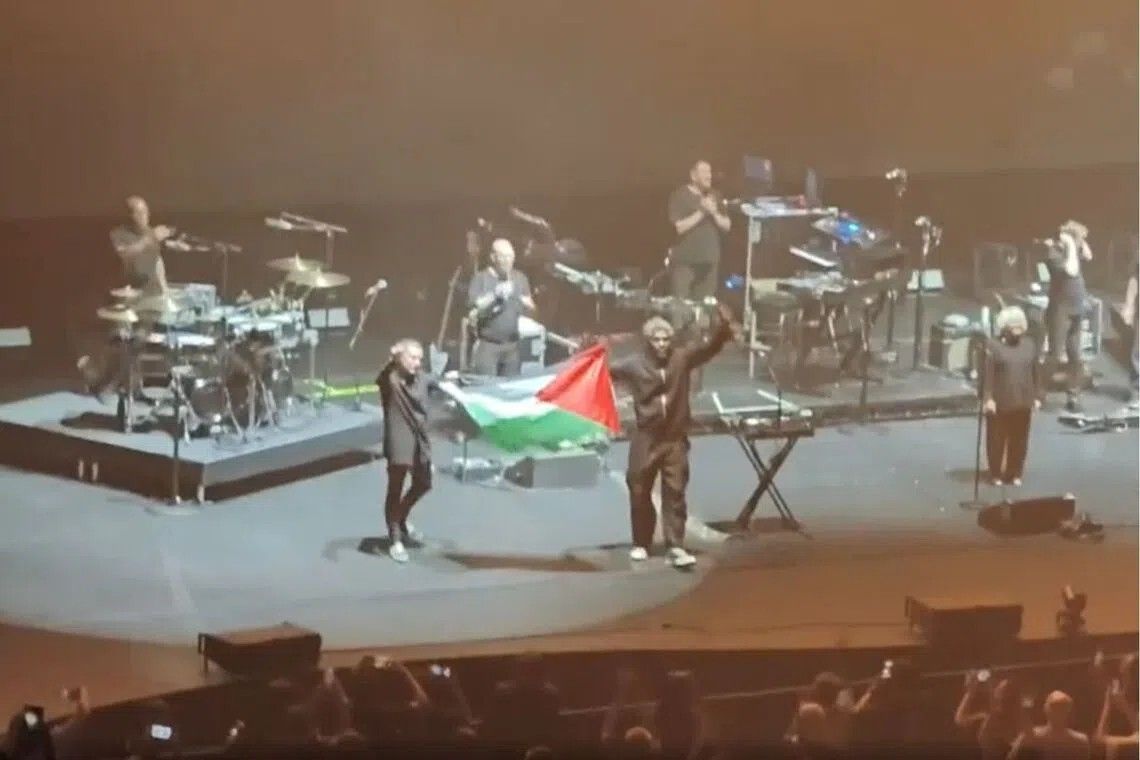
Singapore's authorities have taken decisive action against British trip-hop pioneers Massive Attack, implementing a sweeping performance ban following an on-stage Palestinian flag display that has reignited questions about artistic expression and political speech in one of Asia's most tightly regulated entertainment markets. The police investigation concluded with two unnamed band members receiving stern warnings and permanent entry bans to the city-state, while authorities indicated the ensemble would face rejection for any future performance applications.
The incident unfolded during a Wednesday concert when video footage captured two band members unfurling a Palestinian flag to sustained applause from attendees. One performer was also recorded shouting "Free Palestine" from the stage, actions that immediately triggered regulatory scrutiny given Singapore's well-established legal framework prohibiting unauthorised display of foreign flags, national emblems, and banners without explicit governmental approval. Despite the event organiser's stated acknowledgement of licensing conditions beforehand, the band proceeded with the display, setting in motion the enforcement action that would follow.
Singapore's governing approach to public expression remains notably stringent across multiple domains, extending from assembly regulations to speech protections. The city-state's regulatory regime treats foreign flags and symbols as potential vectors for importing external political divisions into domestic spaces, a concern authorities have articulated as essential to maintaining social cohesion within its diverse, multicultural population. The media regulator has indicated parallel investigations into potential breaches of performance licensing conditions, suggesting the enforcement action extends beyond police intervention into broader licensing frameworks that govern entertainment events.
The band's activism regarding Palestinian causes has been longstanding and widely documented. Massive Attack, whose members have built substantial cultural influence through their distinctive sonic innovations, has consistently leveraged their platform to critique Israeli military operations in Gaza. In April, frontman Robert Del Naja joined more than two hundred demonstrators arrested during a protest at London's Trafalgar Square supporting Palestine Action, an organisation subsequently designated as prohibited by British authorities. This established pattern of political engagement provided contextual backdrop for Wednesday's incident.
The regulatory response carries significant implications for Singapore's positioning as a premier concert destination across Southeast Asia. The city-state has cultivated international reputation as a world-class entertainment hub, hosting multi-night residencies from globally dominant artists including Taylor Swift, Coldplay, Ed Sheeran, and Bruno Mars. This entertainment infrastructure generates substantial economic benefits and attracts international audiences, yet the Massive Attack decision signals that political expression constraints remain non-negotiable even for internationally acclaimed performers commanding substantial audience loyalty and commercial draw.
The enforcement action represents an escalation in how Singapore's authorities manage the intersection of artistic performance and political messaging. Event organisers operating within Singapore's jurisdiction face the challenge of securing formal acknowledgement of regulatory conditions from artists while remaining unable to guarantee compliance during live performances, where spontaneous moments can trigger swift regulatory consequences. The police statement explicitly indicating future performance applications by the band would face rejection removes any ambiguity about the permanence of this enforcement action.
For Southeast Asian entertainment industry participants, the decision underscores the importance of understanding Singapore's distinctive regulatory environment relative to regional counterparts. Promoters booking international acts must now contend with explicit awareness that performers' past activism, documented social media positions, and known advocacy commitments may influence authorities' assessment of compliance risk during scheduled performances. The ban extends beyond conventional contractual matters into reputational and political dimensions that vary significantly across jurisdiction boundaries.
The authorities' public messaging emphasised their concern regarding "importing foreign politics" as corrosive to social cohesion and rule of law principles. This framing reflects Singapore's broader governance philosophy that maintains strict separation between entertainment spaces and political advocacy, particularly regarding international disputes. The police appeal to both residents and visiting foreigners to respect this demarcation represents official clarification that such boundaries apply universally within the city-state's jurisdiction, regardless of performers' international standing or audiences' sympathetic responses.
The concert promoter's silence on the matter leaves open questions about contractual protections and indemnification arrangements surrounding the incident. Organisers booking established international acts typically incorporate compliance representations from performers regarding local legal frameworks, yet enforcing such provisions against globally recognised artists presents practical and reputational challenges that may exceed contractual remedies. This case likely prompts industry participants to reconsider contractual language, rider specifications, and pre-performance briefing protocols when engaging artists with known activist backgrounds.
For Malaysian observers monitoring regulatory trends across the region, Singapore's enforcement approach offers instructive comparison regarding how different jurisdictions calibrate responses to political expression during commercial entertainment events. While Malaysia's regulatory frameworks differ substantially from Singapore's, particularly regarding flag display and political speech, the incident illustrates how regional entertainment markets remain vulnerable to disruptions when international artists' activism intersects with local political sensitivities. Entertainment venues and promoters throughout Southeast Asia may anticipate similar tensions as global audiences increasingly expect artists to leverage performance platforms for political messaging.
The broader implications extend to how international performers navigate divergent regulatory environments while maintaining artistic authenticity and political commitments. Massive Attack's decision to display the Palestinian flag despite organisers' prior licensing acknowledgement reflects a calculation prioritising advocacy visibility over commercial considerations, a choice that carries measurable consequences within Singapore's strict enforcement framework. This tension between artistic expression and regulatory compliance appears likely to intensify as global political divisions increasingly manifest within entertainment spaces across Asia's growing concert markets.

