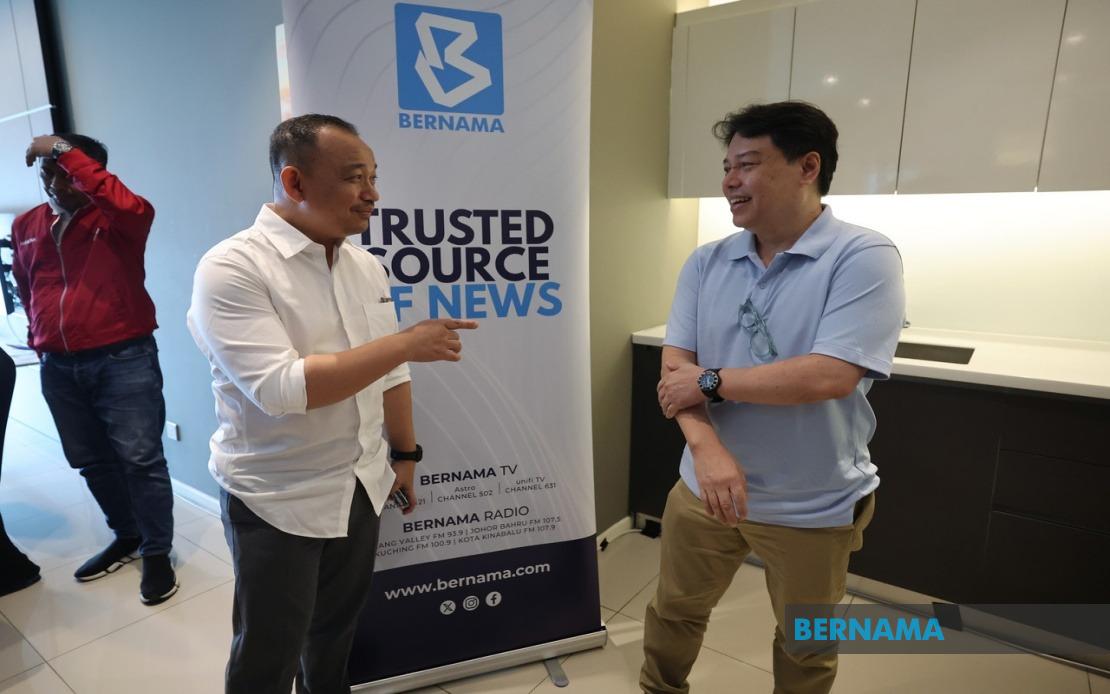
In a hands-on demonstration of political responsiveness, Dr Maszlee Malik accepted a netizen challenge to navigate the contentious route from Kampung Melayu Tebrau to Ulu Tiram in a Perodua Myvi, making tangible his commitment to understanding voter grievances in his bid for the Puteri Wangsa state seat during the upcoming Johor state election.
The exercise proved illuminating. Maszlee's journey, which commenced at Petron Kampung Melayu and passed through Pandan and Kangkar Tebrau before reaching Ulu Tiram, exposed him to the exact problems residents have documented repeatedly on social media platforms. The experience generated visceral understanding—he likened the sensation to riding a traditional wooden boat through Tanjung Surat, with constant swaying and jolting caused by severely compromised pavement. This comparison encapsulates a real infrastructural reality affecting thousands of commuters daily in an economically significant zone near Malaysia's southernmost state.
The road conditions Maszlee encountered represent a broader pattern of urban planning failure across Johor's rapidly developing regions. Traffic congestion near Taman Daya, Taman Pelangi Indah, and surrounding Tebrau areas stems fundamentally from misalignment between development velocity and infrastructure investment. Developers have built residential and commercial projects at pace, yet the underlying road networks have stagnated, creating bottlenecks that worsen during peak commuting hours. This dynamic mirrors challenges facing other Malaysian urban centres where growth has outpaced municipal capacity.
The former education minister and ex-Member of Parliament for Simpang Renggam brought federal-level perspective to his assessment, acknowledging that such issues transcend local governance capacity. Resolving them demands coordinated effort among the Public Works Department (JKR), urban planners, and municipal authorities—an observation rooted in his previous ministerial experience. His diagnosis suggests that infrastructure problems warrant systemic intervention rather than piecemeal fixes, a recognition that carries weight given his prior involvement in national policy frameworks.
Maszlee's approach signals a philosophical stance toward constituency engagement that contrasts with conventional campaigning. Rather than merely collecting complaints, he created a performative moment that demonstrated solidarity with voter frustrations. By subjecting himself to the same road experience his constituents endure, he generated authenticity—a particularly valuable political currency in an era where voters increasingly distrust stage-managed political messaging.
The Puteri Wangsa constituency presents a competitive political landscape heading into polling day on July 11. With 128,723 registered voters, the five-cornered contest involves Maszlee representing Pakatan Harapan, Rashifa Aljunied contesting for MUDA, Teow Chia Ling standing for Barisan Nasional, Nicholas Paul Vincent representing Parti Bersama Malaysia, and Wang Wee Siong competing as an independent. This fragmentation means infrastructure issues may prove decisive, as candidates demonstrate tangible commitment to addressing them.
For Johor voters, the constituency's infrastructure crisis carries economic implications. Poor road conditions increase transport costs for commuters, reducing disposable income and dampening economic activity. Traffic delays impose productivity costs across the broader economy. When political candidates acknowledge these impacts and propose solutions rooted in inter-agency coordination and long-term planning, they signal readiness to tackle problems requiring sustained effort beyond electoral cycles.
Maszlee's emphasis on listening before prioritising reflects a governance philosophy that demands proper needs assessment preceding policy implementation. Having operated at federal level, he understands that infrastructure decisions require technical expertise, budgetary planning, and stakeholder alignment. His commitment to community engagement followed by evidence-based prioritisation suggests an administration that would function differently from one pursuing populist quick fixes.
The timing of this challenge—during active campaigning for the July 11 election—strategic positioning intended to establish credibility on the issue Puteri Wangsa residents consider paramount. Early voting commences July 7, creating urgency for candidates to cement voter trust. Maszlee's Myvi drive generated tangible demonstration of commitment that survives beyond the moment itself, creating durable narrative about his responsiveness.
Understanding why residents issued this particular challenge reveals something crucial about contemporary political engagement in Malaysian constituencies. Social media has enabled voters to collectively highlight grievances and test candidates' authenticity. By accepting the challenge rather than delegating investigation to aides, Maszlee validated the platform residents had created for accountability. This participatory dynamic—where voters set the terms of engagement and candidates demonstrate responsiveness—represents evolving political norms that candidates ignore at electoral peril.
The infrastructure failure documented through Maszlee's drive reflects broader questions about Johor's development trajectory. How should rapid urbanisation be managed to prevent the disconnect between building expansion and services provision? Which governance structures ensure infrastructure keeps pace with population growth? These questions transcend individual candidates, yet their answers depend on electing officials committed to systematic solutions rather than cosmetic interventions.
Looking forward, infrastructure will likely dominate Puteri Wangsa campaign discourse. Candidates unable to articulate credible plans addressing road quality and traffic management will struggle against those offering substantive proposals grounded in inter-agency coordination. Maszlee's hands-on engagement establishes a baseline for accountability that his competitors must acknowledge or counter, effectively raising standards for campaign discourse in the constituency.

