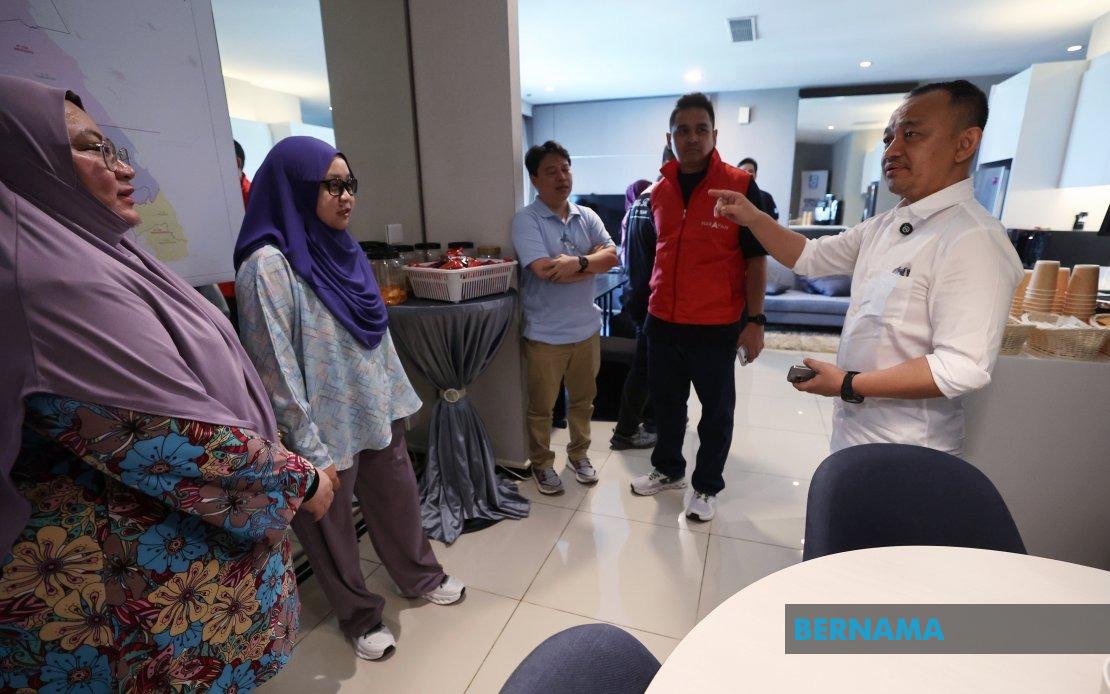
Pakatan Harapan's candidate for the Puteri Wangsa state seat, Dr Maszlee Malik, is positioning himself as a technology-forward representative by pledging to introduce a dedicated mobile application designed to enhance how residents report local grievances and lodge complaints. The proposal comes as the 16th Johor state election approaches, with polling scheduled for July 11, 2023, and reflects a broader shift towards digital-first campaign strategies in Malaysian electoral politics. For Maszlee, the app represents a practical response to the constituency's unique demographic and geographical challenges.
Puteri Wangsa encompasses a striking socioeconomic diversity, spanning from the affluent residential developments of Austin Heights to the agricultural communities of Felda Ulu Tebrau. This variation in community composition and settlement patterns creates a significant challenge for traditional constituent engagement methods, which rely heavily on physical presence and personal interaction. Maszlee argues that a large, heterogeneous constituency demands equally sophisticated approaches to service delivery, moving beyond the conventional walkabout and town hall model that has dominated Malaysian electoral politics for decades.
The former education minister envisions the mobile application serving multiple functions beyond simple complaint lodging. By aggregating data on constituent concerns and systematically tracking requests, the app would create an organised database identifying residents requiring targeted government assistance. Maszlee specifically highlights vulnerable populations—single mothers and persons with disabilities—who often fall through bureaucratic cracks despite formal eligibility for social support. The technology could serve as a bridge between residents and government agencies, reducing friction in access to welfare programmes and ensuring that eligible groups receive timely notification of benefits they qualify for.
Maszlee's inspiration draws from international models of digital civic engagement. He references New York City Mayor Zohran Mamdani's approach to community interaction, which integrates dedicated applications with social media platforms to establish direct communication channels between elected officials and constituents. This cross-border learning reflects a sophisticated understanding of how digital tools can democratise access to elected representatives, particularly in sprawling constituencies where geographic distance previously limited constituent contact. The approach also suggests Maszlee's awareness that Malaysian voters, particularly younger demographics, increasingly expect their representatives to engage through digital channels rather than purely traditional methods.
Beyond the mobile application itself, Maszlee's constituent engagement strategy encompasses a broader ecosystem of community interaction. He commits to sustained dialogue with non-governmental organisations, residents' associations, and government departments, alongside traditional town hall forums. This layered approach acknowledges that different community segments require different engagement mechanisms—not all residents have smartphone access or digital literacy, necessitating parallel conventional channels for those less comfortable with technology-mediated interaction.
Recognising the evolving nature of voter accessibility, Maszlee's campaign has developed a sophisticated social media strategy explicitly targeting demographics difficult to reach through street-level campaigning. Young voters juggling multiple commitments and Malaysian professionals working across the border in Singapore represent electoral groups that conventional campaign methods struggle to engage meaningfully. For these audiences, social media platforms offer the only practical avenue for direct candidate interaction and policy discussion, representing not a supplementary campaign tool but a primary channel.
However, Maszlee candidly acknowledges the structural limitations and distortions inherent in social media-driven political engagement. Digital platforms employ algorithms that create echo chambers, potentially fragmenting the electorate into isolated information bubbles where campaign messages fail to cross ideological or demographic boundaries. Rather than abandoning digital strategy due to these constraints, his campaign responds by explicitly tailoring content to reflect the distinct concerns and priorities of different community groups.
This granular targeting approach reflects sophisticated demographic analysis. Maszlee's team segments the constituency not merely by age but by socioeconomic status, ethnic background, geographic location within the seat, and professional occupation. Content strategy differs markedly across these segments: messaging for Generation Z emphasises youth employment and education access, while material targeting Malaysians in Singapore incorporates considerations of cross-border commuting and remittance concerns. Messages for Chinese community members in Singapore address specific business and economic anxieties, while rural and semi-rural residents receive content emphasising agricultural support and infrastructure development.
The Puteri Wangsa contest itself has evolved into a five-candidate race, reflecting fragmentation in Malaysia's opposition politics. Beyond Maszlee, the ballot includes Rashifa Aljunied representing MUDA, Teow Chia Ling from the Barisan Nasional coalition, Nicholas Paul Vincent for Parti Bersama Malaysia, and independent candidate Wang Wee Siong. This proliferation of choices complicates Maszlee's path to victory and underscores why digitally sophisticated voter targeting has become strategically essential—the fractured opposition vote means that concentrated engagement with specific demographic blocs may prove decisive.
The timing of Maszlee's campaign announcement, coming shortly before the July 7 early voting period and main polling on July 11, suggests a final strategic push to mobilise identified voter segments. The emphasis on technology and constituent services reflects broader shifts in Malaysian electoral politics, where younger voters increasingly evaluate candidates on their digital competency and willingness to engage through contemporary communication channels. For Maszlee, the mobile application proposal signals not merely a service improvement but a statement about representation itself—one that positions him as responsive to how modern Malaysians, particularly those navigating multiple geographic spaces and digital-first lifestyles, expect to interact with their elected officials.
Maszlee's approach also carries implications for Malaysian governance beyond the immediate election. If implemented, the constituent services app would create precedent for how state-level representatives manage service delivery in the digital age. The success or failure of such initiatives in Puteri Wangsa could influence whether other constituencies, particularly those with substantial young populations or geographic complexity, adopt similar models. Whether the technology actually improves constituent service outcomes or becomes another abandoned campaign promise, however, will depend fundamentally on implementation rigour and sustained resourcing after election day—challenges that remain opaque in the candidate's current campaign messaging.

