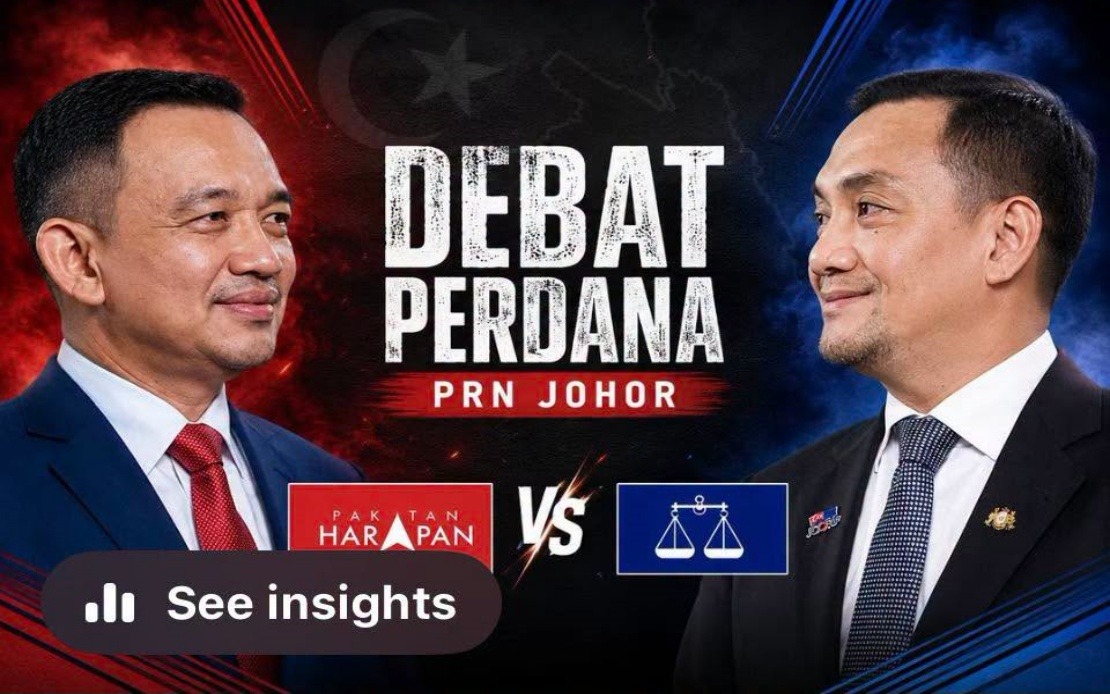
The campaign for Johor's upcoming state election is entering a more confrontational phase, with former Education Minister Maszlee Malik publicly confirming his willingness to face off in a structured debate against incumbent Menteri Besar Onn Hafiz Ghazi. The announcement marks a significant moment in the run-up to polling day, as candidates from opposing coalitions prepare to engage in direct exchanges over policy and governance.
Maszlee, who has been positioned as Pakatan Harapan's standard-bearer for the Puteri Wangsa state seat, framed his acceptance in terms that transcend mere partisan competition. By characterizing his decision as rooted in democratic principles and respect for the electoral process, he sought to position the proposed debate as a vehicle for elevating public discourse rather than simply trading attacks. His assertion that such forums could nurture a more mature political culture reflects a broader conversation within Malaysian politics about the quality of election campaigns and their capacity to inform rather than merely entertain voters.
The debate proposal itself emerged from civil society rather than through formal party channels, originating with social media influencer Muhamad Harris Nasril before gaining wider circulation through the Redaksi.com Facebook platform. This grassroots momentum, coupled with what Maszlee described as numerous inquiries from the public seeking confirmation of his participation, suggests that the proposed encounter has captured public imagination. The organic interest in such a debate could indicate voter appetite for direct confrontation between candidates on substantive issues, moving beyond the typical campaign rally format that dominates Malaysian state elections.
Packatan Harapan's fielding of candidates across the Johor contest demonstrates the coalition's effort to present a comprehensive alternative to the ruling Barisan Nasional administration. The allocation of 56 candidacies across PKR's 20 seats, Amanah's 19 nominations, and DAP's 17 representatives reflects ongoing negotiations within the opposition coalition about seat distribution and strategic positioning. For many of these candidates, particularly those challenging in competitive constituencies, a high-profile debate could provide valuable exposure and an opportunity to articulate distinct policy platforms to voters who might otherwise encounter them only through conventional campaign channels.
The timing of the debate proposal holds strategic significance within the compressed election schedule. With nomination day set for Saturday, early voting scheduled for July 7, and polling occurring on July 11, the campaign period spans merely weeks rather than months. This condensed timeframe means that high-impact events such as structured debates become particularly valuable for candidates seeking to establish themselves or consolidate support. For Maszlee, as a relatively recent entrant to electoral politics compared to his career in ministerial office, such a platform offers an opportunity to demonstrate his capacity to engage in substantive political argument.
Onn Hafiz, as the sitting Menteri Besar representing the current administration, enters any such debate from a position of executive authority and incumbent advantage. His tenure in office provides him with tangible accomplishments to cite and the ability to present government initiatives as evidence of competent administration. However, incumbency also invites scrutiny of governance record and accountability for any perceived shortcomings in service delivery, policy implementation, or administrative efficiency. The stakes for both parties in such a public encounter are therefore considerable, extending beyond rhetorical points to potential shifts in voter perception.
The broader context of Malaysian state elections has increasingly seen candidates and campaigns attempting to claim the high ground on democratic engagement and transparent governance. Debates and public forums, once relatively uncommon in Malaysian electoral culture, have become more frequent as both voters and campaign organizers recognize their potential impact. Social media amplification means that moments from such encounters can rapidly circulate and shape narratives around candidates and their viability. For a former minister like Maszlee, demonstrating comfort and competence in unscripted dialogue against a sitting executive could significantly influence voter assessments of whether opposition candidates possess the caliber necessary for state-level governance.
The composition of Pakatan Harapan's candidate slate in Johor carries implications extending beyond the immediate election. The coalition has worked to balance representation across its three main components while simultaneously ensuring competitive placement of candidates in winnable seats. This balancing act reflects ongoing internal dynamics within PH, particularly the tension between maintaining coalition unity and advancing individual party interests. The performance of candidates like Maszlee across different demographic areas will provide important signals about the coalition's current appeal in a state that remains politically contested.
For Malaysian observers, particularly those interested in the evolution of electoral culture, the willingness of both candidates to engage in a debate format suggests a gradual shift toward more substantive campaign engagement. Whether this represents a sustained trend or a one-off occurrence will depend partially on voter response and media coverage of the debate itself. The Malaysian electoral environment has historically been dominated by party machinery, grassroots mobilization, and incumbent advantages, with voter choice often shaped more by community networks and traditional allegiances than by direct assessment of candidate positions on policy matters.
The debate framework could also influence how voters in the Puteri Wangsa constituency approach their electoral choice. Rather than choosing between candidates primarily on party affiliation or personal networks, constituents would have opportunity to evaluate contrasting visions and governing philosophies directly. This shift from affiliation-based voting toward performance-based assessment, if it gains traction, could have implications for how parties structure campaigns and how seriously they take the development of policy platforms beyond catchphrases and slogans.
Maszlee's public acceptance of the challenge, articulated through careful language about democratic values and political maturity, suggests he views the debate as strategically advantageous. Whether he possesses stronger command of policy detail, more effective communication of opposition positions, or simply greater comfort in formal debate settings remains to be seen. His background in education ministry positions him potentially well to discuss several policy domains, though his record as Education Minister remains contested and could surface as a point of contention during substantive exchanges about governance.
As the Johor campaign enters its most intensive phase, the proposed debate between Maszlee and Onn Hafiz represents one of several mechanisms through which voters will form judgments about electoral choices. The formal election schedule compressed into just weeks means that high-visibility events take on outsized importance, and the outcome of debates can measurably shift perceptions. Both candidates will now prepare extensively for this encounter, recognizing its potential to influence not only local constituency dynamics but also broader state-level narrative about which coalition possesses more compelling vision and more capable leadership for Johor's governance.