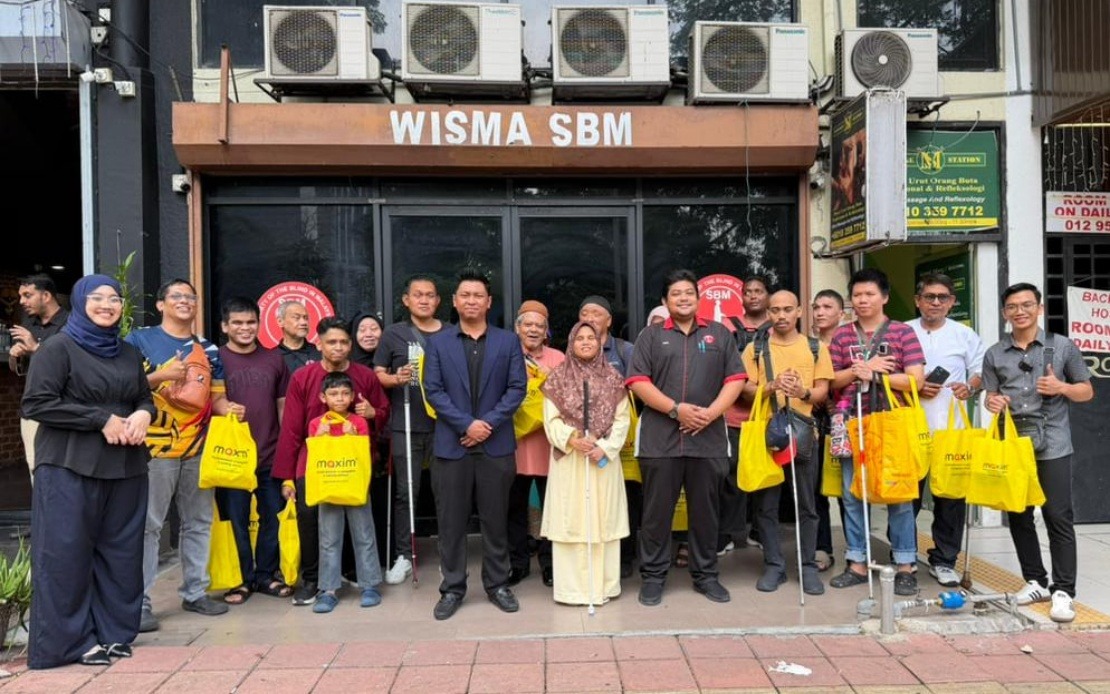
Transportation has become a cornerstone of social opportunity and economic participation in modern Malaysia, yet significant gaps remain in accessibility for vulnerable populations. E-hailing platform Maxim is responding to this challenge by substantially expanding its commitment to serve persons with disabilities, senior citizens, low-income families, and other marginalised communities through a comprehensive strategy combining affordability, technology innovation, and strategic partnerships across the country.
Syed Abdul Syarif Syed Peiaru, Maxim's Kuala Lumpur Head, articulated the company's expanded vision in recent remarks, emphasising that mobility transcends mere point-to-point transit. Instead, he framed accessible transportation as a fundamental enabler of independence and dignity, opening pathways to employment, education, healthcare access, and meaningful social participation. This philosophical positioning reflects a growing recognition among private sector actors that inclusive business practices serve not only humanitarian objectives but also expand market reach and create sustainable competitive advantages.
The practical barriers facing Malaysia's estimated 600,000-plus persons with disabilities in accessing reliable transportation have long constrained their economic participation and social engagement. Rural communities and low-income urban neighbourhoods experience similarly acute service gaps, with conventional e-hailing models often proving economically unviable in lower-density areas or for passengers requiring specialised assistance. Maxim's strategic pivot toward this demographic acknowledges both the social imperative and the underexploited market opportunity within these populations.
Central to Maxim's accessibility drive is the Mesra OKU service, a purpose-built offering incorporating extended waiting periods, driver training in disability etiquette and support techniques, compatibility with mobility aids, and voice-recognition booking interfaces. This layered approach recognises that accessibility encompasses both physical infrastructure and human competency. By enabling passengers to flag specific assistance requirements through the mobile application, the platform facilitates appropriate matching between passengers and trained drivers, reducing friction and uncertainty that often discourages persons with disabilities from using conventional services.
Technological innovation forms the second pillar of Maxim's inclusivity strategy. Beyond the voice-recognition features embedded in Mesra OKU, the platform's transparent pricing, real-time driver connectivity, and streamlined booking architecture eliminate multiple friction points that disproportionately affect users with limited digital literacy or physical limitations. Notably, Maxim's collaboration with the Society of the Blind in Malaysia to promote TalkBack voice features demonstrates targeted engagement with specific disability communities, moving beyond generic accessibility toward tailored solutions addressing distinct user needs.
Financial accessibility remains equally critical, and Maxim has introduced differentiated pricing structures targeting persons with disabilities and individuals with special needs. While specific discount percentages remain undisclosed, this approach acknowledges that affordability constitutes not merely convenience but often the decisive factor determining whether vulnerable populations access essential services. Combined with expanded geographic coverage into rural and underserved urban areas, fare restructuring addresses the compound disadvantage faced by lower-income households in accessing mobility services.
Strategic partnerships amplify Maxim's reach beyond what a single private operator could achieve independently. Collaborations with hospitals, educational institutions, and non-governmental organisations serving vulnerable communities create institutional touchpoints through which accessibility information and services can be promoted. These partnerships also enable service design informed by the lived experiences of target populations rather than assumptions held by platform operators. The company's support for Sarawak para swimmers exemplifies how mobility partnerships extend into athletic and recreational spheres, recognising that inclusive accessibility encompasses not only instrumental transportation but also community, recreation, and self-actualisation.
The broader context of Malaysia's evolving regulatory and social environment has likely influenced Maxim's strategic recalibration. Increasing government emphasis on inclusive development, combined with demographic ageing trends and growing awareness of disability rights, creates both pressure and opportunity for private sector actors to embed accessibility into core business models rather than treating it as peripheral corporate social responsibility. This shift represents significant progress from earlier eras when accessibility was largely relegated to voluntary charitable initiatives.
For persons with disabilities themselves, the expansion of reliable e-hailing options addresses a persistent gap in Malaysia's transportation ecosystem. Public transport systems, while improving, remain challenged in accommodating diverse accessibility needs, while traditional taxi services vary widely in accessibility and service quality. The emergence of dedicated accessible e-hailing services narrows the gap between persons with disabilities and other populations in their ability to access employment, education, and healthcare without dependency on informal support networks or family members.
The economic implications extend beyond individual user benefits to broader productivity considerations. When persons with disabilities gain reliable transportation access, workforce participation rates typically increase, reducing long-term welfare dependency and expanding the economically productive population. Similarly, improved mobility for elderly citizens and low-income students facilitates continued economic participation and human capital development. These outcomes carry particular significance for Malaysia as demographic ageing and skills economy demands reshape labour market dynamics.
Maxim's stated commitment to ongoing platform refinement through user-centric design processes and sustained community engagement suggests the company recognises accessibility as an evolving challenge rather than a static problem to be solved once and archived. Disability communities, elderly populations, and low-income groups possess diverse and sometimes contradictory needs requiring continuous dialogue and iterative improvement. This approach contrasts with more transactional corporate social responsibility frameworks that typically involve time-bounded initiatives with predetermined endpoints.
Government agencies and policy makers observing Maxim's initiatives may consider how public policy might further incentivise or mandate similar approaches across the broader transportation sector. Tax incentives, regulatory frameworks, or procurement policies could accelerate industry-wide adoption of accessibility standards. Conversely, inadequate public policy support could limit the pace and scale at which private operators can sustainably expand accessibility services to underserved populations.

