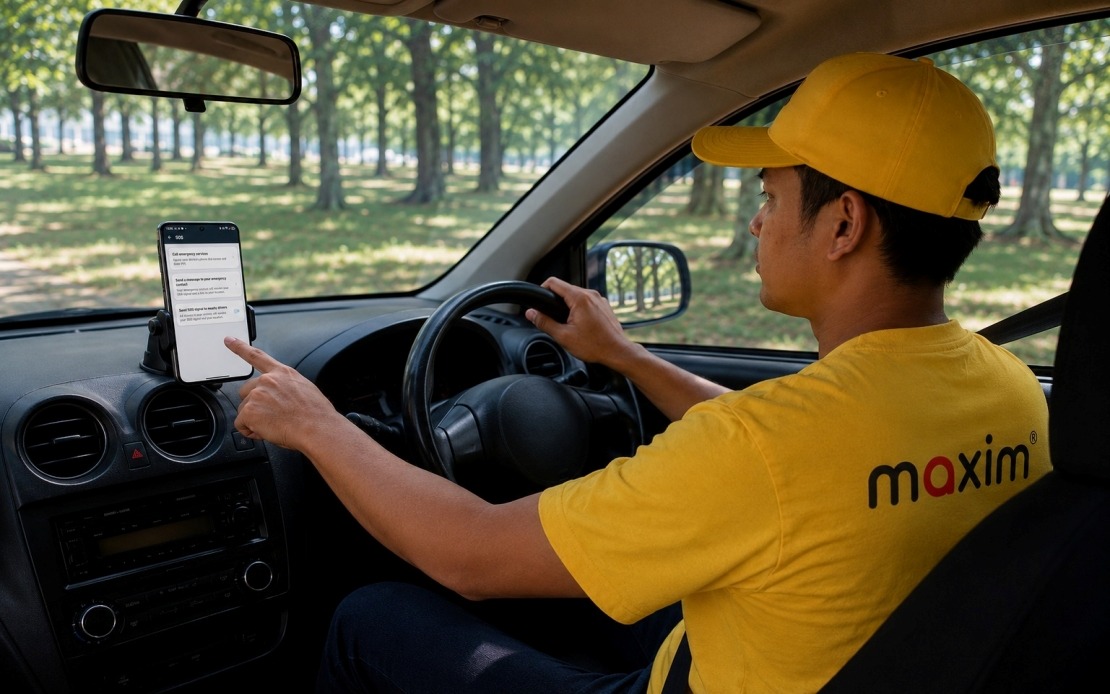
Ride-hailing platform Maxim Malaysia has significantly bolstered its emergency response capabilities by introducing a comprehensive overhaul of its SOS safety infrastructure. The upgrade, announced on July 13, represents a strategic investment in user protection that addresses growing concerns about passenger and driver safety in the ride-sharing sector across Southeast Asia. The enhancements demonstrate the company's commitment to establishing more sophisticated safety protocols that prioritise rapid assistance and reliable location tracking during critical situations.
At the core of these improvements lies a redesigned SOS button that now functions uniformly across both driver and passenger applications. Rather than triggering a single predetermined action, the modernised system grants users immediate discretion to choose their response pathway based on the nature of the emergency they face. Users can either directly contact Malaysia's 999 emergency hotline or instantaneously dispatch alerts to three pre-registered emergency contacts, creating a flexible safety net that adapts to individual circumstances and preferences.
The notification mechanism itself represents a significant technological advancement in ensuring message delivery even when connectivity proves unreliable. Recipients of SOS alerts receive SMS text messages containing precise GPS coordinates of the user's current location alongside a live tracking hyperlink. This dual-layer location-sharing approach ensures that responders can pinpoint the exact incident location even if the user's internet connection deteriorates—a crucial consideration for Malaysia's varied infrastructure landscape, where connectivity gaps remain commonplace in certain regions.
For Maxim's driver-partners, the platform has introduced a dedicated Driver Alert System that substantially expands the network of potential first responders. When a driver activates the emergency function, the system broadcasts notifications to other Maxim drivers operating within a three-kilometre radius, informing them of the emergency type and precise location. This peer-response mechanism creates an immediate local support network capable of providing initial assistance while professional emergency services mobilise, potentially reducing critical delays in time-sensitive situations.
Mohd Hazwan Musli, Maxim Malaysia's director, emphasised that the redesigned system represents a fundamental shift toward user-centric emergency response rather than standardised protocols. He highlighted that users benefit from multiple assistance channels accessible within seconds, and the ability to rapidly determine the most appropriate response pathway—whether contacting loved ones, dispatching professional responders, or engaging nearby fellow drivers—could prove decisive in emergencies. This flexibility acknowledges that different situations demand different interventions, and empowering users to make instantaneous decisions enhances overall safety outcomes.
Beyond the core SOS infrastructure, Maxim has integrated complementary safety features throughout its application ecosystem. A secure in-app messaging system protects users against fraudulent communications, while comprehensive trip monitoring continuously tracks essential journey data including real-time GPS coordinates. For passengers specifically, the Trip Sharing feature enables immediate transmission of live trip links to designated family members or friends upon boarding, ensuring that loved ones maintain visibility of their location throughout the journey without requiring separate applications or manual updates.
The implementation of these features reflects industry-wide recognition that ride-sharing safety demands multi-layered protection combining technology, user empowerment, and community participation. Malaysian passengers and drivers increasingly expect platforms to provide sophisticated safety mechanisms comparable to international standards, particularly following heightened media attention to safety incidents in urban centres across Southeast Asia. Maxim's upgrades position the platform competitively within a market where safety infrastructure increasingly influences user trust and retention decisions.
Critically, all data transmitted through the SOS function, Driver Alert System, and Trip Sharing capabilities undergoes encryption conforming to contemporary security standards. This technical safeguard ensures that sensitive location information and personal emergency contact details remain protected against unauthorised access. Significantly, encrypted data can only be accessed by authorised security personnel and relevant governmental authorities when required under established legal procedures, balancing user privacy with law enforcement needs.
The timing of these enhancements arrives amid broader regional conversations about regulating ride-sharing platforms and establishing minimum safety standards. Malaysian transport authorities and consumer protection agencies have increasingly scrutinised ride-hailing operators' safety mechanisms, and platforms responding proactively to these concerns demonstrate regulatory awareness and commitment to industry leadership. The upgrades may serve as a template influencing safety expectations across the Malaysian and broader Southeast Asian ride-sharing market.
For Malaysian users, particularly in metropolitan areas where ride-sharing adoption remains highest, these features address frequently cited safety concerns. Both passengers and drivers have expressed anxieties about emergency response times and reliability of existing safety mechanisms, particularly when travelling through unfamiliar areas or during irregular hours. The GPS-tracked notifications and multi-contact alert system directly address these concerns by establishing verifiable location information and creating redundant communication pathways that function independently of internet stability.
The platform's emphasis on driver safety represents a notable consideration often overlooked in safety discussions that predominantly focus on passenger protection. Drivers operating in ride-sharing environments face distinct vulnerabilities, including difficult passengers, roadside confrontations, and vehicle-related emergencies. The Driver Alert System specifically acknowledges these risks by mobilising fellow drivers as first responders, creating professional peer networks capable of providing contextually appropriate assistance before formal emergency services arrive.
Looking forward, Maxim Malaysia's enhanced safety infrastructure establishes competitive benchmarks for rival platforms operating throughout the region. As Malaysia's ride-sharing market matures and users become increasingly safety-conscious, platforms offering sophisticated emergency response systems and transparent data protection will likely capture disproportionate market share. The upgrades signal that Maxim views safety investment not merely as compliance obligation but as fundamental value proposition distinguishing the platform in an increasingly competitive marketplace.

