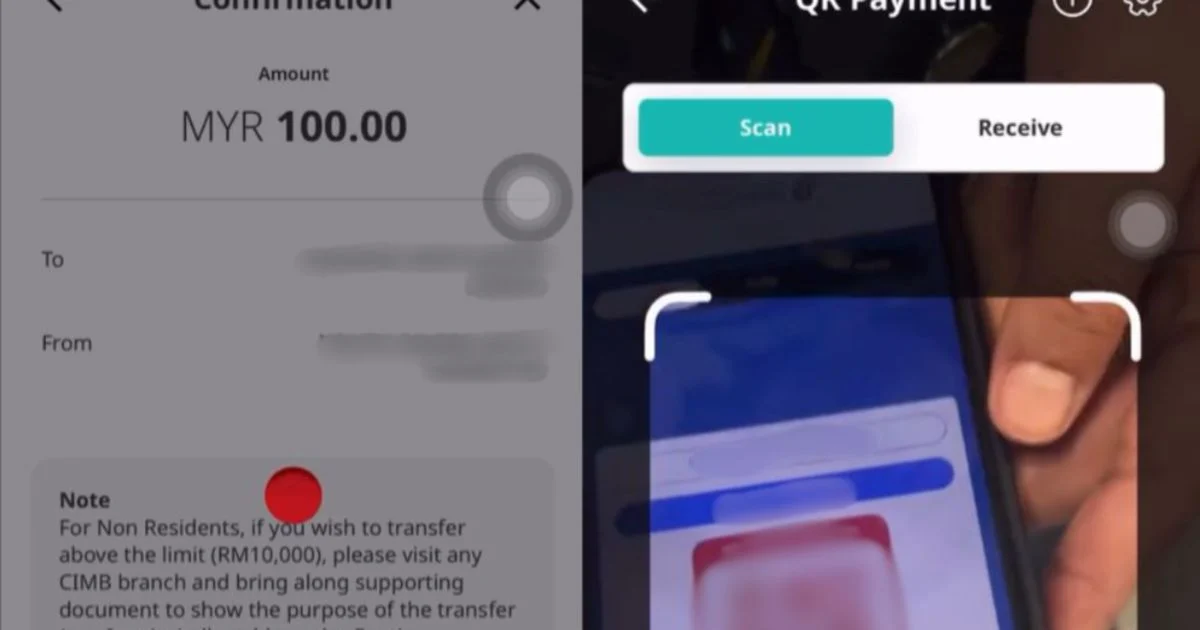
Malaysia's border control agency has initiated a formal internal investigation following allegations that one of its personnel at Kuala Lumpur International Airport Terminal 2 accepted a RM100 payment processed through a personal Quick Response code transaction. The Malaysian Border Control and Protection Agency (MCBA) confirmation of the probe underscores mounting scrutiny over integrity standards among airport officials and the potential exploitation of digital payment systems in bribery schemes.
The incident, which centred on the unauthorized acceptance of personal funds at the airport's second terminal, highlights a troubling vulnerability in how modern payment methods have been weaponised to circumvent traditional detection mechanisms. Rather than conventional cash exchanges that might draw attention, perpetrators increasingly exploit the ubiquity of QR code payments—typically associated with routine commercial transactions—to mask illicit transfers. This methodological shift complicates enforcement efforts and suggests that corruption networks are adapting to contemporary payment infrastructure.
Kuala Lumpur International Airport, as Malaysia's premier aviation gateway, handles over 100 million passenger movements annually and serves as a critical touchpoint for international commerce and tourism. The strategic importance of KLIA means that any erosion of official conduct at border control positions carries implications extending far beyond a single transaction. Officers stationed at immigration and customs checkpoints wield considerable discretionary power over passenger processing, baggage inspection, and regulatory compliance determinations. When such authority becomes subject to financial inducement, the integrity of Malaysia's border security framework itself comes into question.
The reliance on personal QR codes represents an evolution in how corrupt transactions are masked within the digital economy. Unlike recorded business payment channels or traceable bank transfers, personal QR codes create a veneer of legitimacy while leaving minimal institutional records. A traveller might present such a code as a reasonable request—ostensibly for the officer's convenience or as part of a tourism-related transaction—when the actual intent is to facilitate an improper payment. This operational sophistication suggests that those engaged in bribery have deliberately studied enforcement vulnerabilities and tailored their methods accordingly.
The MCBA's decision to open an internal investigation signals institutional acknowledgement of the problem, though the scope and rigour of such inquiries have historically varied. Malaysia has witnessed numerous corruption allegations across its border agencies, including previous instances of officers accepting bribes in exchange for expedited processing, overlooking documentation discrepancies, or facilitating prohibited goods transit. The agency's willingness to investigate itself, rather than dismissing the matter as an isolated incident, indicates some commitment to accountability. Nevertheless, internal probes frequently lack the forensic resources, prosecutorial authority, and transparency of independent external investigations.
For Malaysian travellers and international visitors, such incidents erode confidence in the border control apparatus. Passengers cannot distinguish between corrupt and honest officers at checkpoint encounters, creating an environment of uncertainty and potential vulnerability. Those unaware of unofficial payment expectations risk delays or complications; those who acquiesce contribute to normalization of the practice. This dynamic particularly affects disadvantaged travellers who may lack the social capital to report irregularities or who fear retaliation.
The broader Southeast Asian context amplifies concerns. Border corruption across the region has been identified by international agencies as a significant driver of organized crime, human trafficking, and counterfeiting networks. When gateway officials accept improper payments, they effectively reduce the friction costs that would otherwise deter criminal organizations from routing illicit activities through Malaysian territory. The RM100 transaction, whilst modest in isolation, represents a data point within a potentially larger pattern of compromised border integrity.
Effective response requires measures extending beyond individual personnel discipline. The MCBA should examine systemic vulnerabilities that enabled the alleged transaction to occur: were there adequate supervision mechanisms, checkpoint monitoring, or audit procedures that failed to detect the exchange? Did the officer have a history of complaints that warranted closer scrutiny? Why was the QR payment method not flagged by supervisors as an anomaly in professional conduct?
Technological solutions merit consideration alongside procedural reforms. Airports in more developed jurisdictions have implemented comprehensive digital monitoring systems that track officer movements, communications, and transactions during shifts. Malaysia's border agencies could explore similar infrastructure investments, coupled with random integrity audits and behavioural analysis protocols. Additionally, establishing clear whistleblower protections and reward mechanisms would encourage fellow officers to report suspicious conduct by colleagues without fear of professional reprisal.
The investigation's outcome will offer important signals regarding Malaysia's commitment to border integrity. A thorough process resulting in appropriate disciplinary or legal consequences would demonstrate institutional seriousness. Conversely, a cursory inquiry culminating in minimal sanctions would suggest that corruption allegations are treated as manageable rather than intolerable deviations from expected conduct. International investors, trade partners, and travellers increasingly factor governance quality and official integrity into decisions affecting Malaysia's economy and reputation.
As the MCBA proceeds with its inquiry, particular attention should focus on determining whether this represents an isolated incident or symptomatic of broader practices within Terminal 2's operations. Investigators should examine transaction patterns, passenger complaints data, and communications among personnel. The findings will likely inform whether more comprehensive anti-corruption initiatives become necessary across Malaysia's border control infrastructure.

