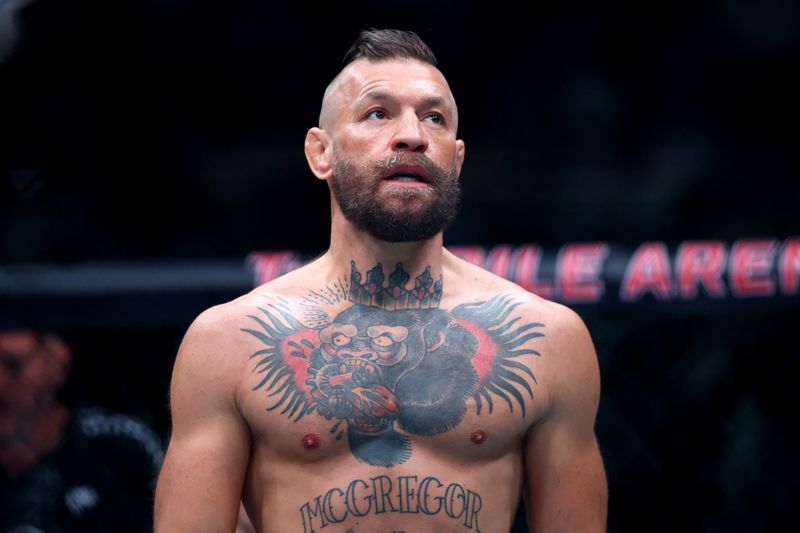
Conor McGregor's eagerly awaited return to professional mixed martial arts competition came to an abrupt and devastating end on Saturday night in Las Vegas, lasting merely sixty seconds before a catastrophic knee injury forced the Irishman out of his UFC 329 bout against Max Holloway. The former two-weight champion, attempting to make his comeback after nearly four years away from the octagon, initiated the contest with an ambitious flying kick during the opening moments. The aerial manoeuvre, however, went badly wrong as McGregor landed awkwardly, immediately signalling distress and looking towards the referee. He managed only a handful of additional seconds before gesturing that he could not continue, ending what many in the combat sports world had anticipated would be a significant test of his readiness to reclaim relevance at the highest level of the sport.
The injury represents another cruel chapter in what has become a troubled narrative surrounding McGregor's career trajectory over the past several years. The 37-year-old's last competitive appearance came in July 2021 when he suffered a leg fracture whilst facing Dustin Poirier, an incident that launched a period of extended absence from competition. Prior to this latest setback, McGregor had been scheduled to face fellow American Michael Chandler in June 2024, only to see that arrangement collapse when he sustained a broken toe during training camp. The accumulated toll of injuries, combined with various personal and legal complications, has increasingly distanced the once-dominant fighter from the sport's centre stage.
Beyond the physical mishaps, McGregor has confronted substantial challenges outside the competition arena. A jury in an Irish civil court determined in late 2024 that he bore liability in connection with allegations of sexual assault involving Nikita Hand in 2018, a verdict that garnered significant international media attention. Additionally, his disciplinary record within professional fighting organisations has deteriorated, resulting in an eighteen-month ban imposed in October 2025 for what sports authorities termed whereabouts failures. McGregor had missed three consecutive testing opportunities from the Combat Sports Anti-Doping agency during 2024, violations serious enough to warrant substantial sanctions. Although the punishment was backdated and technically expired in March, it underscores the broader complications surrounding his status as an athlete.
Max Holloway, the former featherweight champion who faced McGregor in Saturday's encounter, demonstrated a markedly different trajectory during their contest. Despite the abbreviated nature of their bout, Holloway expressed openness to future competition with his opponent, suggesting that the fight deserved a proper resolution given the commercial and sporting interest it had generated. In post-fight commentary, Holloway indicated his willingness to discuss potential rematches with the UFC organisation once McGregor recovered from his injury, acknowledging the substantial promotional value such a confrontation would represent. Their previous meeting in 2013 had resulted in a clear victory for McGregor, who secured a unanimous decision across all three rounds, establishing his dominance at that juncture of his career.
The Las Vegas event proved notable for additional dramatic developments beyond McGregor's premature exit. In the co-main event, British lightweight Paddy Pimblett produced an emphatic victory against France's Benoit Saint-Denis, submitting his opponent by chokehold in comparable fashion to McGregor's quick elimination, requiring less than one minute to secure his win. These back-to-back abbreviated contests generated discussion within the professional fighting community regarding both the quality of matchmaking and the unpredictability inherent in combat sports competition.
For Malaysian and Southeast Asian combat sports enthusiasts and business observers, McGregor's continued struggles carry particular significance. The fighter has historically represented one of the sport's most bankable and globally recognised personalities, with substantial commercial appeal across the region through digital streaming platforms and associated merchandise markets. His inability to compete consistently or maintain professional standing raises questions about the sustainability of individual athlete branding when personal complications mount. The UFC, as a commercial enterprise, faces the challenge of managing expectations around high-profile fighters whose personal trajectories increasingly diverge from their sporting capabilities.
The injury itself, occurring through such an early-stage training error, suggests concerning deterioration in McGregor's condition and preparation standards heading into what was publicised as a carefully orchestrated return. The extended layoff since 2021, combined with advancing age and accumulated physical damage, may have fundamentally altered his capacity to compete at elite levels. Unlike younger fighters who can recover from lengthy absences, McGregor's nearly four-year gap presents significant challenges in regaining competitive sharpness and physical coordination.
The broader implications extend to how major fighting organisations calibrate comeback narratives and match-making decisions. McGregor's return was billed as a watershed moment for his legacy, yet the reality fell dramatically short of expectations. For aspiring athletes in Southeast Asia pursuing mixed martial arts careers, the McGregor situation illustrates both the precarious nature of professional fighting and the importance of maintaining consistent competition schedules rather than extended absences.
As speculation emerges regarding whether McGregor might pursue further competition following recovery from his knee injury, significant uncertainty surrounds his viability as a main-event draw. The combination of his age, injury history, legal complications, and disciplinary record creates substantial headwinds against any straightforward return to relevance. Whether the UFC organisation chooses to invest further in reviving McGregor's competitive career or moves forward prioritising younger, less complicated roster members remains an open question that will influence the sport's promotional direction considerably.

