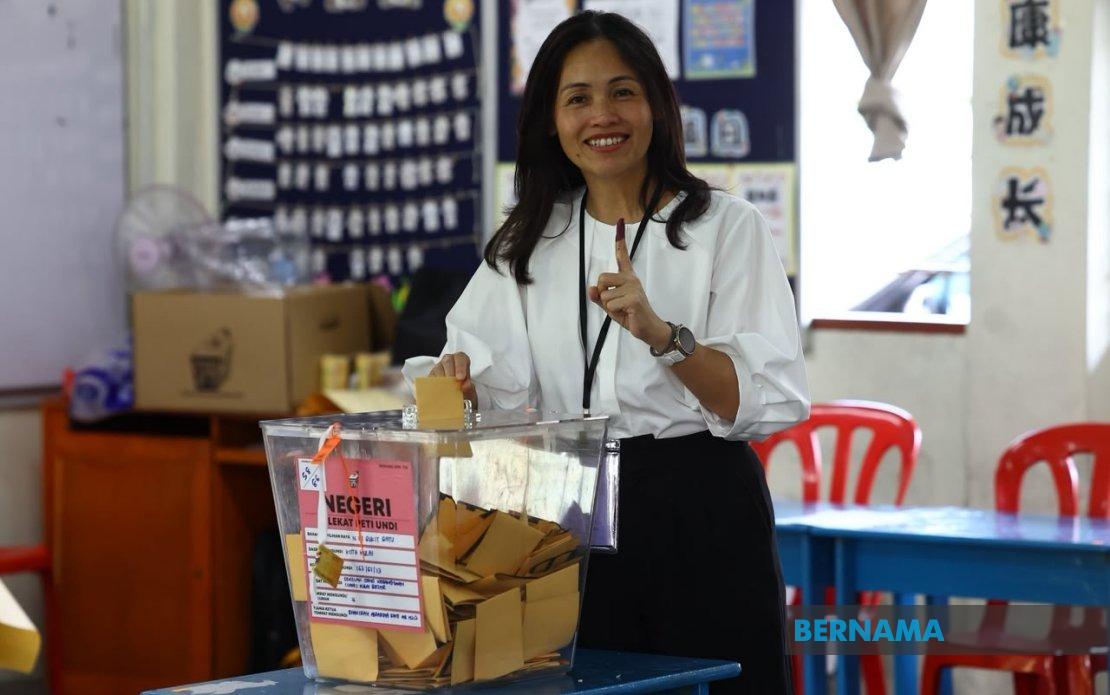
Malaysia's communications watchdog encountered a steady stream of online misinformation during the campaign leading up to the 16th Johor state election, underlining the persistent challenge of digital falsehoods in electoral contexts across the country. The Malaysian Communications and Multimedia Commission (MCMC) fielded 29 complaints spanning fake news, hateful content, and fraudulent schemes throughout the voting period, Deputy Communications Minister Teo Nie Ching disclosed after exercising her franchise at SJK (C) Kulai Besar.
Breaking down the complaints by category, the regulatory body identified 17 cases centred on the propagation of unverified or fabricated information, marking fake news as the dominant concern. Eleven additional reports targeted hate speech in various forms, while a single complaint flagged fraudulent account creation and impersonation tactics. The composition of these submissions reflects a landscape where false narratives and divisive rhetoric continue to circulate through digital platforms, even as election officials work to maintain the integrity of the polling process.
Among the hate speech cases, nine encompassed racial dimensions, a particularly sensitive area within Malaysia's multicultural context where inter-communal harmony remains paramount. Individual complaints also surfaced regarding inflammatory remarks touching on religion and the monarchy, all falling under the umbrella of 3R content—the regulatory shorthand for material involving race, religion and royalty. These categories are especially significant given Malaysia's constitutional protections for these domains and the societal concerns around their misuse during periods of heightened political engagement.
Teo's disclosure serves as a timely reminder of the vulnerabilities that accompany modern electoral processes. While the absolute number of complaints—29 across an entire state election—may appear modest, each instance represents potential damage to public trust and the risk of voter manipulation. The variety of complaint types suggests that bad actors are deploying multiple strategies simultaneously, from wholesale disinformation campaigns to targeted harassment designed to polarize communities along established fault lines.
The deputy minister seized the opportunity to appeal directly to voters and the broader public for heightened vigilance in navigating the digital information ecosystem. She emphasised the importance of questioning unverified claims before accepting or sharing them, a fundamental principle of digital citizenship that becomes critical during electoral cycles when political messaging intensifies. Her call for improved digital literacy reflects a recognition that regulatory interventions alone cannot stem the tide of online falsehoods; citizen responsibility and critical thinking remain essential complements to official oversight.
Teo's message also implicitly acknowledged the limitations facing enforcement agencies in combating online misconduct at scale. With millions of messages transmitted daily across social media platforms, WhatsApp groups, and messaging applications, the MCMC and its partner agencies face a formidable task in detecting, investigating, and responding to violations in real time. The 29 complaints documented likely represent only a fraction of problematic content circulating during the campaign, with many instances going unreported or unnoticed by authorities.
The broader context for these figures involves the sheer scale of electoral participation in Johor. The 16th state assembly election attracted 172 candidates competing for 56 seats, with more than 2.6 million registered voters casting ballots on the polling day. Within this vast electorate, digital platforms have become primary channels through which candidates, parties, and independent actors communicate their messages. This democratisation of reach has advantages for political engagement but also creates sprawling terrain where misinformation can flourish without immediate detection.
For Malaysian policymakers and election observers, the Johor experience offers instructive lessons applicable to future electoral contests at state and federal levels. The persistence of fake news and hate speech complaints suggests that awareness campaigns, regulatory frameworks, and platform policies have not yet achieved their intended deterrent effect. Furthermore, the specific composition of complaints—with racial content dominating the hate speech category—highlights the particular vulnerabilities affecting Malaysia's plural society during periods of heightened political competition.
Teo's additional remarks commending election personnel for their professionalism reflected a broader appreciation for the operational success of the polling day itself. Beyond digital governance, Malaysia's electoral machinery demonstrated its capacity to manage a complex, large-scale voting exercise smoothly. This operational competence, however, exists somewhat independently from the battle against online misinformation, which unfolds across private digital platforms largely beyond government control.
Moving forward, the challenge for Malaysian authorities involves balancing multiple objectives: protecting electoral integrity and public discourse from malicious falsehoods while respecting freedom of expression and avoiding heavy-handed censorship. The MCMC's role in documenting and responding to breaches represents one component of a broader ecosystem that must include platform cooperation, media literacy programmes, and public engagement.
The deputy minister's emphasis on voter wisdom and discernment ultimately points toward a solution that transcends regulatory enforcement alone. Across Southeast Asia and globally, democracies are grappling with similar tensions between safeguarding elections from digital manipulation and maintaining open information environments. Malaysia's experience during the Johor state election—with its documented complaints and ongoing vigilance—contributes to a wider regional conversation about sustaining electoral credibility in the digital age.

