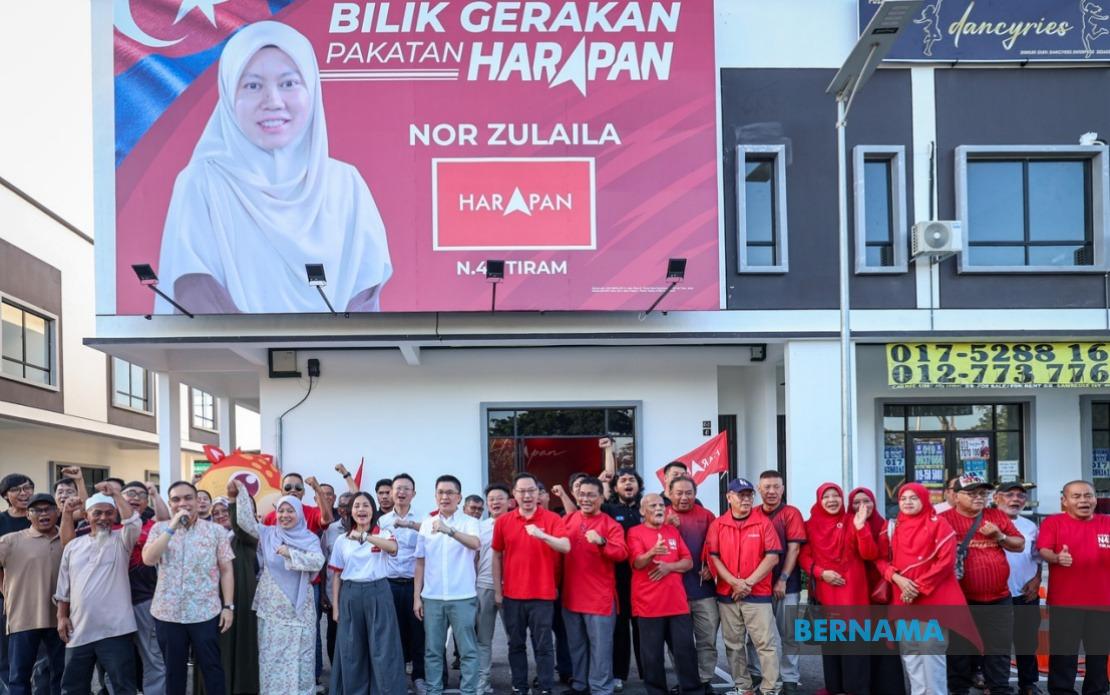
The Malaysian Communications and Multimedia Commission has been tasked with maintaining robust internet infrastructure throughout the Johor state election campaign period, Deputy Communications Minister Teo Nie Ching announced today. Speaking at the Pakatan Harapan operations room launch for the N40 Tiram constituency in Pasir Gudang, Teo stressed the importance of reliable connectivity in enabling campaign activities and keeping voters informed during the critical pre-election phase.
Teo's directive to MCMC reflects an emerging recognition among Malaysian political parties that digital infrastructure has become integral to modern electoral campaigns. While traditional methods such as ceramah and grassroots engagement remain central to political strategy, stable internet access now underpins everything from live-streamed rallies to WhatsApp-based voter communication networks. The Deputy Minister specifically highlighted that MCMC will conduct enhanced monitoring in areas anticipated to draw substantial crowds, acknowledging that infrastructure strain often occurs precisely where campaign activity is most intense.
The Johor state election, set for July 11, represents a significant test of Malaysia's election management capabilities as the country gradually incorporates digital tools into its democratic processes. Early voting is scheduled for July 7, with nominations taking place tomorrow, compressing the official campaign timeline. This condensed schedule increases the importance of seamless digital infrastructure, as candidates and parties must mobilise voters efficiently through both online and offline channels.
Teo, who leads the DAP in Johor, reported encouraging feedback from grassroots campaigning across the state. Notably, she indicated that voters appear genuinely motivated to participate, with many from outside their home constituencies indicating willingness to return specifically for polling day. This observation carries implications beyond the immediate election, suggesting that despite political fatigue in some segments of Malaysian society, electoral engagement remains substantive in Johor, particularly among voters who demonstrate the commitment to travel for their franchise.
The DAP's strategic approach underscores a disciplined campaign methodology that eschews complacency. Rather than categorising seats as secure or marginal, the party intends to apply consistent resources and attention across all 17 constituencies it contests. Teo articulated this approach as essential risk management, noting that assumptions about seat safety historically lead to reduced effort and lower turnout in those areas. By treating each seat as contested territory regardless of historical voting patterns, the party aims to maximise both candidate activation and voter mobilisation.
This ground-level strategic emphasis also reflects lessons learned from previous Malaysian elections where seemingly predictable outcomes produced surprises. The 2018 general election fundamentally reshaped expectations about voter behaviour and coalition performance, while subsequent state and federal by-elections have demonstrated that local issues often override national political narratives. The DAP's refusal to regard any Johor seat as predetermined suggests the party recognises that each locality presents distinct demographic, economic, and socio-political conditions requiring tailored campaign messaging.
Internet infrastructure reliability has particular relevance for Johor given the state's geographic sprawl and varied urbanisation patterns. Coastal constituencies such as Tiram contrast sharply with interior and rural areas where connectivity challenges persist. MCMC's monitoring initiative must therefore address not merely bandwidth availability in urban rally venues but also the quality of service reaching voters in less densely populated regions who increasingly rely on digital platforms for campaign information. The commission's role extends beyond ensuring smooth event logistics to supporting equitable access to political messaging across diverse communities.
The visible presence of multiple senior Pakatan Harapan figures at the Tiram operations room launch—including Deputy Education Minister Wong Kah Woh, Bangi MP Syahredzan Johan, and Tebrau MP Jimmy Puah Wee Tse—signals the coalition's investment in the Johor contest. These personalities bring both national profile and specific constituency linkages that reinforce local campaign networks. Their attendance alongside Nor Zulaila Abdul Ghani, the DAP's Tiram candidate, demonstrates the integration of national and state-level party machinery, a structural approach that has become standard practice in Malaysian elections.
From a broader Southeast Asian perspective, Malaysia's attention to digital infrastructure during elections reflects regional trends toward technology-enabled campaigning. Thailand, Indonesia, and the Philippines have all grappled with managing internet-dependent campaign activities, each facing distinct challenges related to infrastructure inequality and digital literacy. Malaysia's MCMC intervention demonstrates state capacity to engage with these challenges proactively rather than reactively, potentially establishing a model that other regional democracies might study.
The compression of campaign timelines and reliance on rapid information dissemination inevitably intensifies pressure on digital systems. When campaigns run shorter cycles, they must maximise impact per interaction, making internet stability economically consequential for parties managing fixed campaign budgets. A single day of connectivity disruption during critical campaign phases could substantially affect rally attendance, volunteer coordination, and voter outreach effectiveness. MCMC's commitment to regular monitoring therefore represents preventive management of electoral infrastructure.
The upcoming election also occurs within Malaysia's broader context of electoral reform and modernisation discussions. Questions about voter accessibility, campaign finance transparency, and the role of digital platforms in political communication remain ongoing. The Johor election will generate empirical data about how Malaysian voters and parties utilise digital tools, potentially informing future policy discussions about election management and the infrastructure necessary to support increasingly technology-mediated democratic processes.
For Malaysian voters, particularly those in Johor, the MCMC initiative translates into practical implications for their campaign engagement. Better internet coverage facilitates their access to multiple information sources, ability to fact-check campaign claims, and capacity to participate in online political discussion. Simultaneously, candidates and parties gain more reliable platforms for conveying their messages across the state's diverse constituencies, reducing the likelihood that technical failures undermine campaign objectives or disadvantage particular contenders.
As the Johor state election enters its formal campaign phase, the attention devoted to digital infrastructure reflects the maturation of Malaysian electoral politics in an increasingly connected society. The Democratic process now necessarily incorporates considerations of broadband speeds, signal strength, and data accessibility alongside traditional concerns about voter mobilisation and campaign message discipline. MCMC's enhanced monitoring protocols, while often invisible to voters, constitute an essential foundation upon which contemporary Malaysian elections now rest.

