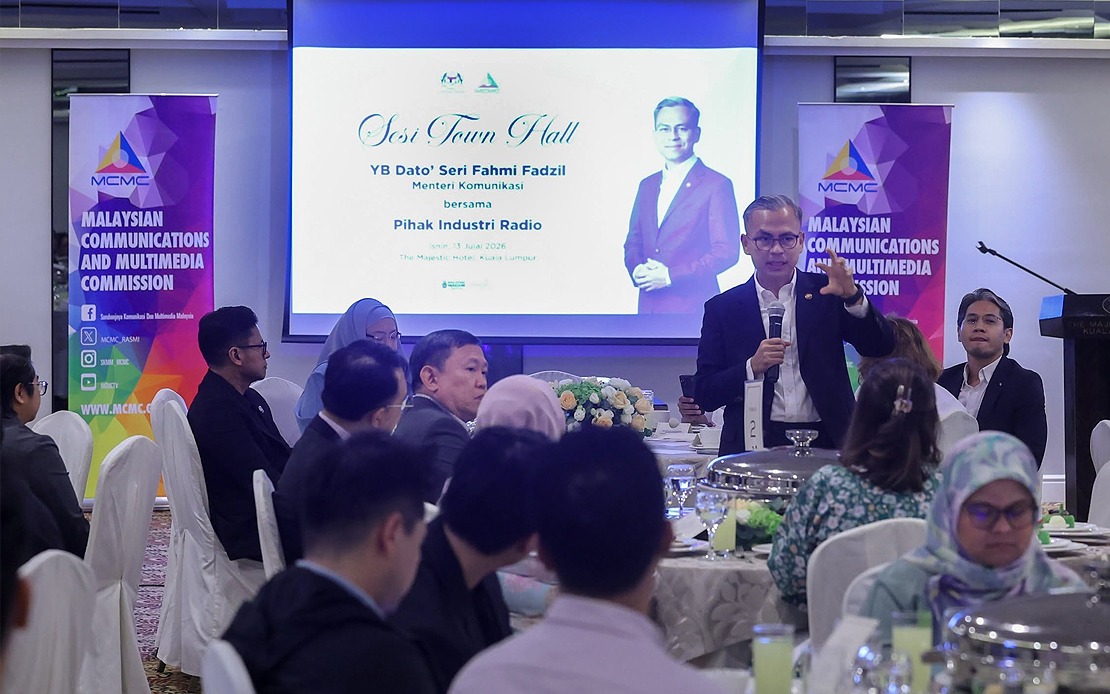
The Malaysian Communications and Multimedia Commission will undertake a systematic examination of the radio broadcasting industry, according to Communications Minister Datuk Seri Fahmi Fadzil, who announced the initiative as part of efforts to bolster the sector's relevance and sustainability. The review, grounded in the National Broadcasting Policy framework, represents a significant government commitment to understanding the structural challenges facing radio operators as they navigate an increasingly competitive media environment dominated by digital platforms and streaming services.
Fahmi disclosed the plan following a town hall engagement where his ministry met directly with radio station managers and industry representatives to solicit perspectives on the sector's current position and future direction. These discussions revealed several pressing concerns that the policy review will address, including the promotion of Malaysian music content on airwaves, the effectiveness of existing licensing arrangements, and strategies for ensuring commercial viability in an era when listener habits are rapidly shifting toward on-demand audio consumption. The minister emphasised that understanding these interconnected challenges is essential for formulating responses that support industry sustainability without stifling innovation.
The government's decision to conduct this comprehensive review signals recognition that Malaysia's radio sector faces a critical juncture. Unlike television or print media, which have received substantial policy attention in recent years, radio has largely operated within frameworks established decades ago, before the emergence of podcasting, streaming audio platforms, and social media-based music discovery. A thorough landscape assessment will help identify regulatory adjustments, licensing modifications, and support mechanisms that could enable traditional broadcasters to evolve while maintaining their distinctive role as local, community-oriented media outlets.
The initiative aligns with broader government priorities articulated through the National Creative Industry Policy and the Orange Economy Council agenda, positioning radio reform within Malaysia's wider ambitions to nurture creative sectors and develop knowledge-based economic activities. Radio broadcasting, despite its maturity as an industry, remains relevant to this vision because of its capacity to nurture local music talent, provide employment across production and technical roles, and generate content that reflects Malaysian cultural diversity and linguistic communities. By integrating radio sector development into creative industry frameworks, policymakers acknowledge that traditional media can contribute meaningfully to economic growth and cultural expression when given adequate structural support.
Promotion of local music content emerged as a central concern during the consultations, reflecting industry anxiety that Malaysian artists struggle to gain airtime equivalent to international content. Radio stations, as commercial entities, naturally gravitate toward music that attracts maximum audiences, and in competitive markets, international hits often outperform locally-produced tracks. However, without sufficient local radio promotion, emerging Malaysian musicians face barriers to building fan bases and generating income from recorded music. The policy review will likely examine whether adjusted licensing requirements, financial incentives, or promotional frameworks could better balance commercial viability with support for domestic talent development.
Licensing models represent another critical focus area for the forthcoming review. Current radio licensing structures may not adequately reflect the operational realities of contemporary broadcasters, particularly regarding digital streaming rights, online distribution, and podcast production. Some operators may face licensing constraints that prevent them from fully participating in audio markets beyond traditional FM/AM transmission, while others struggle with licensing costs that remain onerous relative to their revenue. The MCMC's assessment will determine whether modernising licensing frameworks could reduce compliance burdens while maintaining regulatory oversight and competition standards.
The digital transformation challenge underpins many of the concerns raised during the town hall sessions. Listeners increasingly consume audio content across multiple platforms simultaneously, and radio's historical advantage—the intimacy of local, live-hosted programming—now competes directly with on-demand platforms offering unlimited choice and personalised recommendations. Radio broadcasters have begun adapting by establishing digital presences and streaming their content, yet regulatory frameworks may not have caught pace with these evolving business models. The policy review will examine how regulatory settings can facilitate radio operators' digital expansion without creating competitive disadvantages or fragmenting the regulatory framework across traditional and new delivery methods.
Fahmi's commitment that government will continue collaborating with industry players reflects an understanding that effective policy emerges from dialogue rather than top-down prescription. Radio operators possess detailed knowledge of market dynamics, listener behaviour, financial pressures, and technological opportunities that government entities cannot easily access independently. By institutionalising industry consultation through the MCMC's review process, authorities signal genuine openness to stakeholder input and reduce the risk of policies that inadvertently harm broadcasters while intending to help them. This collaborative approach also builds industry confidence in the regulatory process and may encourage greater voluntary compliance with updated policies.
For Malaysian listeners and the broader media ecosystem, a successful radio industry review holds significant implications. Radio remains uniquely important for serving audiences in rural areas with limited broadband access, for providing emergency broadcast capabilities during crises, and for maintaining community connections through locally-hosted programming. If the policy review enables radio operators to innovate and sustain operations, listeners benefit from continued investment in local journalism, music curation, and cultural programming. Conversely, if radio continues to lose economic viability without policy support, the sector's decline would concentrate media ownership among larger digital and television entities, reducing diversity and local content production.
The review's timeline and scope remain to be clarified, but the government's framing suggests this will be a substantive examination rather than a ceremonial exercise. Previous policy reviews on Malaysia's creative industries have generated detailed recommendations, and there is precedent for translating findings into legislative or regulatory amendments. The radio industry will likely monitor progress carefully, hoping that the MCMC's assessment translates into concrete measures—whether through licensing amendments, financial support schemes, or regulatory clarifications—that address the sector's most pressing challenges.
Ultimately, Malaysia's radio industry review reflects a maturing understanding that traditional media sectors require active policy attention to survive disruption from digital competitors. Rather than presuming radio will naturally adapt or accepting its decline as inevitable, the government is intervening with diagnostic assessment and commitment to collaborative problem-solving. Whether this review generates sufficient momentum for substantive reform will become clear in coming months as the MCMC completes its analysis and forwards recommendations to the Communications Ministry for decision-making.

