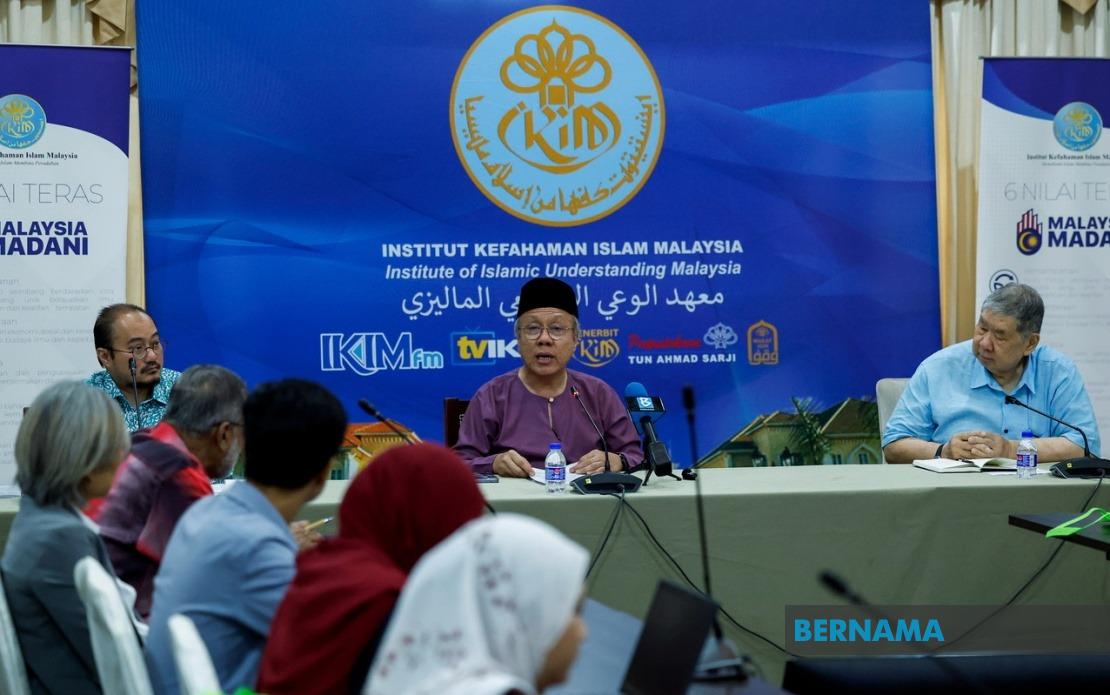
The Malaysian Press Institute, in partnership with the Institute of Islamic Understanding Malaysia and Tabung Haji, convened media practitioners for a specialized briefing session on the pilgrimage fund's Royal Commission of Inquiry, seeking to deepen journalistic understanding of a matter of significant national concern. Held at IKIM's headquarters here, the gathering brought together Tabung Haji Group Managing Director and Chief Executive Officer Mustakim Mohamad alongside MPI president Datuk Yong Soo Heong and IKIM Director-General Associate Professor Datuk Dr Mohamed Azam Mohamed Adil, among more than 20 representatives from news organizations.
The nearly two-hour closed-door session provided journalists with direct access to TH leadership, who outlined the institution's response to the RCI's findings and fielded questions spanning both substance and media coverage strategies. This format—combining formal briefing with interactive questioning—reflects growing recognition that complex institutional matters require sustained dialogue between official bodies and newsrooms rather than traditional one-off press conferences. For Malaysia's media landscape, where coverage of financial institutions often proves contentious, such structured engagement carries particular weight in shaping how stories eventually reach readers.
MPI president Yong characterized the initiative as a crucial bridge between the financial sector and public understanding. He emphasized that the programme delivered value by furnishing journalists with dependable information about Tabung Haji's stabilization efforts and the confidence-restoration measures underway. The framing matters significantly: by positioning accurate reporting as essential to rebuilding depositor and investor confidence, organizers signaled that responsible journalism serves broader economic interests beyond mere information transmission. Yong suggested the model might extend beyond the capital, with similar sessions potentially occurring in other states through expanded dialogue formats or town hall arrangements.
The emphasis on accuracy and narrative control reflects underlying anxieties about how the RCI findings circulate through Malaysia's fragmented media ecosystem. With digital platforms accelerating story spread and interpretation, institutional actors increasingly recognize that leaving coverage solely to reactive journalism risks distortion or misinterpretation. By proactively educating journalists, Tabung Haji and its partners attempt to seed the initial framing that shapes subsequent reporting and public discourse. This approach carries implications for how Malaysian institutions—particularly those with religious or cultural significance—navigate transparency obligations against reputational pressures.
Mohamed Azam articulated a critical interpretive frame: the RCI matter should be understood as fundamentally a question of management integrity and institutional accountability rather than as controversy touching upon religion or ethnicity. This repositioning proves strategically important, as Tabung Haji's unique role as custodian of the hajj pillar—a central Islamic obligation affecting millions of Malaysian Muslims—means that institutional failures carry religious and communal dimensions beyond typical corporate governance lapses. By urging journalists to adopt and communicate this accountability-centered narrative, IKIM's director-general attempted to establish interpretive boundaries that separate legitimate questioning of management from sectarian framings.
The invocation of trust as the core issue resonated throughout the briefing. Tabung Haji functions not merely as a financial intermediary but as a repository of religious trust—managing funds accumulated by Muslims executing one of Islam's five pillars. When such institutions face inquiries into operational integrity, restoration of confidence requires more than technical explanations; it demands narrative reframing that reconnects institutional legitimacy to foundational religious purpose. The media literacy programme thus served double duty: equipping journalists with factual details while simultaneously cultivating a particular interpretive lens through which those details should be presented to audiences.
For Southeast Asian media practitioners observing Malaysian institutional dynamics, this episode illustrates broader tensions navigating press independence against institutional credibility. Tabung Haji's approach—organizing collaborative briefings with respected intermediaries like MPI and IKIM—preserves surface journalistic autonomy while gently channeling coverage toward preferred framings. Neither coercive nor deceptive, this method represents sophisticated institutional communication suited to markets where media landscape remains concentrated and where certain institutions hold quasi-sacred status within national consciousness.
The participation of these three organizations signaled institutional alignment around managing the RCI narrative. MPI's involvement lent journalistic credibility to the exercise, positioning it as professional development rather than institutional propaganda. IKIM's participation invoked Islamic intellectual authority, suggesting that the accountability narrative carried religious legitimacy. Tabung Haji's role remained straightforward—providing information and facing questions. Together, this tripartite arrangement created a framework that addressed multiple audiences simultaneously: journalists received substantive briefing; public discourse received endorsed narrative framing; and institutional confidence received symbolic reinforcement through structured engagement.
The decision to restrict attendance to roughly two dozen journalists rather than holding an open press conference reflected strategic choices about information management. Smaller, controlled gatherings permit deeper engagement and reduce opportunities for adversarial questioning that characterizes larger public briefings. Participants leave with richer understanding and greater investment in accurate reporting, having received what amounts to privileged access. This approach suits institutions seeking to shape rather than simply respond to coverage, though it carries reputational risks if journalists perceive themselves as being co-opted rather than informed.
Looking forward, the success of this media literacy initiative will depend on whether journalists maintain editorial independence while benefiting from improved institutional understanding. The programme establishes a precedent—that complex institutional matters warrant sustained media education beyond traditional press releases. For Tabung Haji specifically, subsequent months will reveal whether improved journalistic comprehension translates into coverage that successfully repositions the RCI as accountability matter rather than institutional crisis. For Malaysian media more broadly, the episode demonstrates how institutions employ sophisticated engagement strategies to influence coverage in ostensibly arms-length contexts.

