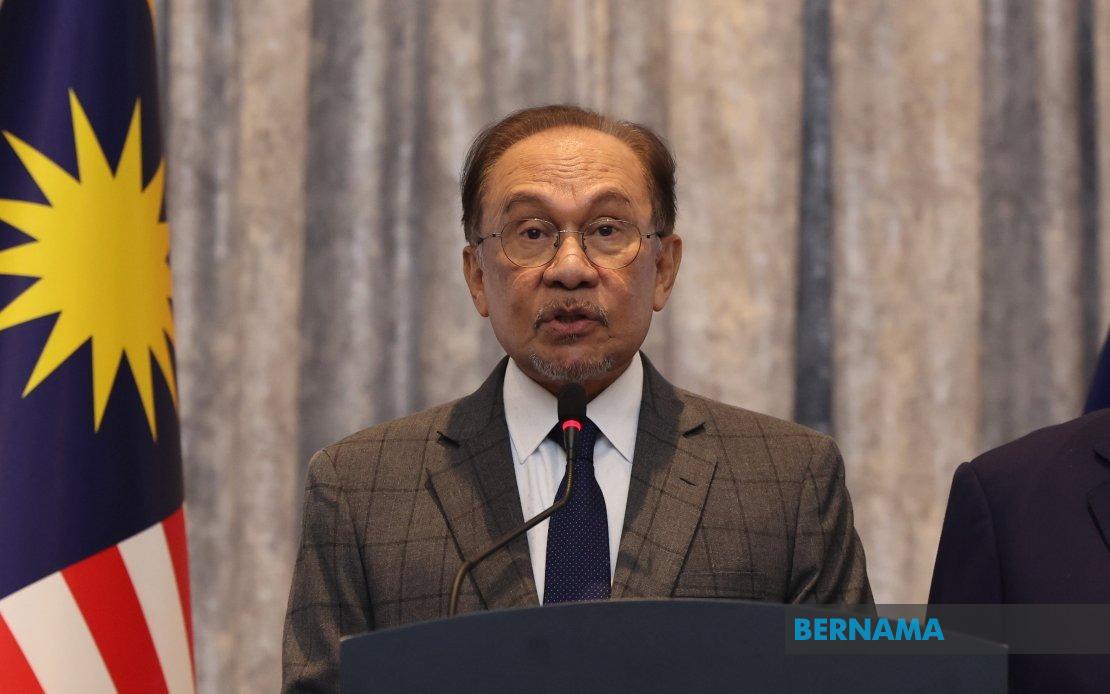
Prime Minister Datuk Seri Anwar Ibrahim has cautioned Malaysia's media industry to resist the temptation of chasing technological progress at the expense of fundamental journalistic principles and national values. Speaking at the Malaysian Press Night 2025 and Malaysian Press Institute-PETRONAS Journalism Awards 2026 in Kuala Lumpur, Anwar underscored that rapid digitalisation and artificial intelligence adoption must remain anchored to ethical standards that reflect the country's unique identity and cultural context.
The prime minister framed technological advancement as a double-edged sword for developing nations like Malaysia. Whilst acknowledging the necessity of embracing digital innovation, communications technology, and AI capabilities to remain globally competitive, Anwar warned that these tools could become vectors for external influence if deployed without moral guardrails. He emphasised that the government, through Communications Minister Datuk Seri Fahmi Fadzil and the Malaysian Communications and Multimedia Commission, shares responsibility with media organisations in navigating this transition responsibly.
Anwar drew historical parallels to illustrate his concerns about technological influence. He referenced how Western dominance of traditional global media infrastructure historically enabled powerful nations to shape international narratives according to their geopolitical interests and ideological preferences. That historical pattern, he suggested, now finds its modern equivalent in technological dominance, where control of digital platforms and artificial intelligence systems allows dominant powers to advance cultural and ideological values that may fundamentally conflict with local societies' beliefs and worldviews.
The concept of the "captive mind" took central place in Anwar's analysis. Traditionally, this phenomenon referred to populations whose thinking and autonomy were constrained by political control or colonial domination. However, the prime minister argued that contemporary technological systems pose an analogous threat through different mechanisms. As nations invest heavily in mastering emerging technologies to improve competitiveness and services, they simultaneously expose themselves to subtle forms of cognitive and cultural capture through algorithmic influence, data control, and the embedding of foreign values within digital infrastructure.
Anwar stressed that maintaining press freedom and democratic principles need not contradict technological adoption. Rather, journalists and media organisations bear a responsibility to scrutinise how new technologies are introduced into society, to question whose interests they serve, and to ensure that innovation serves national development objectives rather than external agendas. He called on columnists and opinion writers specifically to engage more deeply with these intersections between technology, identity, and sovereignty.
The prime minister articulated that Malaysia cannot afford internal divisions on this issue. Creating consensus across government, media, civil society, and the private sector regarding how to harness technology whilst protecting national interests represents a strategic imperative. Accordingly, Anwar pledged that the government would maintain open dialogue with media practitioners, remaining receptive to critical commentary and alternative perspectives rather than adopting defensive postures when questioned about technology policy.
Anwar commended the Malaysian Press Institute, supported by PETRONAS, and the Malaysian Media Council for their efforts to drive media innovation whilst simultaneously fortifying defences against ideological capture. These initiatives, he suggested, demonstrate that innovation and values need not exist in tension. Rather, conscious effort to embed ethical practices, national interest considerations, and cultural sensitivity into media institutions undergoing technological transformation represents the path forward.
The prime minister also acknowledged the continuing contributions of Malaysia's journalists to maintaining press freedom and sustaining democratic discourse. He expressed appreciation for journalists' willingness to provide constructive criticism, offer policy recommendations, and scrutinise government actions whilst exercising their fundamental reporting responsibilities. This reciprocal relationship between government and media, characterised by genuine listening rather than antagonism, underpins democratic health during periods of technological disruption.
For Malaysian readers and Southeast Asian observers, Anwar's remarks reflect broader regional concerns about technological sovereignty. Countries across Southeast Asia face similar pressures to digitise rapidly to remain economically competitive whilst worrying about dependency on foreign technology providers and exposure to ideological influence through digital channels. Malaysia's experience in attempting to establish balanced technology policy—neither rejecting innovation nor passively accepting external dominance—offers lessons relevant to neighbours facing identical tensions.
The government's positioning of this issue also signals likely future policy directions. Stronger coordination between media regulators, communications authorities, and national news agencies appears probable, whilst industry standards emphasising ethical technology adoption may emerge from Malaysian Press Institute and related organisations. These developments could influence how neighbouring countries approach similar challenges, potentially contributing to emerging ASEAN consensus on responsible digitalisation.
For media practitioners specifically, Anwar's message carries implicit expectations. News organisations should develop internal capacity to evaluate technological tools not merely for efficiency gains but for alignment with ethical standards and national interest. Editors and managers must cultivate critical literacy regarding artificial intelligence systems, algorithm design, and data governance practices. This represents an additional professional skill set that modern journalism requires beyond traditional reporting and editorial competencies.

