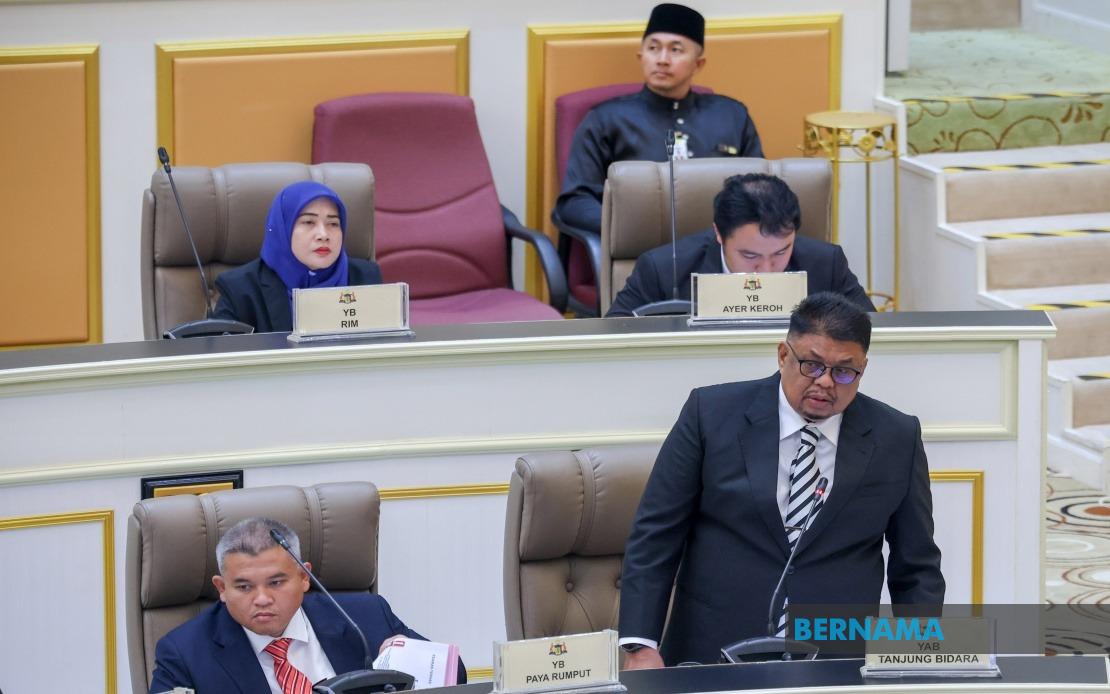
The Melaka State Legislative Assembly has cleared the way for a significant institutional reform by passing a constitutional amendment that will permit the appointment of nominated state assemblymen, marking a milestone in the state's political framework. The Melaka State Constitution (Amendment) Bill 2026 secured approval with backing from 23 legislators, though five members voiced opposition to the measure during the July 14 proceedings.
Chief Minister Datuk Seri Ab Rauf Yusoh spearheaded the legislative initiative, with Senior State Executive Councillor Datuk Rais Yasin providing formal support for the proposal. The amendment seeks to introduce up to seven additional seats in the assembly through a nomination mechanism rather than electoral contests, fundamentally altering the composition of Melaka's 36-member chamber.
The rationale underpinning this constitutional revision centers on enriching the caliber of legislative engagement and broadening perspectives in state deliberations. Ab Rauf articulated that the amendment would facilitate the inclusion of specialists possessing substantive backgrounds in domains including law, economics, education, investment, technology and regional development. By recruiting individuals with demonstrated expertise, policymakers aim to elevate the technical rigor of parliamentary discussions and policy formulation.
Beyond technical competence, the amendment addresses representation gaps that the electoral process has historically left unfilled. The Chief Minister highlighted that the nomination framework could create meaningful avenues for constituencies traditionally underserved by electoral mechanisms: female candidates, younger prospective legislators, Orang Asli representatives, members of minority communities, and specialists from commerce and industry sectors. This approach acknowledges that talent and capability exist outside conventional political party structures, and creating appointed positions offers a pathway for such individuals to participate in state governance.
The internal checks and balances within the legislature stand to benefit from expanded diversity and expertise among assemblymen. With appointed members potentially offering more detached, technically grounded assessments of legislative proposals and administrative decisions, the quality of scrutiny directed at government initiatives and bills should intensify. This mechanism resembles the federal-level practice of Dewan Negara appointments, which the opposition leader Dr Mohd Yadzil Yaakub referenced during parliamentary discussion, suggesting institutional precedent supports the approach.
Notably, the opposition chose not to obstruct the amendment, with Dr Yadzil indicating measured support contingent on transparent implementation mechanisms and genuine people-centered priorities guiding the appointment process. His backing signals potential consensus around the principle of nominated representation, provided safeguards prevent the system from degenerating into patronage-driven appointments divorced from merit considerations.
This constitutional amendment traces its origins to the Barisan Nasional electoral manifesto from the 2021 Melaka state election, specifically falling under the political stability and mature democracy plank. The delay between that campaign promise and July 2024 parliamentary action reflects the legislative machinery required to modify fundamental constitutional provisions, demonstrating that such reforms require sustained political commitment and cross-party dialogue to materialize.
For Malaysian observers, the Melaka development holds broader implications for subnational governance models across the federation. As state capitals experiment with institutional adjustments, their outcomes provide evidence regarding whether nominated representations genuinely enhance legislative quality or merely create sinecures for political appointees. The mechanisms Melaka establishes for selecting nominated assemblymen will prove instructive for assessing whether this appointment model can function as genuinely merit-based institutional architecture.
The amendment's success in clearing the assembly without overwhelming opposition suggests receptiveness among Melaka's political establishment toward evolving representation structures. However, implementation details remain crucial; transparent selection criteria, public disclosure of appointment rationales, and periodic performance evaluation will determine whether this constitutional innovation strengthens democratic institutions or undermines electoral legitimacy. The coming months will reveal whether Melaka's nominated assemblymen positions attract substantive expertise or devolve into reward mechanisms for political loyalists.

