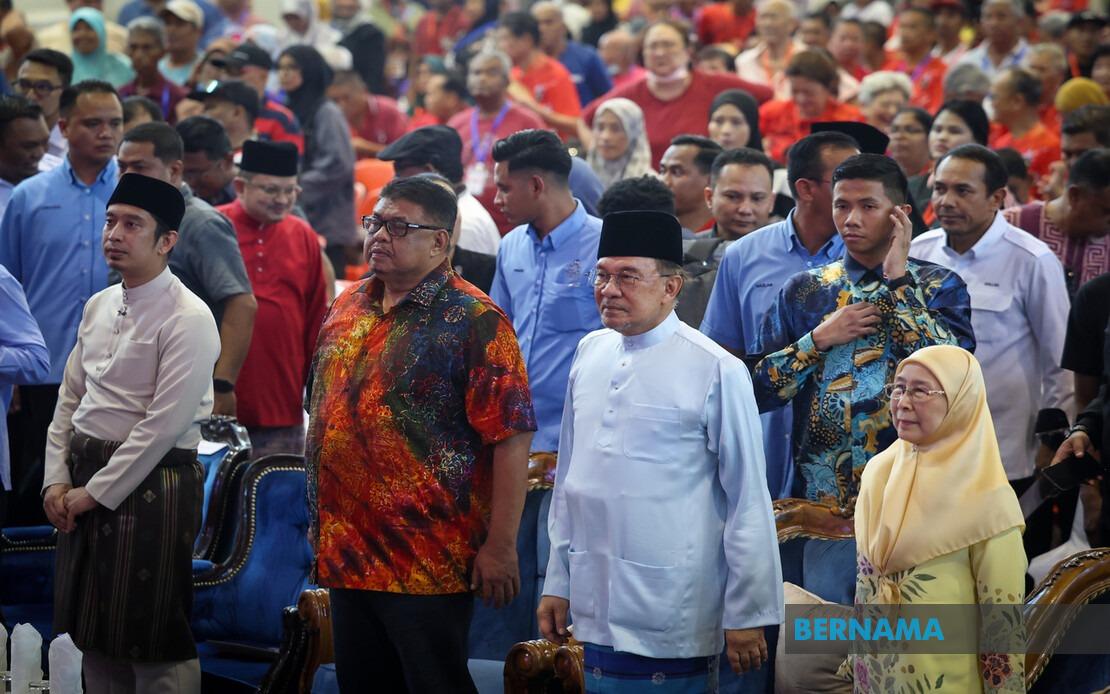
Melaka is positioning itself as a regional leader in sustainable environmental management, moving beyond conventional greening initiatives to establish comprehensive systems that integrate conservation with community benefit and economic development. Chief Minister Datuk Seri Ab Rauf Yusoh outlined these ambitions at the National Landscape Day 2026 celebrations, where Prime Minister Datuk Seri Anwar Ibrahim and Housing and Local Government Minister Nga Kor Ming were present, underscoring the initiative's significance within Malaysia's broader sustainability agenda.
The foundation of Melaka's approach rests on robust legal and policy frameworks that have been incrementally strengthened over recent years. The enforcement of the Tree Preservation Order under the Town and Country Planning Act 1976 provides statutory protection for trees of significant ecological, cultural or aesthetic value, preventing arbitrary removal and ensuring that development must be balanced against environmental preservation. This mechanism, while not unique to Melaka, reflects a growing recognition across Malaysian states that unplanned urban expansion has depleted tree cover and diminished landscape character in ways that are costly to reverse.
The 2022 introduction of the Melaka State Landscape Guidelines marked a qualitative shift in how the state approaches development approval and environmental stewardship. Rather than treating landscapes as incidental to property development, these guidelines establish landscape design as a core consideration for all implementing agencies, local authorities, developers and private stakeholders. This framework-based approach standardises expectations and reduces ad-hoc decision-making, a particular concern in Malaysian municipal governance where consistency between local authorities and enforcement capacity has historically been uneven.
Central to Melaka's modernisation effort is the MyTrees@Melaka digital system, launched in 2017 and now encompassing over 70,000 tree inventory records maintained collaboratively by the state's four local authorities and the Melaka Forestry Department. This represents a substantial leap in landscape management sophistication. Rather than relying on visual inspections and paper records, digital inventory enables remote monitoring, automated maintenance scheduling, disease tracking and strategic planting decisions based on data rather than intuition. The system exemplifies how digital governance tools, increasingly adopted across Southeast Asia, can enhance environmental management at the local level while creating auditable records of stewardship.
The planting of 10,588 trees as of June 2024 demonstrates concrete implementation, though the significance lies not merely in the number but in the commitment to systematic monitoring and maintenance. Melaka's insistence that every tree be recorded, monitored and maintained creates accountability and ensures that planting programmes translate into long-term canopy growth rather than temporary landscaping gestures. This distinction matters in tropical climates where survival rates for newly planted trees can be compromised by inadequate aftercare, making the data-driven maintenance framework crucial to success.
The Aspiring Melaka Geopark initiative represents a more sophisticated integration of environmental preservation with economic and educational objectives. By linking geological heritage with biodiversity, cultural identity and local communities, the geopark model transforms Melaka's landscape from a passive heritage asset into an active platform for nature-based tourism, ecological research and community education. This approach resonates with emerging global trends in sustainable development, where protected areas generate revenue through tourism while incentivising local conservation stewardship. For Southeast Asian states seeking to balance development pressures with environmental protection, such models offer templates for achieving multiple objectives simultaneously.
Three major landscape projects completed in 2023—SDG Park @ Sungai Melaka, Kampung Felda Air Kangkung Recreation Park and Taman Kejiranan Pulai Indah—demonstrate the practical application of these principles. Notably, Ab Rauf emphasised that these projects prioritise usability and community enjoyment rather than purely aesthetic considerations. This reflects a mature understanding that sustainable development requires public buy-in; landscapes designed only for visual appeal without functional community benefit often fall into neglect. By creating spaces where residents and visitors can recreate, socialise and connect with nature, Melaka increases the likelihood of long-term stewardship and political support for conservation.
The ongoing MADANI Recreational Park projects—upgrading Dataran Sejarah Ayer Keroh, Ayer Keroh Art Lanai and Bukit Beringin Masjid Tanah—continue this trajectory. These initiatives signal that Melaka's government views landscape development as integral to quality-of-life improvements, not peripheral to economic or infrastructure agendas. This messaging carries particular weight in Malaysian political discourse, where development is often framed as necessarily opposed to environmental preservation. By demonstrating that beautification, ecosystem preservation and community amenity can be pursued together, Melaka challenges this false dichotomy.
The National Landscape Day 2026 event, attracting nearly 3,000 participants across four days, served multiple strategic functions. Beyond celebrating Melaka's achievements, the gathering created a platform for knowledge exchange among landscape professionals, local authority representatives, academics and private sector stakeholders across Malaysia. The twelve participating local authority pavilions showcasing innovative approaches and distinctive landscape identities suggested that Melaka's initiatives are catalysing broader sectoral conversation about landscape excellence beyond the state itself. This convening role enhances Melaka's standing while building momentum for landscape-centred development thinking nationally.
For Malaysia and Southeast Asia more broadly, Melaka's integrated approach offers instructive lessons. As rapid urbanisation and climate pressures intensify, state-level governments require frameworks that simultaneously enhance biodiversity, improve community wellbeing, create economic opportunities and ensure systematic management of public assets. Digital tools, legal protections, design guidelines and community-oriented implementation appear to constitute a replicable template. Other Malaysian states and ASEAN neighbours facing similar pressures on urban landscapes might examine whether comparable investments in systems, frameworks and innovation could yield comparable gains in environmental and quality-of-life outcomes.

