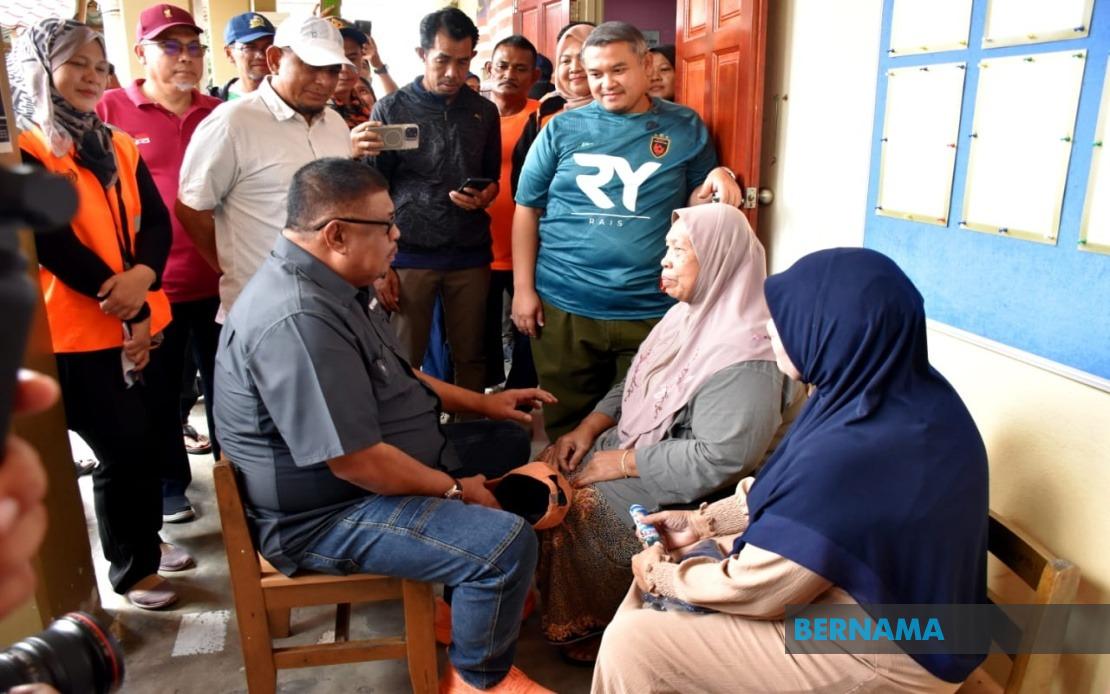
Melaka Chief Minister Datuk Seri Ab Rauf Yusoh has vowed to tackle the chronic flooding problem that has afflicted the Tanjung Minyak area for more than 30 years, marking a fresh push by the state government to finally resolve one of the region's most persistent environmental challenges. Speaking during a visit to flood evacuees at Sekolah Kebangsaan Tanjung Minyak 2 relief centre on July 12, the Chief Minister declared that the state would carefully examine all proposals and technical recommendations submitted by government agencies involved in drainage, irrigation, and disaster management in order to develop a comprehensive, long-term intervention strategy.
The flooding crisis in Tanjung Minyak represents a particularly intractable problem for local residents, who have endured recurrent inundation cycles for more than three decades with little substantive improvement in their living conditions. Ab Rauf acknowledged the scale of frustration among affected communities, recognising that the issue has persisted far longer than acceptable and pledging that his administration would prioritise identifying effective methodologies to mitigate the impact of heavy rainfall on residential neighbourhoods. The commitment reflects growing political pressure on state leadership to demonstrate tangible results on infrastructure and disaster resilience, particularly in areas where vulnerability to flooding has become chronic rather than episodic.
The most recent flooding event underscored the vulnerability of the area, with rainfall exceeding historical benchmarks recorded over the previous 20 years. According to data from the Melaka Irrigation and Drainage Department, the deluge that affected central Melaka and Alor Gajah surpassed the precipitation levels witnessed during Tropical Storm Senyar in late 2023, with cumulative rainfall recordings exceeding 100 millimetres by mid-afternoon. The scale of the event overwhelmed existing water retention infrastructure, causing drainage systems to backflow into populated residential zones and triggering what has become an all-too-familiar evacuation cycle for long-suffering residents.
The human cost of the flooding was evident in evacuation figures released by state authorities. More than 900 evacuees from approximately 300 households have been sheltered across multiple relief centres throughout Melaka, with the state government assuming responsibility for their basic welfare and living conditions until residential areas become habitable again. Ab Rauf indicated that the state authorities have committed to maintaining this humanitarian support infrastructure for as long as necessary, rejecting any suggestion that evacuees would be pressured to return prematurely to flood-affected homes. This represents a notable departure from earlier responses to flooding events, where evacuee support was sometimes terminated rapidly to signal a return to normalcy.
State Senior Housing, Local Government, Drainage, Climate Change and Disaster Management Committee chairman Datuk Rais Yasin accompanied the Chief Minister during his site visit, signalling elevated attention within the state executive to the flooding crisis. The presence of senior officials responsible for drainage, climate adaptation, and disaster response suggested that the state administration views this as an opportunity to develop an integrated policy response cutting across multiple government portfolios. The involvement of the Melaka Social Welfare Department director Halyjah Muhamad further indicated that the state was treating evacuation and relief operations as deserving sustained high-level oversight rather than routine administrative matters.
The technical challenge confronting policymakers relates to the fundamental inadequacy of drainage infrastructure relative to the hydrological stress being imposed by increasingly intense rainfall events. The recorded rainfall exceeding 100 millimetres in central Melaka and Alor Gajah demonstrates that conventional drainage systems designed to accommodate historical weather patterns are becoming insufficient in an environment characterised by more extreme precipitation events. Climate scientists have increasingly documented this phenomenon in Southeast Asia, where traditional infrastructure designed for mid-20th century rainfall patterns struggles when confronted with the more volatile precipitation regimes associated with changing global climate conditions.
For Malaysian policymakers and regional observers, the Tanjung Minyak situation encapsulates broader challenges confronting low-lying areas throughout Peninsular Malaysia and across Southeast Asia. The 30-year duration of the crisis suggests that previous attempts at remediation, whether through localised drainage improvements or piecemeal infrastructure modifications, have failed to address the underlying hydrological and geographical factors rendering the area inherently vulnerable to waterlogging. Any sustainable solution will likely require substantial capital investment, potentially including comprehensive reconfiguration of surface drainage networks, elevation of critical residential areas, or managed relocation of populations from the most vulnerable zones—options that present significant political and financial challenges for state governments operating under budget constraints.
The Melaka government's stated commitment to reviewing all available proposals from relevant technical agencies signals an openness to exploring multiple intervention pathways rather than persisting with previous unsuccessful approaches. This inclusive consultation process may generate recommendations ranging from conventional infrastructure upgrades to more innovative solutions such as nature-based drainage systems, residential elevation programmes, or integrated water management approaches that balance flood prevention with other environmental objectives. The involvement of the climate change and disaster management portfolio in this deliberation suggests that planners are explicitly considering how flooding responses should be calibrated in light of anticipated future climate variations.
The timing of the Chief Minister's commitment also reflects pressure from residents and civil society to demonstrate political will on an issue that has generated considerable public frustration. Across Malaysia and Southeast Asia, communities affected by chronic flooding have become increasingly vocal in demanding that state governments treat recurring inundation as a priority warranting sustained executive attention rather than as a periodic crisis demanding temporary relief measures. The Chief Minister's presence at the evacuation centre and his explicit commitment to resolving rather than merely managing the crisis appears designed to signal that the state executive takes this obligation seriously and will not allow the issue to remain unresolved indefinitely.
Moving forward, the effectiveness of the Melaka government's response will depend on whether preliminary technical reviews translate into concrete policy interventions with identifiable timelines and funding allocations. Communities affected by chronic flooding typically develop considerable scepticism toward government commitments that generate political headlines but produce limited practical change, particularly when previous administrations have issued similar pledges. The Chief Minister will need to demonstrate not merely that the state is consulting relevant agencies, but that these consultations are producing actionable recommendations backed by adequate budgetary resources and sustained political commitment beyond the immediate post-crisis phase when media attention is concentrated.

