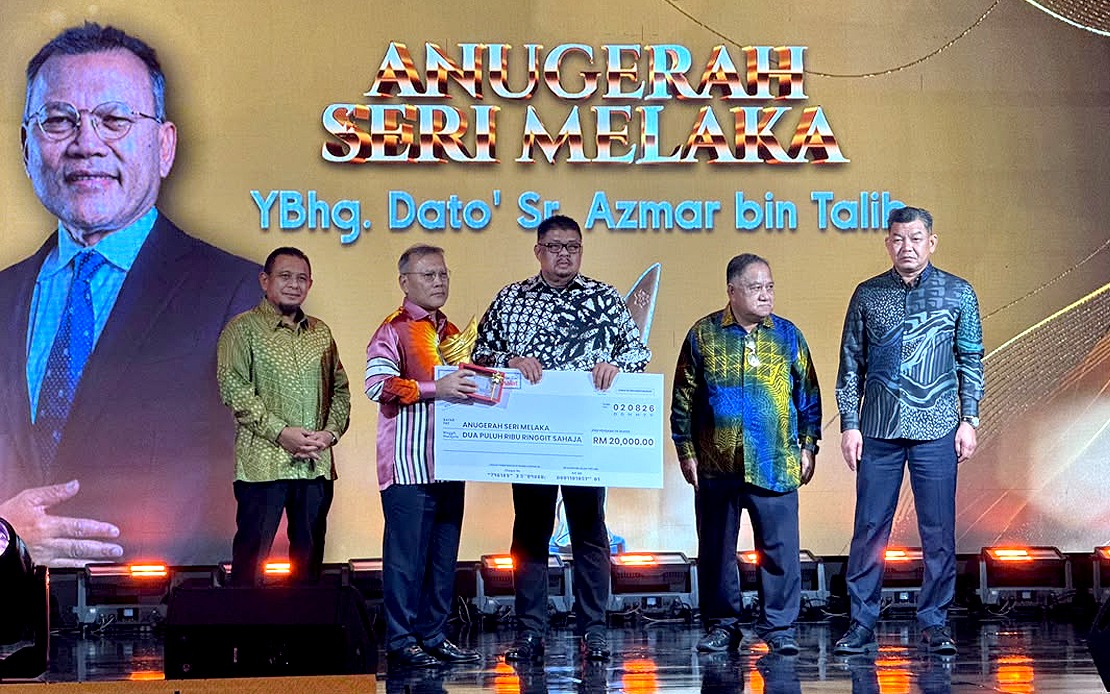
Melaka's Chief Minister Datuk Seri Ab Rauf Yusoh has issued a call to the state's high-achieving individuals across all sectors to step forward as strategic collaborators with the state administration, positioning themselves as mentors and enablers for the next wave of talent emerging from the region. Speaking at the Anugerah Seri Melaka ceremony held at the Melaka International Trade Centre in Ayer Keroh, Ab Rauf articulated a vision whereby accomplished Melaka natives would repurpose their accumulated expertise, professional networks, and hard-won experience toward creating tangible pathways for younger residents seeking to build successful careers.
The Chief Minister's appeal represents a deliberate strategy to transform individual success stories into collective assets for the state's development. Rather than allowing achievements to remain as isolated personal triumphs, the state government seeks to channel these accomplishments into institutional knowledge and opportunity creation. This approach reflects broader governance trends across Southeast Asia, where state administrations increasingly recognize that talent development requires not just policy frameworks but active engagement from the private sector and established professionals within their respective communities.
Central to this initiative is the Melaka Sayang Rakyat or MeSRa programme, through which the state government systematically documents and publicizes the trajectories of accomplished individuals. By elevating these stories beyond personal milestone celebrations, the programme aims to inspire broader participation in professional and entrepreneurial pursuits across Melaka's population. The underlying logic is that visible role models and accessible mentorship networks reduce barriers to entry for aspiring professionals and entrepreneurs, particularly those from disadvantaged backgrounds who might otherwise lack exposure to successful career pathways.
The Anugerah Seri Melaka framework itself encompasses four distinct categories reflecting the economy's diversity and the state's aspirations across multiple sectors. These divisions—Public Service, Corporate, Sports, and Arts and Culture—acknowledge that excellence manifests across different domains and that each sector requires specialized knowledge and networks. The awards received more than 200 nominations, suggesting substantial engagement from Melaka's professional and creative communities and indicating genuine interest in public recognition of achievement.
Among this year's recipients, Datuk Azmar Talib, chief executive officer of TRX City Sdn Bhd, received the prestigious award in the Corporate category, cementing recognition for business leadership and commercial acumen. The sports category saw national badminton player Aaron Chia honoured, acknowledging the state's contributions to Malaysia's international sporting reputation. Lokman Abd Ghani's recognition for his work as a performing arts director underscores the importance placed on cultural preservation and creative industries, sectors increasingly viewed as economic drivers in the modern knowledge economy. Datuk Zamri Misman, serving as director-general of the Legal Affairs Division at the Prime Minister's Department, represented the public service category, while Dr Saiful Anuar Singar received the Special Category award for his work as an international medical science researcher.
Financial recognition accompanied these honours, with the primary award recipients each receiving RM20,000 in cash alongside a trophy, while category winners obtained RM10,000 and matching trophies. Though modest in absolute terms, these awards signal governmental commitment and provide symbolic validation of excellence that can enhance professional standing and open doors within institutional networks.
The Chief Minister's framing of successful individuals as potential "strategic partners" rather than mere award recipients introduces a transactional dimension to the recognition process. By positioning excellence as a resource to be mobilized for state benefit, Ab Rauf attempts to redefine achievement from a personal accomplishment into a social responsibility. This formulation carries both inspirational and obligatory undertones—suggesting that those who have succeeded should view their success as carrying implicit duties toward their communities.
For Malaysia's regional context, this approach holds particular relevance. With competition intensifying between Malaysian states for skilled talent and investment, initiatives that leverage and retain local expertise become increasingly valuable. Melaka, situated between the economic powerhouses of Kuala Lumpur and Johor, has long grappled with talent retention challenges as aspiring professionals gravitate toward larger metropolitan centres offering greater career opportunities. By systematizing recognition of local achievement and creating structured mentorship frameworks, the state government attempts to build cultural capital and institutional advantages that make remaining in Melaka attractive for talented individuals.
The emphasis on documentation and inspiration also reflects awareness that contemporary knowledge economies depend heavily on information flow and network access. In jurisdictions where professional networks remain concentrated in capitals, those in secondary cities face structural disadvantages in accessing opportunities. By deliberately publicizing achievements and creating forums where successful individuals interact with emerging talent, the state works to democratize access to the relationships that often determine career trajectories.
Looking forward, the effectiveness of this initiative will depend substantially on whether invitation translates into genuine partnership and resource allocation. Mentorship requires time and commitment, qualities busy professionals often struggle to provide without institutional support or incentives. The state government's willingness to provide platforms, compensate participant time, or create formal recognition systems for mentors will determine whether this remains largely symbolic or evolves into transformative programming.
Moreover, the initiative's success hinges on whether mentorship flows primarily upward toward securing opportunities or balances with mentors' genuine interest in community development. If successful individuals see participation primarily as networking or reputation enhancement rather than as genuine commitment to enabling the next generation, the initiative may reinforce existing hierarchies rather than democratize advancement.
The Melaka government's appeal to its talented diaspora and resident high-achievers represents a measured attempt to address persistent regional development challenges through cultural mobilization and network activation. Whether this strategy gains traction will offer insights into how Malaysian state administrations can compete for talent and foster inclusive growth in an increasingly competitive regional environment.

