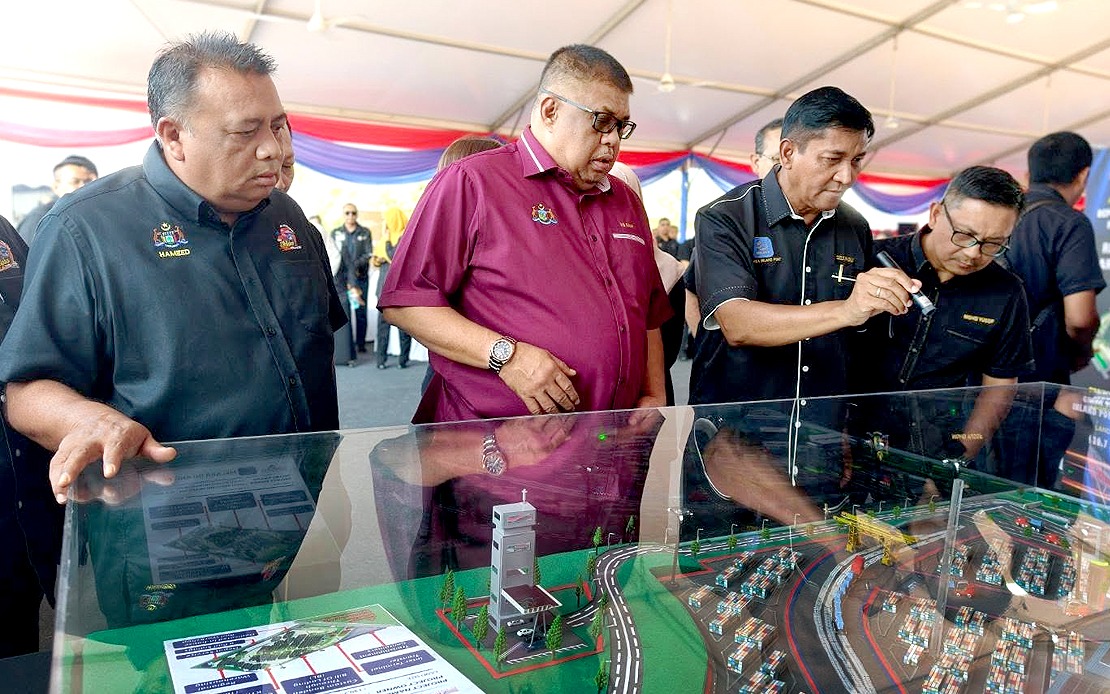
Melaka's state government is moving forward with an ambitious infrastructure initiative designed to transform the state's port operations and regional logistics capacity. The project centres on constructing a 12-kilometre expressway linking Kuala Linggi International Port (KLIP) to Ayer Molek and Kuala Sungai Baru, with a projected budget of RM129 million. The endeavour represents a significant investment in maritime-adjacent infrastructure, reflecting broader regional efforts to position Malaysian ports as competitive nodes within Southeast Asian supply chains.
The proposed route has been strategically planned to traverse the Melaka Inland Port (MIP) locality, creating an integrated network that will harmonise traffic flows between multiple port installations. According to Datuk Hameed Mytheen Kunju Basheer, chairman of the state's Public Works, Infrastructure, Public Facilities and Transport Committee, this approach optimises the utilisation of existing port capacity while establishing efficient corridors for cargo movement. The design phase is being managed by the Works Ministry, with the expectation that procurement procedures—including quotation requests, formal tendering, and contractor selection—will commence during the coming year.
One of the most compelling aspects of this proposal is the dramatic reduction in travel distances that the new road will facilitate. Currently, logistics vehicles must navigate a 28-kilometre circuit to connect these port facilities; the new direct route will cut this to merely 12 kilometres. For the transport and logistics sector, which operates on narrow margins and where fuel costs and vehicle hours represent significant operational expenses, such efficiency gains translate directly into cost savings and improved competitiveness. Enhanced connectivity also encourages consolidation of cargo handling at a single location, reducing operational complexity for port operators and shipping companies utilising these facilities.
The timing of this infrastructure push is noteworthy given Malaysia's broader economic positioning. As global supply chains recalibrate following pandemic-induced disruptions and geopolitical realignments, port states across Southeast Asia are investing heavily in capacity and connectivity improvements. Melaka, already a historical maritime hub with deep-rooted shipping traditions, recognises that infrastructure investment is essential to maintain competitive advantage against emerging port facilities in Thailand, Vietnam, and Indonesia. The MIP, in particular, has been positioned as a modern inland port facility capable of handling containerised cargo and other specialised operations.
Beyond the primary 12-kilometre corridor, the Melaka administration is pursuing complementary infrastructure enhancements that will create a comprehensive web of improved connectivity. Plans include widening the existing roadway from Tangga Batu to Sungai Udang, which provides access to Tanjung Bruas Port, addressing current bottlenecks on that route. These complementary improvements recognise that port efficiency depends not merely on individual road segments but on the entire transport network surrounding port facilities. Congestion at any point in the supply chain diminishes the value of capacity improvements elsewhere.
An additional six-kilometre stretch from Telok Gong through Kampung Pulau and Paya Lebar is also under consideration, estimated to require RM49 million in investment. This secondary project will establish an alternative pathway to the MIP from port areas, deliberately skirting traditional residential villages and thereby minimising disruption to local communities. The route from Paya Lebar to Kampung Pulau is currently in quotation phase, while the Kampung Pulau to Telok Gong segment remains in design development. Completion of this secondary project is targeted for 2028 or 2029, suggesting a phased implementation strategy that may allow earlier completion of more critical segments.
The infrastructure vision reflects evolving tensions between port development and community impact mitigation. By deliberately routing the secondary corridor around populated areas, the Melaka government acknowledges legitimate concerns about noise, pollution, and traffic disruption that port-adjacent infrastructure can impose on residents. This represents a more nuanced approach than earlier port expansion projects in the region, which sometimes proceeded with insufficient consideration of social costs. However, the extended timeline for completion of secondary routes means that some community benefits—such as alternative routes avoiding congested village roads—may not materialise for several years.
From a broader Malaysian perspective, these investments contribute to an ongoing repositioning of Melaka within the national economic hierarchy. Historically overshadowed by Port Klang and Port Tanjung Pelepas as primary Malaysian shipping hubs, Melaka has been systematically developing alternative value propositions. The Melaka Inland Port offers shorter dwell times and lower handling costs compared to deep-sea ports, making it attractive for regional short-sea shipping and transhipment operations. Improved road connectivity directly supports this market positioning by reducing total transit times and costs for users.
The project also illustrates how infrastructure development can unlock value from existing assets. Rather than constructing entirely new port facilities—an enormously capital-intensive endeavour—the state government is enhancing utilisation of the MIP through improved transport connections. This represents more efficient deployment of public resources, particularly important given competing demands on state budgets. Port utilisation tends to increase disproportionately with small improvements in accessibility, suggesting that the RM129 million investment may generate substantial returns through increased cargo volumes and associated economic activity.
Implementation challenges should not be minimised, however. Infrastructure projects of this scale frequently encounter delays due to land acquisition difficulties, environmental assessments, utility relocation, and unforeseen engineering complications. The compressed timeline for design and procurement across the coming year suggests an ambitious schedule. Cost inflation, particularly in construction materials and labour, could further pressure the budget envelope. Melaka's government will need robust project management and contingency planning to maintain momentum.
The wider context includes Singapore's continued dominance in the regional port hierarchy and increasing competition from Chinese-backed port initiatives in Southeast Asia. Malaysia's port operators must continuously innovate and improve efficiency to remain competitive. Melaka's infrastructure investments represent a rational response to this competitive environment, targeting niche markets where local advantages—shorter distances from hinterland, lower costs—can be leveraged effectively. Success will depend on whether the improved infrastructure translates into actual cargo volume growth and whether associated economic benefits sufficiently compensate for any community disruptions.
For Malaysian businesses dependent on efficient port access, particularly those in regional supply chains, these developments offer potential benefits through reduced logistics costs and faster cargo movement. The projects will require sustained government commitment and effective coordination between state and federal authorities, particularly regarding the Works Ministry's ongoing design responsibilities. As Melaka implements this multi-phase infrastructure programme over the coming years, the success or challenges encountered will likely inform future port infrastructure decisions across Malaysia and the broader Southeast Asian region.

