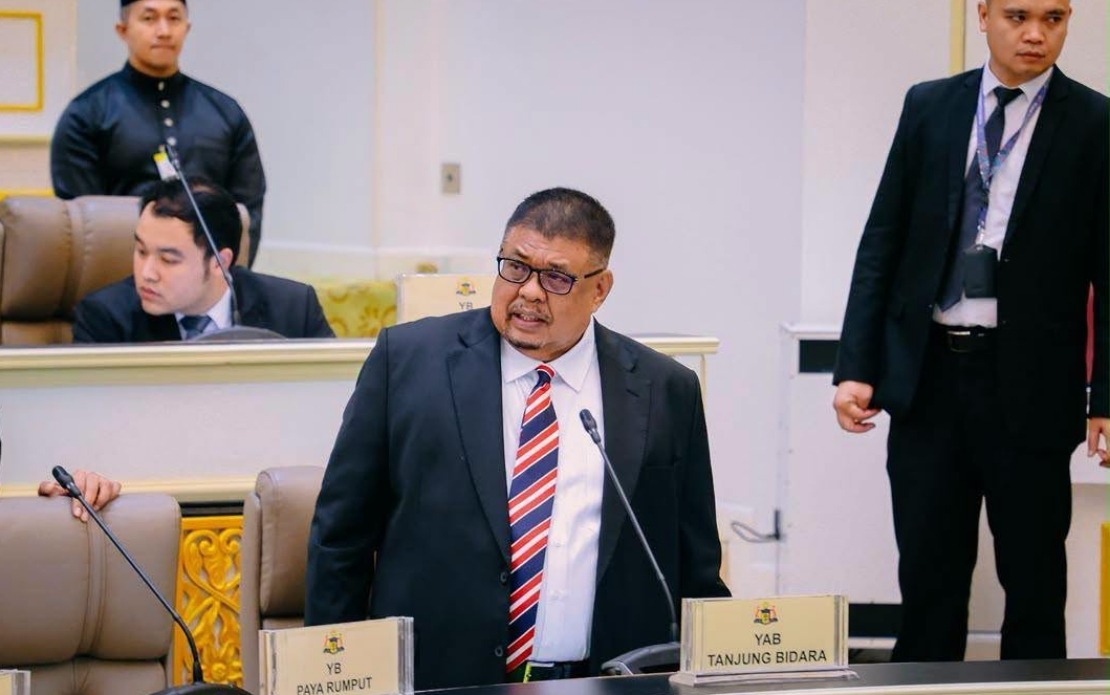
The Melaka state government will proceed with its regular functions despite the Democratic Action Party's withdrawal from the administration, according to Chief Minister Datuk Seri Ab Rauf Yusoh, who sought to reassure the public that the departure will not disrupt essential services or development initiatives across the state.
Addressing reporters at the Seri Negeri Complex in Ayer Keroh, Ab Rauf underscored that the state's administrative machinery, infrastructure projects, and public service delivery mechanisms would remain unaffected by the coalition reconfiguration. His comments came in the wake of the DAP's decision to step back from the governing partnership, a move that carries significant implications for Melaka's political landscape and governance structure moving forward.
The Chief Minister sought to provide reassurance across multiple constituencies including residents, civil servants, the business sector, and potential investors that the state administration would maintain its operational efficiency and continue executing its responsibilities with the same level of commitment and systematic approach that citizens had come to expect. This messaging appeared designed to prevent uncertainty that often accompanies significant political transitions at the state level.
Ab Rauf adopted a notably conciliatory tone when discussing the departure, stating that the government would refrain from prolonging discussions or challenging the DAP's prerogative to make decisions aligned with their organisational principles. His approach reflected a measured response that prioritised stability over acrimonious debate, an important consideration given the interconnected nature of state governance where former coalition partners must often continue working together on matters affecting constituents.
The Chief Minister articulated a vision of mature political engagement, noting that despite no longer sharing administrative structures, the DAP and the current government need not become adversarial in their commitment to safeguarding Melaka's interests. This statement acknowledged the reality that multiparty governance sometimes requires former partners to maintain workable relationships even after formal coalitions dissolve, particularly in states where political margins are narrow and cooperation across party lines remains necessary for effective governance.
Expressing gratitude for the DAP's contributions throughout their time in the administration, Ab Rauf recognised the collaborative work undertaken during their partnership. The acknowledgment of past cooperation served as a diplomatic gesture that may help preserve channels for future coordination on matters of mutual concern to the state's residents, regardless of their political affiliation.
Regarding relations with the federal government, Ab Rauf committed to maintaining constructive engagement with Kuala Lumpur to advance Melaka's developmental agenda and secure resources necessary for state-level initiatives. This pledge underscored the importance of federal-state cooperation in Malaysia's system of governance, where funding for major infrastructure projects and policy implementation often depends on collaborative frameworks.
When addressing Prime Minister Datuk Seri Anwar Ibrahim's earlier call for negotiations between the state and DAP leadership, Ab Rauf indicated that such discussions had become moot. The DAP's formal resignation letter, submitted immediately following the party's press conference, had finalised their decision to withdraw, rendering further negotiation attempts impractical or irrelevant. This timeline explanation clarified why reconciliation efforts, however well-intentioned at the federal level, could not reverse a decision that had already been conclusively executed.
The departure of the DAP representatives stemmed from the State Legislative Assembly's approval of a constitutional amendment enabling the appointment of assemblymen, a development that triggered the immediate resignations of four DAP legislators. These included Allex Seah Shoo Chin from Kesidang, Low Chee Leong from Kota Laksamana, Leng Chau Yen from Banda Hilir, and Kerk Chee Yee from Ayer Keroh, whose exits removed DAP representation from the executive council and dissolved their formal participation in state-level decision-making.
On the practical matter of replacing these vacant positions, Ab Rauf announced that the government would not immediately appoint successors to the four vacated exco seats. Instead, the administrative responsibilities previously shouldered by the departing DAP members would be temporarily redistributed among existing office holders. This approach provided breathing room for the government to assess its governance requirements and consider longer-term structural adjustments without rushing into potentially destabilising decisions.
The constitutional amendment permitting assemblymen appointments represented a significant governance shift with implications extending beyond Melaka's immediate political configuration. Such changes to appointment mechanisms can reshape political dynamics by reducing reliance on elected representatives and expanding executive discretion, alterations that occasionally generate controversy about democratic accountability and legislative independence within Malaysia's federal structure.
The situation reflects broader tensions within Malaysian coalition politics, where shared governance arrangements between parties with divergent ideological positions and strategic interests frequently encounter friction. The Melaka developments illustrate how constitutional amendments, if perceived as threatening minority partners' representation or political prospects, can precipitate sudden withdrawals from previously stable arrangements, underscoring the fragility of multiparty administrations that depend on sustained trust and aligned interests.
Looking forward, Melaka's political trajectory will likely depend on whether the Chief Minister's administration can maintain effective governance without DAP participation while preserving working relationships necessary for addressing constituent needs that transcend party boundaries. The state serves as a microcosm of Malaysia's complex political environment, where pragmatic coalition management and democratic governance principles must be carefully balanced.

