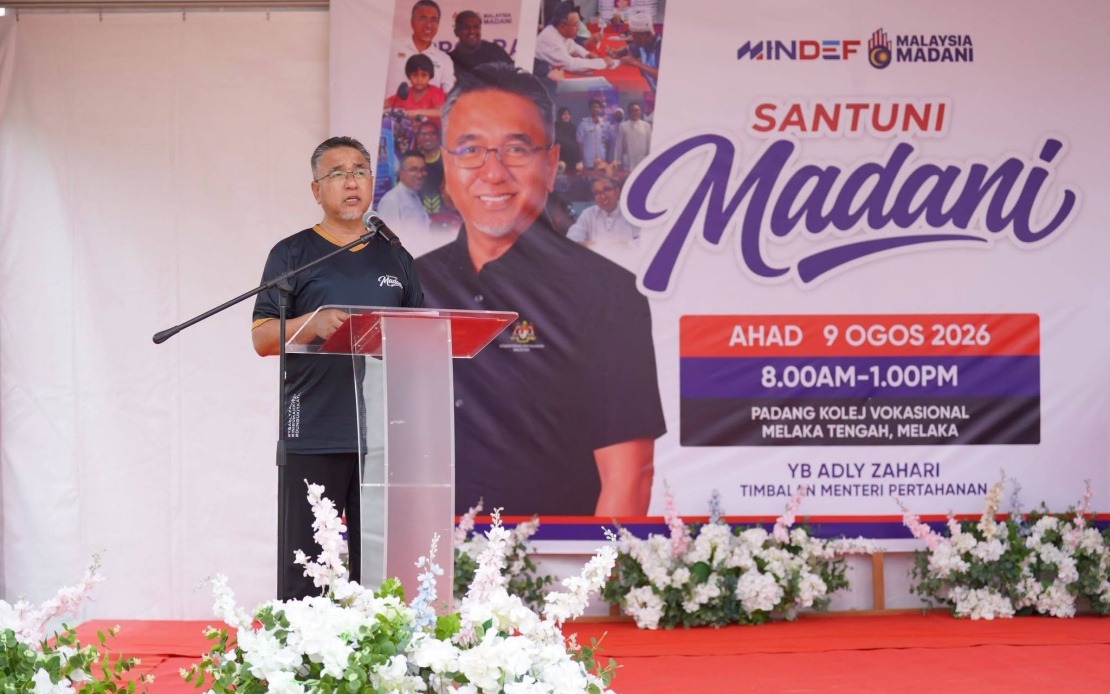
Melaka's Pakatan Harapan leadership is signalling strategic flexibility in the run-up to the state election, with coalition chairman Adly Zahari declaring openness to political cooperation with any party willing to enter discussions. The announcement reflects how Malaysian state-level politics continues to evolve beyond the rigid two-coalition framework that characterised recent national elections, with regional dynamics and local electoral mathematics often driving pragmatic arrangements that transcend broader political alignments.
Adly made his remarks after attending an event in Melaka Tengah, indicating that while PH has already conducted preliminary assessments of its electoral prospects, formal negotiations regarding coalition structures and seat allocations remain in preliminary phases. The coalition has held two rounds of internal discussions to evaluate its competitive position, though these have remained confined to PH's own machinery rather than extending to external partners. This careful pacing suggests a desire to project strength internally while maintaining flexibility externally—a delicate balance that state-level coalitions must often navigate when local political realities do not neatly align with federal arrangements.
The coalition has notably avoided formal engagement with Melaka's Barisan Nasional chapter, despite the two blocs' participation together in the federal Unity Government framework. Rather than pursuing a predetermined alliance formula, PH's Melaka wing indicates it will prioritise potential partners whose stated values and policy orientations align with the Malaysia MADANI agenda. This phrasing suggests that seat-sharing decisions will hinge on ideological compatibility rather than simply maximising electoral advantage, though observers might note that framing coalition criteria around value alignment frequently reflects both genuine principle and strategic calculation in contemporary Malaysian politics.
On territorial ambitions, Melaka PH has made clear its determination to expand significantly from the five seats it captured in the previous state election out of the 28-seat legislature. Party assessments are focusing particularly on the three parliamentary constituencies where PH achieved national election victories—Alor Gajah, Kota Melaka, and Hang Tuah Jaya—reasoning that strength at the federal level typically translates into state assembly performance. Additionally, the coalition sees potential expansion into traditionally competitive seats in Tangga Batu, Masjid Tanah, and Jasin, suggesting it is studying not merely consolidation but genuine territorial gains across multiple constituencies.
The underlying electoral arithmetic matters considerably for Melaka politics. With only 28 state seats in play, even modest seat gains can substantially shift the balance of power, particularly if seats are distributed among multiple coalitions rather than concentrated in one bloc. PH's confidence in seat expansion rests partly on the logic that areas delivering federal-level victories often contain overlapping state assembly divisions, though state elections have historically proven less predictable than this assumption sometimes implies. The coalition appears to be hedging its analysis by looking beyond its proven strongholds toward constituencies where polling and grassroots feedback suggest vulnerability in the incumbent administration.
Within PH itself, the Parti Keadilan Rakyat component acknowledged Melaka's distinctive political character. Adam Adli Abd Halim, acting chairman of PKR's state leadership council, emphasised that the state presents unique dynamics that differentiate it from other Unity Government jurisdictions. This observation reflects a broader reality in Malaysian federalism: state politics, while influenced by national trends and party machinery, ultimately responds to local figures, historical voting patterns, and community-specific concerns that do not automatically mirror national political configurations. Melaka's political economy, demographic composition, and historical voting behaviour create a specific electoral ecosystem requiring tailored strategies.
Communications with Barisan Nasional remain informal at the official level, according to PKR leadership, though individual party members have reportedly maintained contact with BN counterparts exploring potential collaborative frameworks. This distinction between formal and informal channels appears deliberate, permitting exploratory discussions without prematurely committing either side to binding arrangements. In Malaysian politics, such informal preliminary conversations often precede formal negotiations, allowing room for posturing, testing, and withdrawal if political circumstances shift or internal party consensus does not materialise.
Meanwhile, PH's state assemblymen have reportedly oriented themselves toward constituency work and public service delivery rather than aggressive political positioning. This strategic choice reflects learning from past electoral cycles, where excessive internal political contestation and public partisan conflict sometimes alienated floating voters. By emphasising governmental competence and public responsiveness during the pre-election period, PH hopes to build momentum based on perceived performance rather than coalition manoeuvring, a approach that recent Malaysian electoral trends suggest resonates with increasingly selective voters.
The broader context involves ongoing recalibration of Malaysia's political landscape following the 2022 national election and the subsequent formation of the Unity Government. State-level politics represents important terrain in this recalibration, as different coalitions maintain strongholds in different regions and must constantly negotiate whether state elections will proceed under unified coalitions, split-ticket arrangements, or fragmented contests. Melaka, as a relatively small but symbolically significant state, often becomes a laboratory for testing new coalition formulas before application in larger contests.
For Malaysian observers and regional stakeholders, developments in Melaka's electoral positioning carry implications extending beyond the state itself. How PH balances ambition with coalition pragmatism, whether BN emerges as coalition partner or adversary, and whether the Malaysia MADANI framework proves substantive enough to anchor cross-coalition cooperation all offer signals about trajectories that may eventually affect federal politics. Similarly, investors and economists monitoring political stability must track whether Melaka's upcoming election produces clear governance mandates or fractious coalition arrangements requiring ongoing negotiation.
The timeline and specific mechanics of Melaka's election remain fluid, with the state having experienced multiple dissolutions and contests in recent years that have made electoral scheduling unpredictable. This volatility underscores why political players maintain strategic flexibility and avoid overcommitting to formal arrangements until electoral rules and timing crystallise. Both PH and other political forces understand that premature public declarations of coalition intentions can become vulnerabilities if circumstances shift, as has occurred multiple times in recent Melaka political history.

