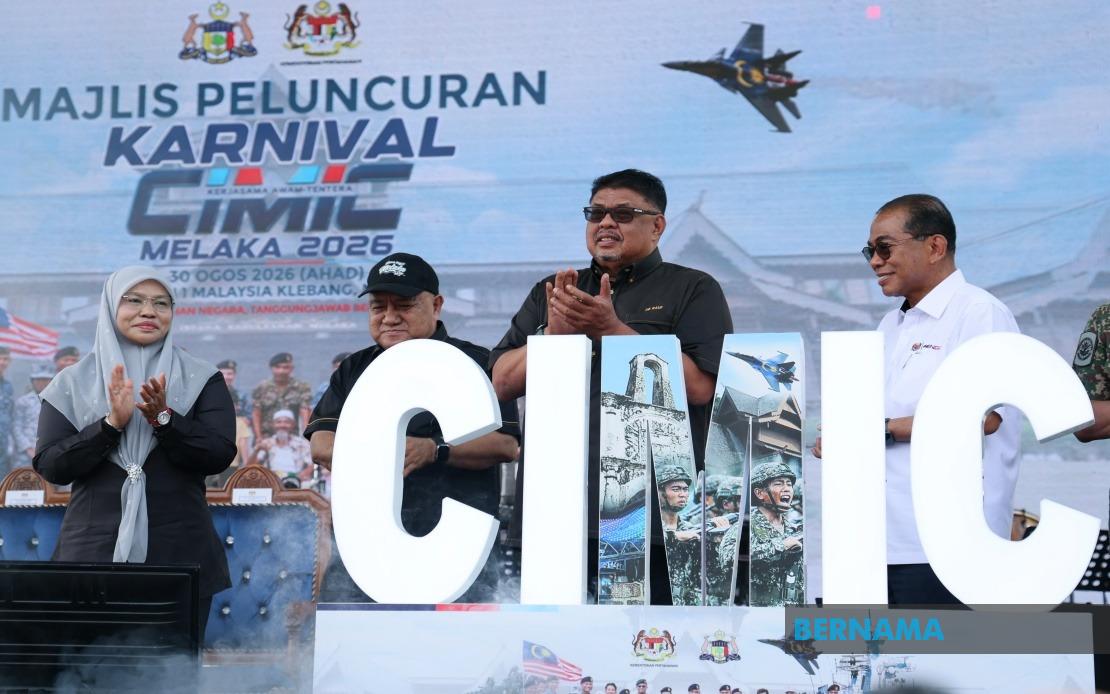
Malaysia's Defence Ministry is actively examining whether Melaka could serve as a future venue for the Langkawi International Maritime and Aerospace Exhibition (LIMA), one of Asia's premier defence and aerospace showcases. Defence Minister Datuk Seri Mohamed Khaled Nordin announced the exploratory initiative whilst addressing participants at the Civil-Military Cooperation Carnival in Klebang on Friday, signalling a strategic pivot that could reshape how the biennial event reaches audiences across the nation.
The proposal emerged from practical observations about accessibility and logistics. Melaka Chief Minister Datuk Seri Ab Rauf Yusoh noted that the Klebang area, situated near Batu Berendam Airport and accessible to naval berths, possesses inherent advantages as an exhibition site. The geography offers what administrators describe as an optimal blend of air, sea, and ground transport connectivity—a crucial requirement for an event that showcases military vessels, aircraft, and defence technology alongside civilian maritime innovations.
Mohamed Khaled articulated a core rationale underpinning the exploration: current attendance patterns reveal that holding LIMA in Langkawi, whilst maintaining the event's prestigious island setting, constrains participation from broader segments of Malaysia's population. Relocating to Melaka would theoretically democratise access by positioning the exhibition within easier reach for visitors from throughout the peninsula, substantially expanding potential attendance across diverse regions and demographics. This represents a deliberate policy consideration about balancing event prestige with inclusive public engagement.
However, the Defence Minister acknowledged that transforming Melaka into a venue capable of hosting an international exhibition of LIMA's calibre demands considerable public investment. Infrastructure development would necessarily encompass expanded exhibition facilities, enhanced transportation networks, upgraded accommodation capacity, and improved security apparatus—all prerequisites for accommodating the thousands of military personnel, defence contractors, government officials, and international visitors who typically converge during the biennial gathering. The financial commitment would fall substantially upon both federal and state budgets.
Melaka's state government has signalled conditional receptiveness to the proposal. Chief Minister Ab Rauf emphasised that whilst Melaka possesses strategic geographic advantages, the state administration must first conduct rigorous capacity assessments and conduct cost-benefit analyses. Officials need to determine whether hosting such a major international event would generate sufficient economic returns, employment opportunities, and reputational benefits to justify the upfront capital expenditure and ongoing operational commitments. This reflects prudent fiscal stewardship rather than reflexive enthusiasm.
The proposition gains additional context from recent naval activities in Melaka. This year's National Day celebrations witnessed the unprecedented participation of six Royal Malaysian Navy vessels, demonstrating both operational capability and logistical feasibility for hosting significant maritime-focused events. These celebrations inadvertently functioned as a proof-of-concept exercise, validating that Melaka's infrastructure could accommodate substantial defence sector mobilisation and public engagement simultaneously.
LIMA's current Langkawi venue has maintained the exhibition's status as a premium international gathering since its establishment decades ago. The island location projects exclusivity and provides a controlled environment for sensitive defence demonstrations. Yet geographic isolation inherently limits walk-up attendance and creates barriers for domestic participants who might otherwise engage with military innovation and defence policy developments. The tension between maintaining international prestige and expanding domestic participation represents a genuine policy challenge confronting event organisers.
The exploratory process reflects broader strategic thinking within Malaysian defence administration about regional development and civil-military integration. The Civil-Military Cooperation Carnival itself, which provided the announcement platform, embodies this philosophy by facilitating direct dialogue between armed forces personnel and civilian communities. Transferring LIMA from Langkawi would similarly advance objectives of transparency, public understanding, and civil society engagement with national security apparatus.
From a Southeast Asian perspective, the proposed relocation carries wider implications. Major defence exhibitions function as regional diplomatic venues and technology showcases, attracting participants from neighbouring countries and major powers. Shifting LIMA's location could alter patterns of international engagement and potentially enhance Melaka's profile as a regional strategic hub. The historic port city's position along crucial maritime trade routes aligns naturally with defence and aerospace sector interests.
Implementation remains contingent upon inter-governmental coordination and resource allocation decisions. Federal authorities must align with state administrators regarding fiscal contributions, infrastructure timelines, and operational frameworks. The Defence Ministry has indicated that substantive discussions at federal government level will precede any definitive commitment. This suggests the proposal remains in preliminary evaluation phases rather than advanced planning stages.
The timing of this announcement reflects evolving considerations about event venues and public accessibility within Malaysian governance circles. As digital communication and remote participation expand, large exhibitions increasingly need to justify the expense of physical gatherings through enhanced attendance numbers and broader societal engagement. Repositioning LIMA in Melaka addresses this imperative whilst preserving the event's international stature and technical significance within defence and aerospace communities.

